MieleRepair Miami

175 conditions, all of them the manufacturer's own

Miele error codes, decoded by appliance.

This maker writes an F and a number on everything it builds. Type the number below and pick the machine that is showing it — that second step matters here, because 42 of these numbers appear on more than one appliance and mean different things on each. 75 of the 175 are conditions Miele asks the owner to try first; the rest it says outright cannot be cleared without a technician, and those pages say so instead of inventing a checklist.

  • 175 conditions decoded
  • 133 distinct numbers
  • 75 the owner can try first
  • from $95 diagnostic, credited to the repair

Book a visit

Book a diagnostic visit

Your model number and a line about what it is doing is enough to get started. We will confirm the earliest slot we can genuinely keep.

  • Diagnostic from $95, credited toward the repair when you go ahead
  • The work and the price in writing before anything is opened
  • A warranty on our workmanship
  • Miami-Dade, Broward and Palm Beach counties
  1. 01 You tell us the model and what the unit is doing. A photo of the display helps.
  2. 02 We come back with the earliest slot we can genuinely keep, not the earliest one that sounds good.
  3. 03 Diagnosis on site, then the scope and the price in writing before anything is opened.

Your details stay private. No spam, ever.

Loading the booking form…

The booking form is taking longer than it should. Call (305) 518-1594 and we will book the visit with you.

Search the archive

Type what the display is showing

Spaces and capitals do not matter. F24, f 24 and 24 all find the same pages — pages, plural, because the same number belongs to more than one machine on this make. The appliance is in every title for exactly that reason.

175 conditions across 133 numbers, every one of them read from this manufacturer's own support base and linked to the page it came from. If yours is not here, that does not make it invalid — some appear only on certain model years. Call (305) 518-1594 with the model number and exactly what the appliance is showing.

Read the number with the machine

F1 is five different conditions.

On a dishwasher it is a water and heating temperature sensor, short-circuited. On a washing machine it is a short circuit in the heating sensor circuit. On a heat-pump dryer it is a refrigerant temperature sensor. On an oven and on refrigeration it is something else again.

That is not unusual on this make — it is the normal case. There are 133 distinct numbers behind 175 conditions, so roughly a third of them are shared between machines. Every page here names its appliance in the title, and looking a number up without knowing which machine is showing it is how people end up reading about somebody else’s appliance.

Start from the appliance instead
A fully integrated dishwasher and a tall refrigerator column side by side in one run of matte black handleless cabinetry

Most of these are not yours to fix

100 of 175 say so in the manufacturer's own words.

Miele is unusually direct about this. Where a condition is a board, a motor or a sealed circuit, its own page says that it cannot be remedied by the owner — and this archive repeats that rather than working around it. Those pages carry no invented checklist, because a ten-step routine that ends in booking a visit anyway is not help.

The other 75 do have steps, and the steps are the maker’s own: a tap that is not fully open, an inlet filter thick with scale, a suction hose out of place in a steam oven’s water container, a drawer under an induction cooktop blocking the fan. Several of those end a call for nothing at all, which is why this archive is free to read before you book anything.

What a repair costs
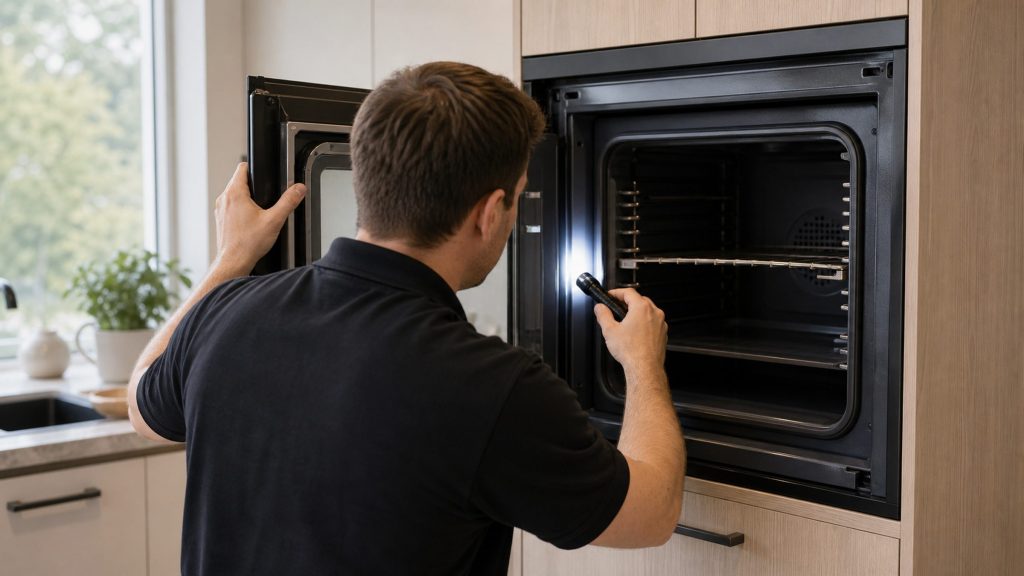
A technician holding open the door of a built-in oven and lighting the empty cavity with a flashlight, seen from behind

Before you switch it off

Three things worth doing while the code is still on screen

A condition clears when the power goes, and it takes the evidence with it. These take a minute and they are usually the difference between one appointment and two.

Write it down exactly

  • The letter and every digit — F14 and F140 are different appliances' problems
  • Any words printed beside it, which the washing machines sometimes add
  • Which appliance is showing it, because the number alone is not enough on this make

Note what it was doing

  • How far into the cycle it stopped, and whether it is always the same point
  • Whether there was water in the machine, and where
  • Whether anything was installed, moved or serviced recently

Then try the reset

  • Off at the breaker for five full minutes, not at the button
  • If it comes back on the next cycle, that is real and worth booking
  • If it does not, a brownout caught the control mid-write — common here in summer

No number on the display?

Plenty goes wrong without one

The gas cooking surfaces on this make publish no condition of any kind, and a dryer that simply dries badly usually reports nothing at all. Those are described in plain words instead.

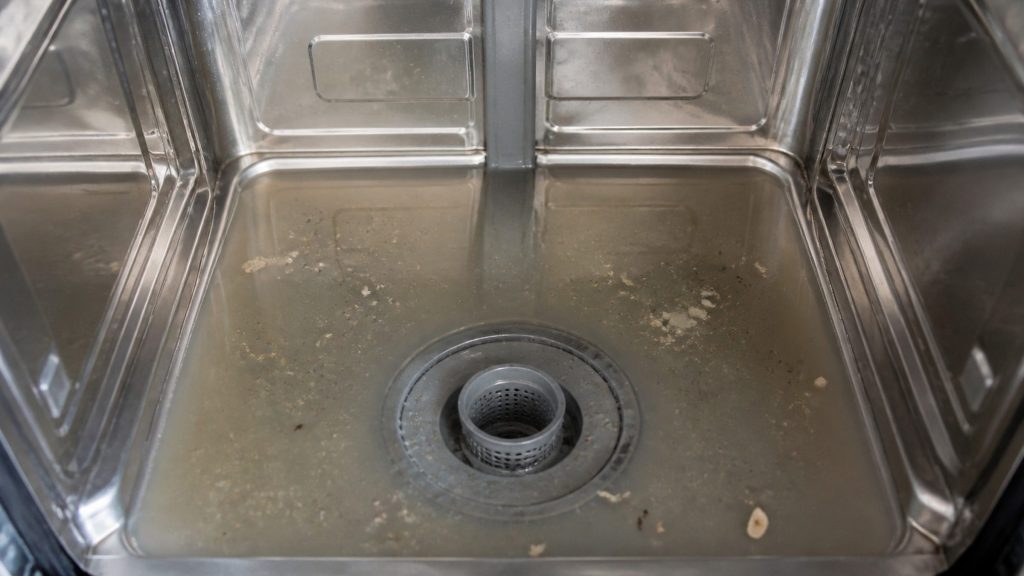
  • Cloudy water standing over the floor of a dishwasher tub around the filter, with food debris left in it
    Water still in the tub at the end

    Dishwasher will not drain

    A cycle that finishes — or stops — with water standing in the bottom of the tub. On a Miele this usually reports itself with a number, and more often than not the cause is outside the machine altogether.

    What it usually means
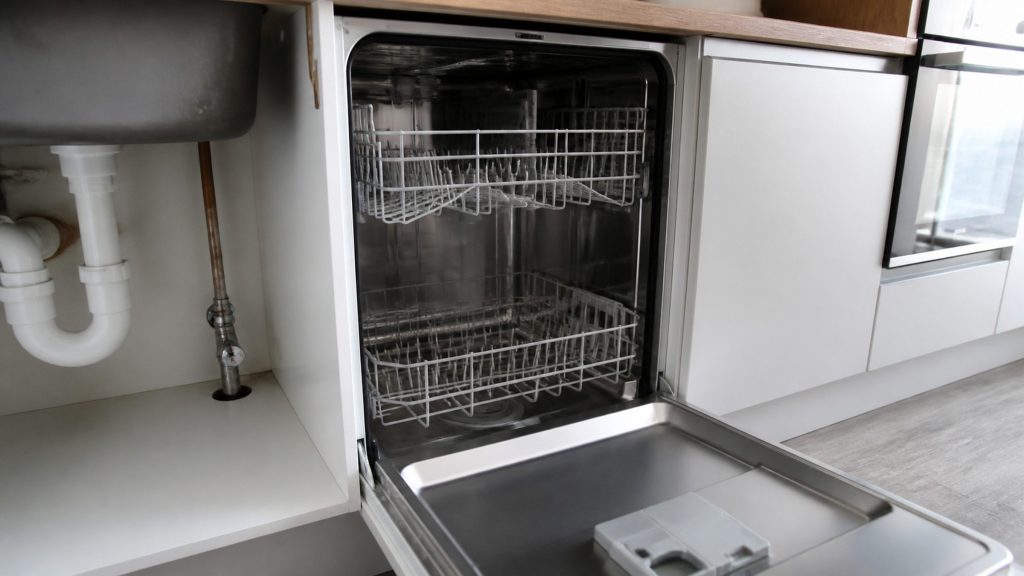
  • The empty dry tub of an integrated dishwasher standing open beside the under-sink cabinet, the water shutoff valve visible on the supply pipe
    The cycle starts and no water arrives

    Dishwasher will not fill

    The machine starts, waits and stops. Miele publishes several separate conditions for this and they point at four things, three of which are outside the appliance and free to check.

    What it usually means
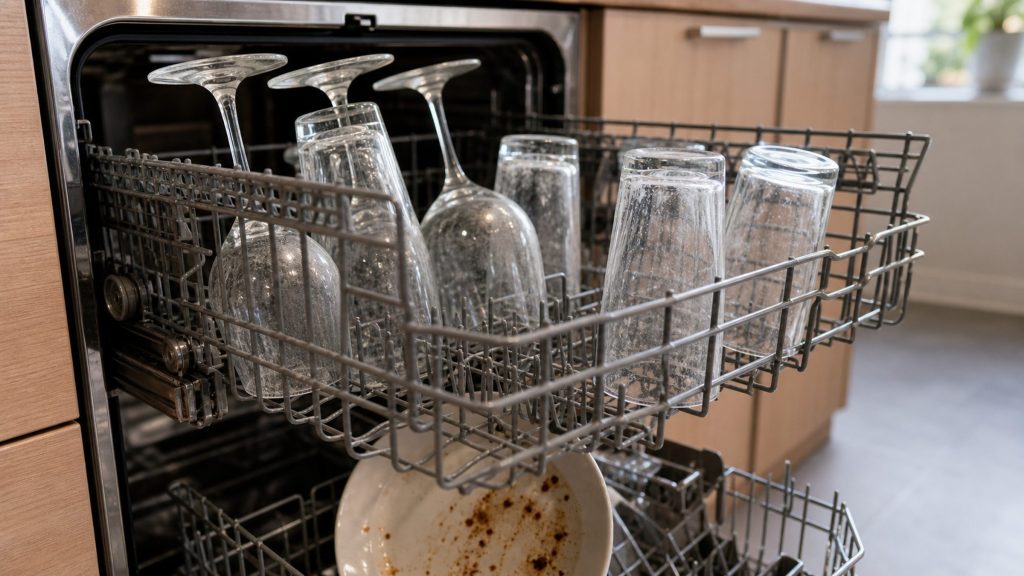
  • Wine glasses and tumblers standing upside down in a dishwasher basket, every one clouded with a white film after the cycle
    Water in and out normally, and still not clean

    Dishes come out dirty

    The machine fills, runs and empties, and the dishes are no better than when they went in. Which rack is failing is the useful clue and it is one you can read from the kitchen.

    What it usually means
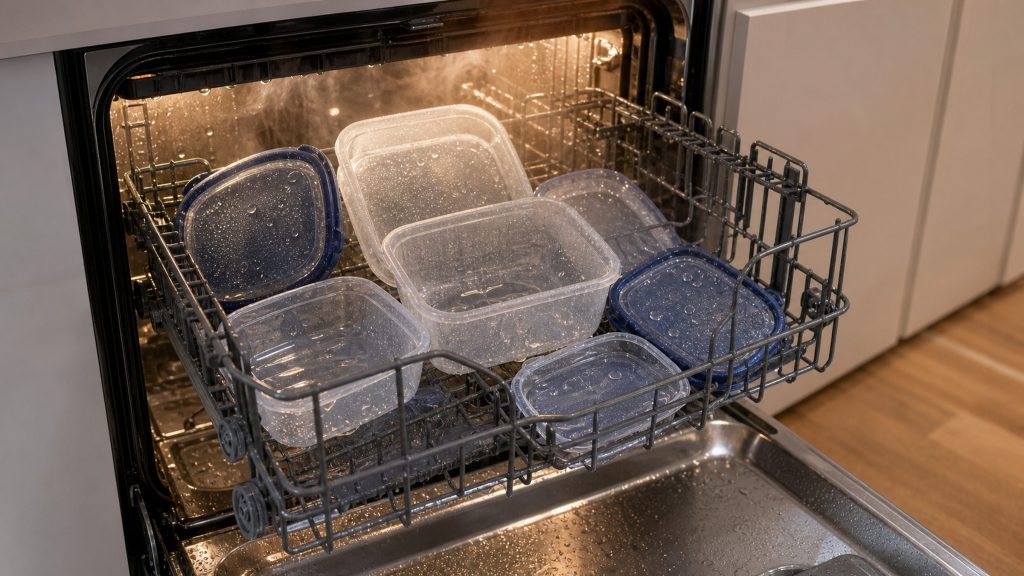
  • Plastic food containers standing in a dishwasher basket, every one still beaded with water at the end of the cycle
    Clean, and still soaking

    Dishes come out wet

    On this make that is frequently not a repair at all. A Miele dries with residual heat and, on the newer machines, by opening its own door at the end — so a machine that will not dry is often a door that is not opening or a rinse aid reservoir that is empty.

    What it usually means
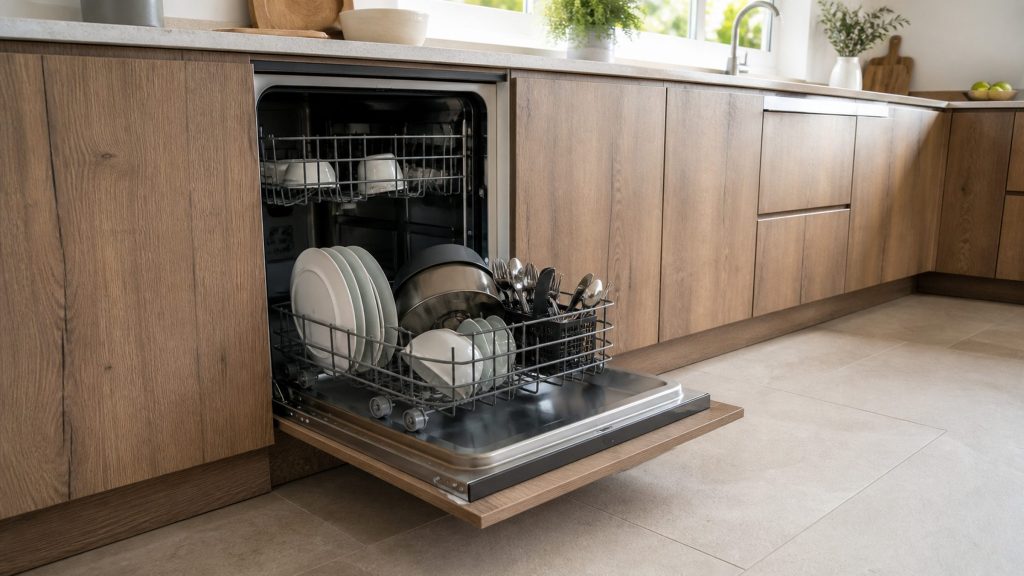
  • The door of an integrated dishwasher hanging part-way down under its own weight, the loaded lower basket sliding forward on it
    It falls open instead of holding

    Dishwasher door drops or will not shut

    A door that swings down instead of holding at an angle, or one that no longer latches. On a fully integrated machine the door is carrying your own cabinetry, and that weight is what the springs were set for.

    What it usually means
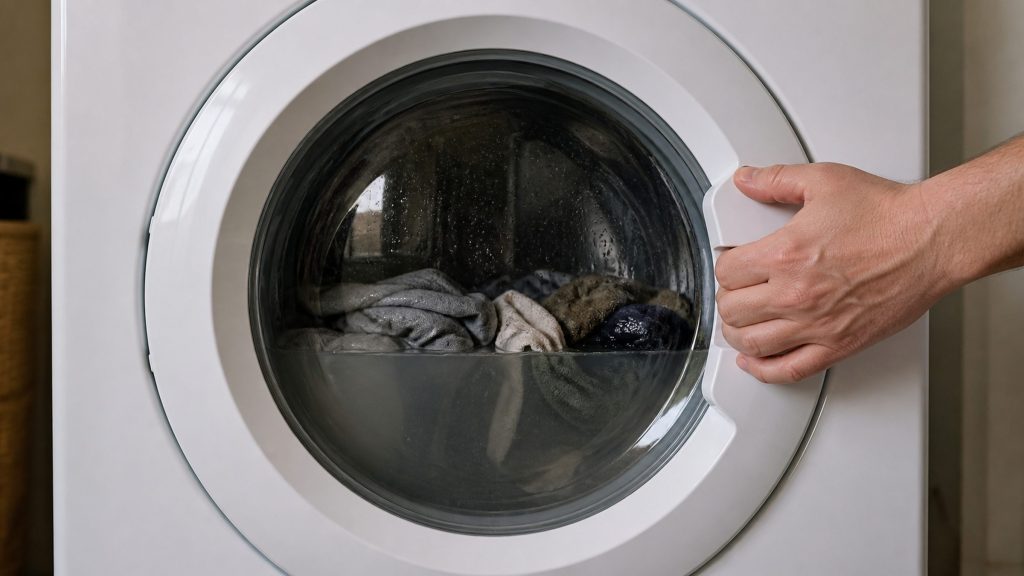
  • A hand pulling at the door of a washing machine that will not open, water standing halfway up the glass with the load submerged
    Laundry locked inside

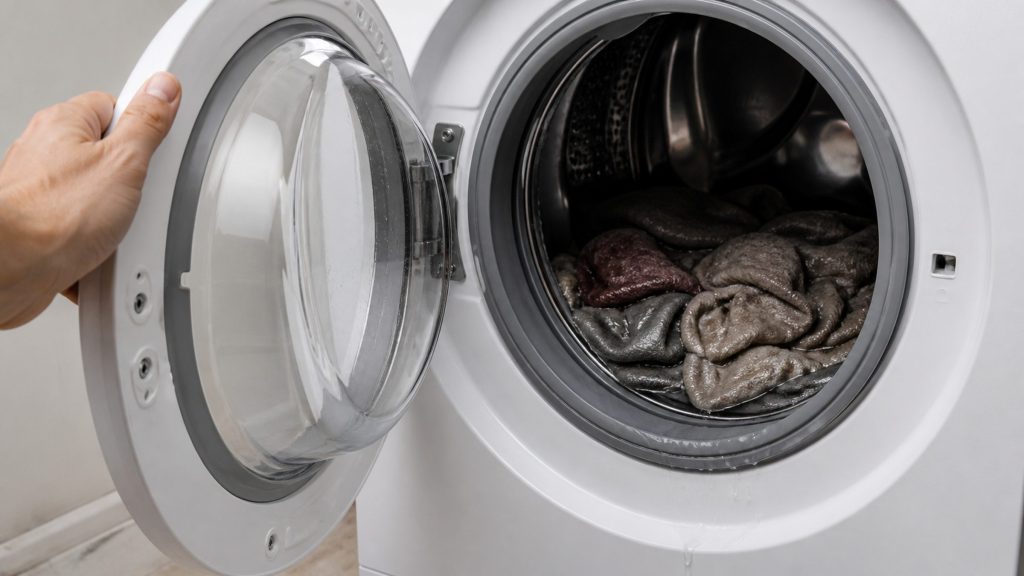
    Washing machine door will not open

    One of the very few conditions this maker prints in words as well as a number. With a wet load behind the glass it is a same-day call, and forcing the door is the one thing that turns a part into a panel.

    What it usually means
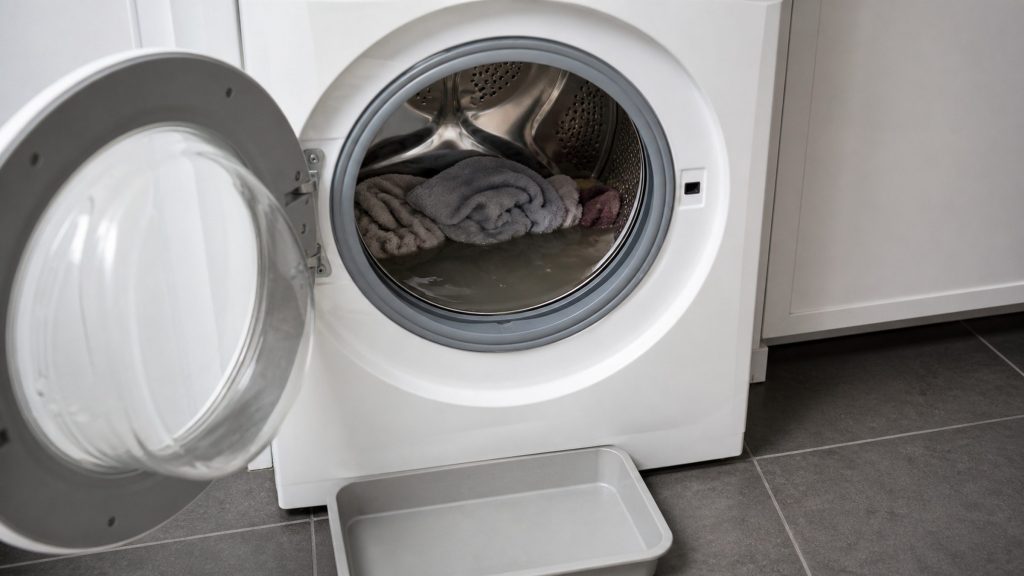
  • A washing machine standing open with water still lying in the bottom of the drum under the load, a drip tray on the floor
    The cycle stops with water in the drum

    Washing machine will not drain

    A cycle that halts part-way with the drum full, or one that finishes and leaves water behind. The W1 machines report the water path in detail, so this is usually a short diagnosis.

    What it usually means
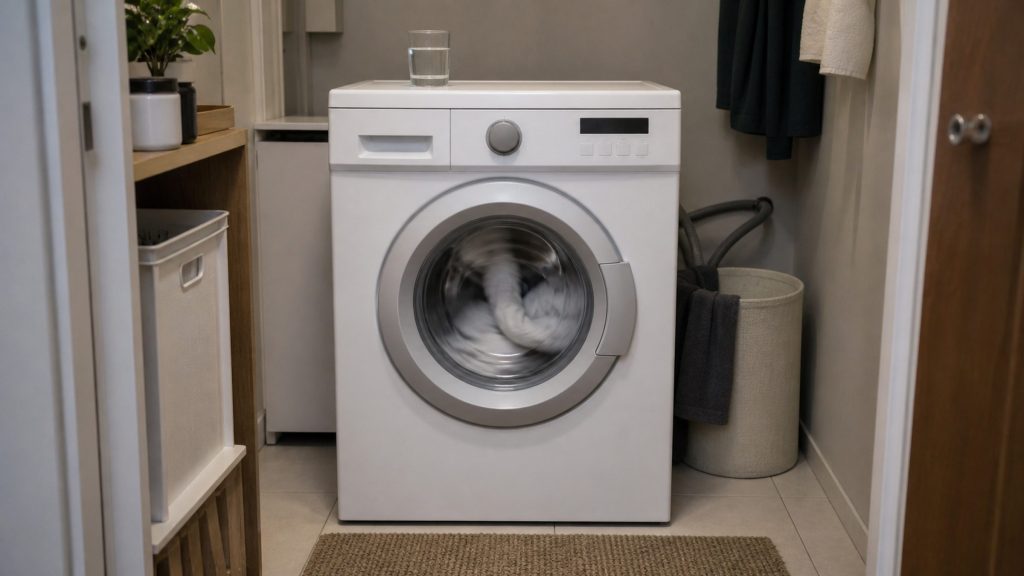
  • A washing machine mid-spin in a narrow laundry closet with a glass of water standing on its lid
    A rumble that rises with the speed

    Washing machine is loud on the spin

    Noise that arrives with the spin and quiets as it slows is the classic bearing signature — and it is worth acting on early, because a bearing allowed to run to failure can take the drum with it.

    What it usually means
  • The door of a washing machine held open on a load so wet it is still dripping, water beaded across the drum and the gasket
    Clothes come out soaked

    Washing machine will not spin

    A machine that washes and rinses and then leaves the load dripping. On this make the first question is whether it is refusing to spin or unable to — and the difference is usually the load.

    What it usually means

Number not in the archive?

That does not make it invalid.

This archive holds what the manufacturer publishes for the nine appliance types we cover. It does not hold conditions that appear only in service mode, ones specific to a single model year, or anything from the coffee machines and vacuum cleaners, which we do not repair.

Call (305) 518-1594 with the model number and exactly what is on the display, including any words beside the number. We will tell you what it points at before anybody is booked.

About these codes

Questions we get about the display

Is there one master list of Miele error codes?

Not one that means anything on its own, and that is the honest answer rather than a dodge. This manufacturer publishes its conditions per appliance family in its own customer support base, and the same number carries a different meaning on a dishwasher and on a dryer. The archive here is compiled from those pages so all of them can be searched at once, with the machine named on every page and the source linked. We do not reproduce the manufacturer's wording or its repair procedures.

The same number is showing on two of my appliances.

Then they are almost certainly two unrelated problems. Roughly a third of the numbers in this archive belong to more than one machine, and they mean different things on each. Read the page for the appliance that is showing it, not the one that comes up first.

Why do some pages have no steps at all?

Because the manufacturer says the condition cannot be remedied by the owner, and we repeat that instead of filling the space. It applies to a clear majority of the conditions on this make. Those pages tell you what the condition covers and what a visit does first, which is the useful part.

The code cleared itself. Should I still call?

If it comes back, yes. A condition that survives a five-minute power cut at the breaker is reporting something real. One that never returns after a summer brownout is usually a control that was interrupted mid-write, and that is not a repair.

My gas cooktop has no code.

It never will. This maker publishes no condition for its gas surfaces on any model, so a burner problem is diagnosed entirely from behavior — which burners, on which settings, whether it clicks and whether it holds. The symptom pages cover that.

Tell us the number and the appliance.

Those two together are usually enough for us to say what it points at and what it should cost.

This article is based on:

  • Official manufacturer documentation
  • Internal repair procedures
  • Technician repair history
  • Company quality standards
Call (305) 518-1594