Appliance
Miele heat-pump dryers
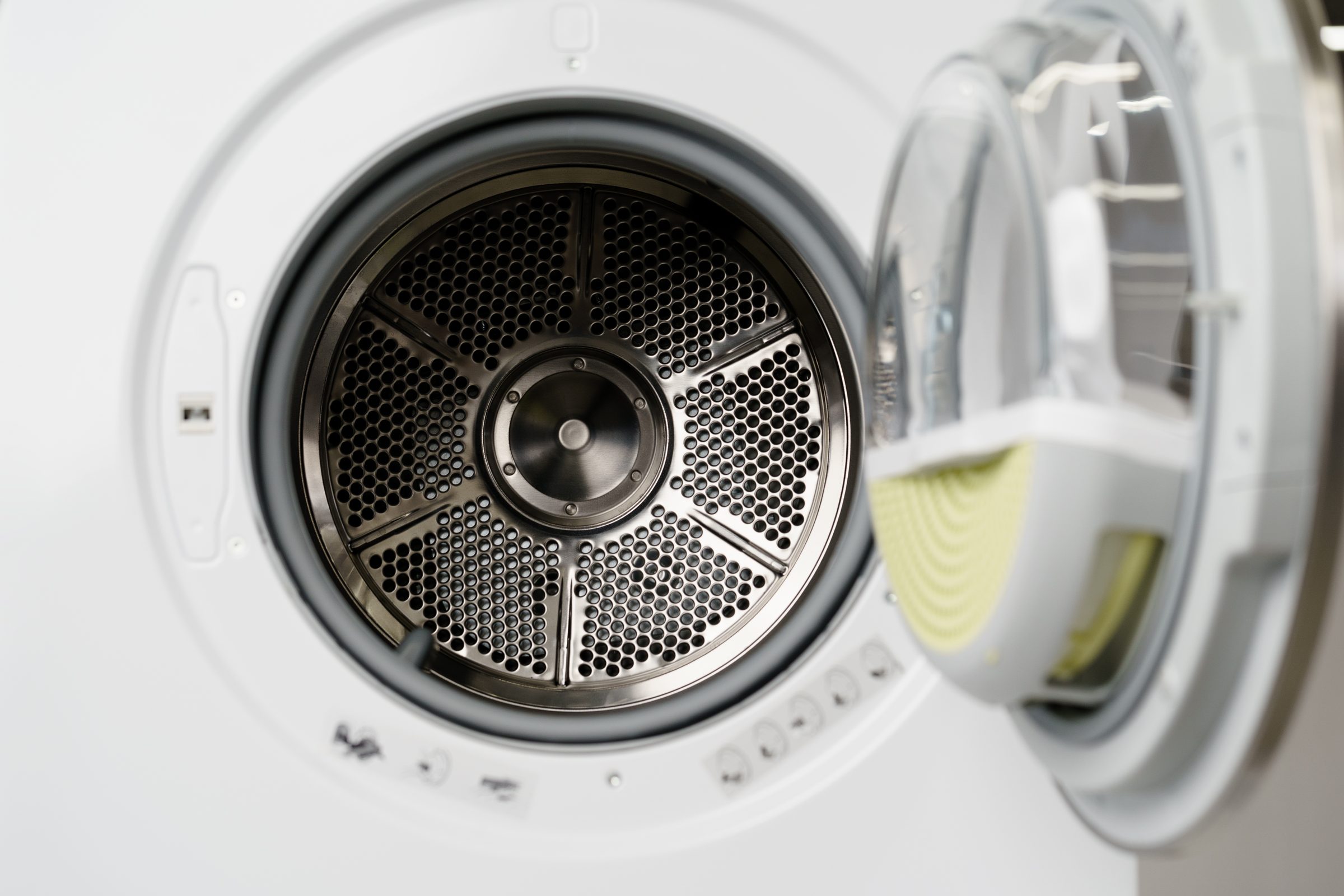
Every dryer Miele sells in the United States is a heat pump, and there is no vented model to compare it to. That is the single most useful thing to know before booking: this machine has a sealed refrigerant circuit rather than a heating element, so almost nothing that goes wrong with it is what goes wrong with an ordinary dryer.
- 7 symptoms we are called out to
- From $95 diagnostic, credited to the repair
- 59 cities and neighborhoods covered
- OEM parts available on order
The short version
What this equipment is, for a repair
Configurations
T1 heat pump · Ventless · 24" · 120V · No duct required
Access
Planned before the visit, not discovered on arrival
Parts
OEM, available on order
Diagnostic
From $95, credited to the repair
What goes wrong with it
Symptoms we are called out to on Miele heat-pump dryers
Each one covers the likely causes in the order they are worth checking, and what to do in five minutes before booking anything.
-

Damp clothes and no error on the display Dryer will not dry
The commonest complaint on a heat-pump dryer and the one most often solved without a part. This machine has no heating element — it moves heat around a sealed loop — and everything about that depends on air moving freely.
- Damp clothes after a full cycle
- Cycles getting steadily longer
- No error message at all
-
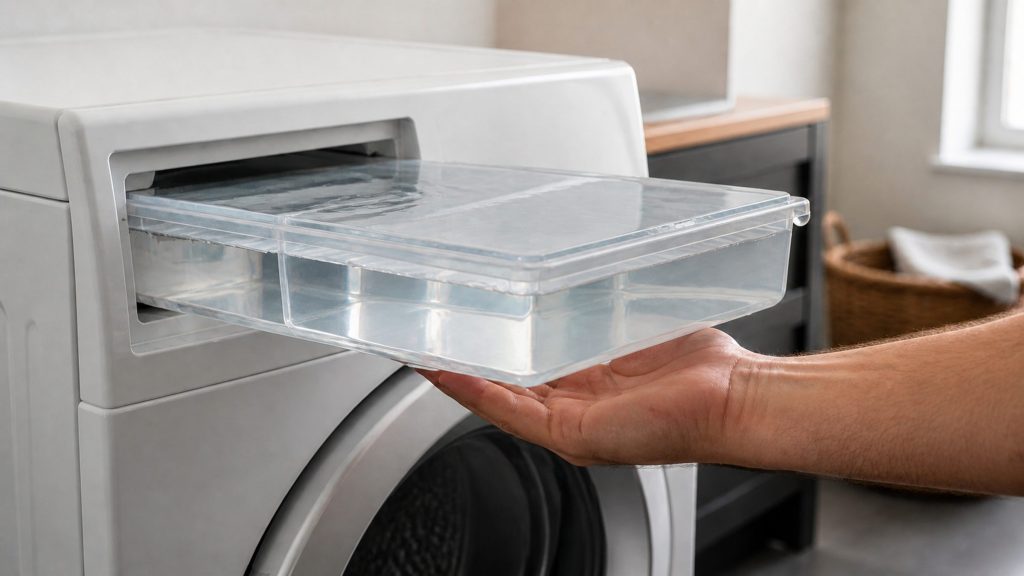
And you have just emptied it Dryer says the container is full
A ventless dryer collects the water it takes out of your clothes. When it reports a full container an hour after being emptied, the container is not the problem — the float, the pump or the drain is.
- The message returns immediately after emptying
- Water visible in the base of the machine
- A plumbed machine reporting it at all
-
It finishes, eventually Dryer cycles are getting longer
A heat-pump dryer is slower than a vented one by design, and that is not a problem. A cycle that is getting steadily longer than it used to be is — and it is nearly always the air path.
- Cycles noticeably longer than a year ago
- The machine warm to the touch on the outside
- Clothes dry but only just
-
And the cycle has stopped There is an F number on the display
Miele writes an F and a number on every appliance it builds. The number on its own is not the condition — the number plus the appliance is — and a good share of them are things the manufacturer asks the owner to try first.
- A number that returns after every reset
- The same number on two different appliances
- A number with words beside it
-
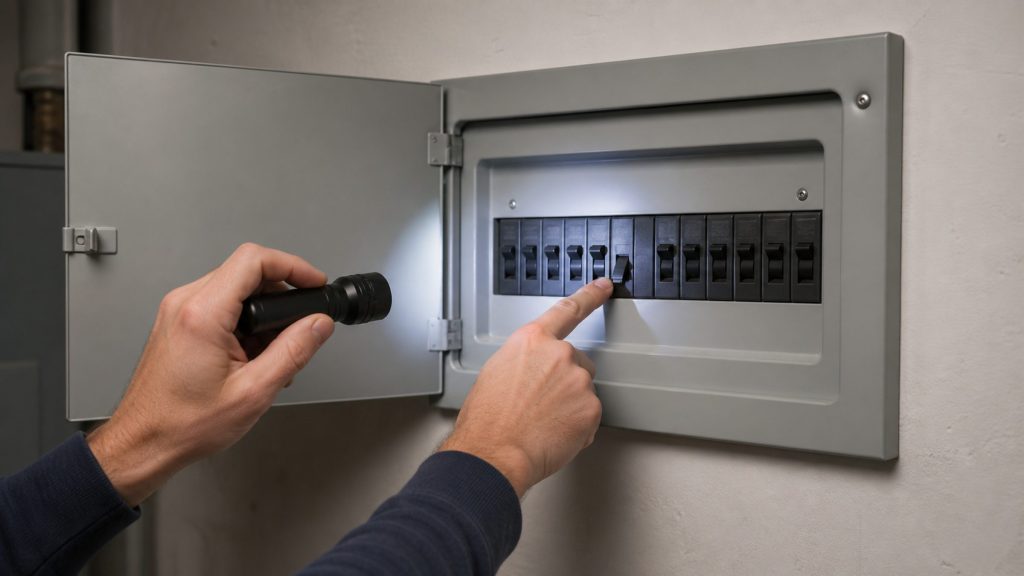
Or the RCD, every time it runs The appliance trips the breaker
An appliance that trips its protection is telling you something specific, and the one thing not to do is keep resetting it. On this make the maker itself names a residual-current device tripping as a condition to report rather than to work around.
- It trips as soon as the appliance starts
- It trips part-way through, at the same point each time
- It only trips when one particular appliance runs
-
No lights, no response The appliance will not start at all
Nothing at all is a different problem from a cycle that stops, and it has a much shorter list behind it. Half of that list is outside the appliance.
- A completely dead panel
- Lights on, and nothing happens when a program is started
- It came back once and then stopped again
What we do on it
Repairs we carry out on Miele heat-pump dryers
Starting figures for this equipment in South Florida. The exact cost is confirmed after an on-site diagnostic — and this is not the whole list of what can go wrong, so call if your problem is not here.
-
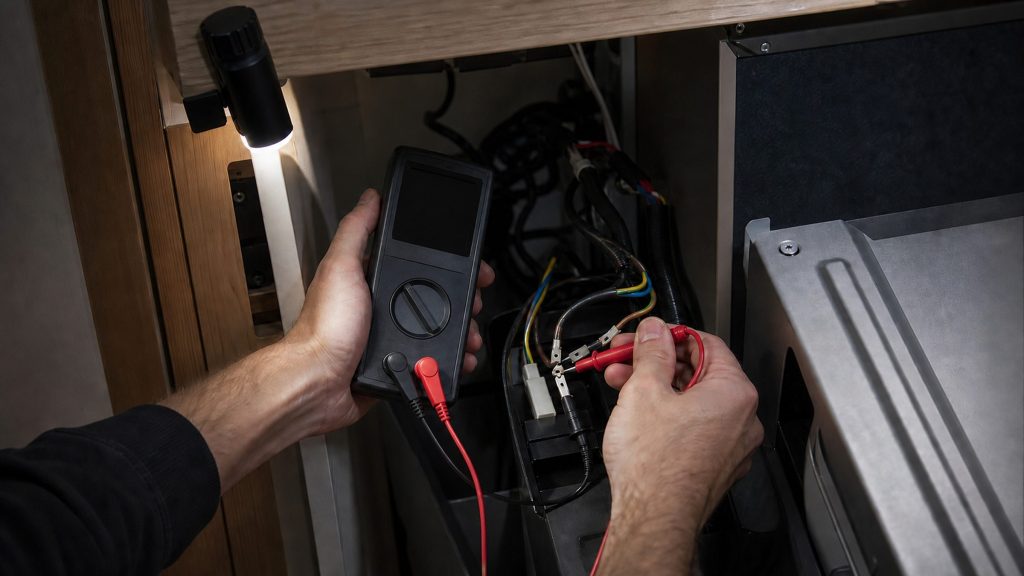
from $95 Diagnostic visit
One visit that ends with a named cause, a figure and a decision — and the fee comes off the bill if you go ahead with the work.
- Credited against the repair
- A written figure before anything is ordered
- Nine appliance types, one rate
-
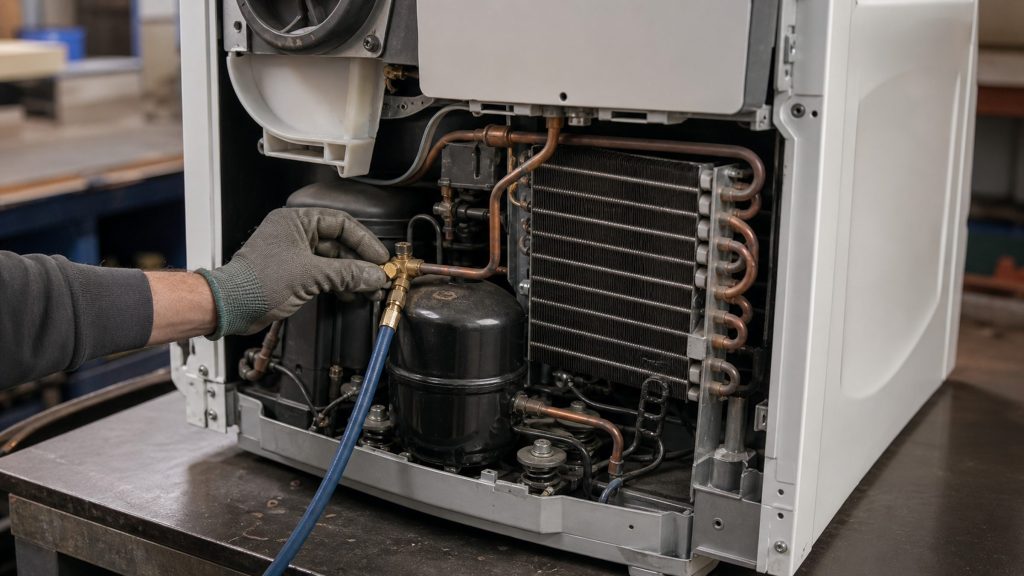
from $345 Dryer heat pump & sensor repair
A ventless dryer has no heating element to replace. It has a sealed refrigerant circuit, and twenty-four of the twenty-eight conditions Miele publishes for its dryers point into it — which is the shape of the machine rather than a sign that yours is unusual.
- The owner-serviceable half eliminated first, at no charge
- Sealed circuit tested rather than swapped
- Sensors read as resistances, not guessed
-
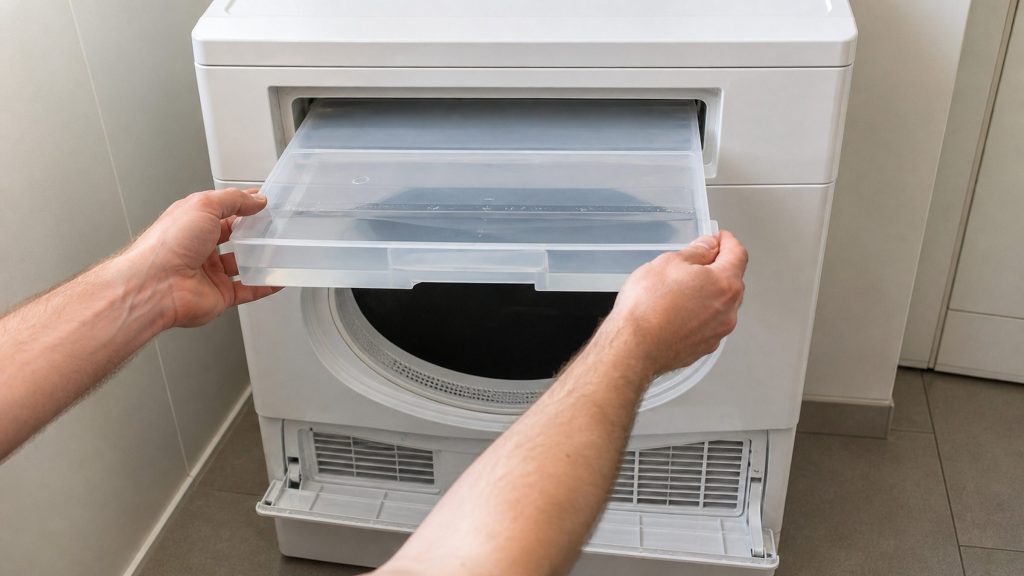
from $135 Dryer condensate & filter service
Priced as maintenance on purpose, because on a ventless dryer in this humidity it is the row that keeps the expensive one away. Filters, condenser block, condensate path and the sensors that all three affect.
- Both filters and the condenser block cleaned properly
- Condensate container, float and pump checked
- Drum sensors cleaned so the cycle ends when it should
-
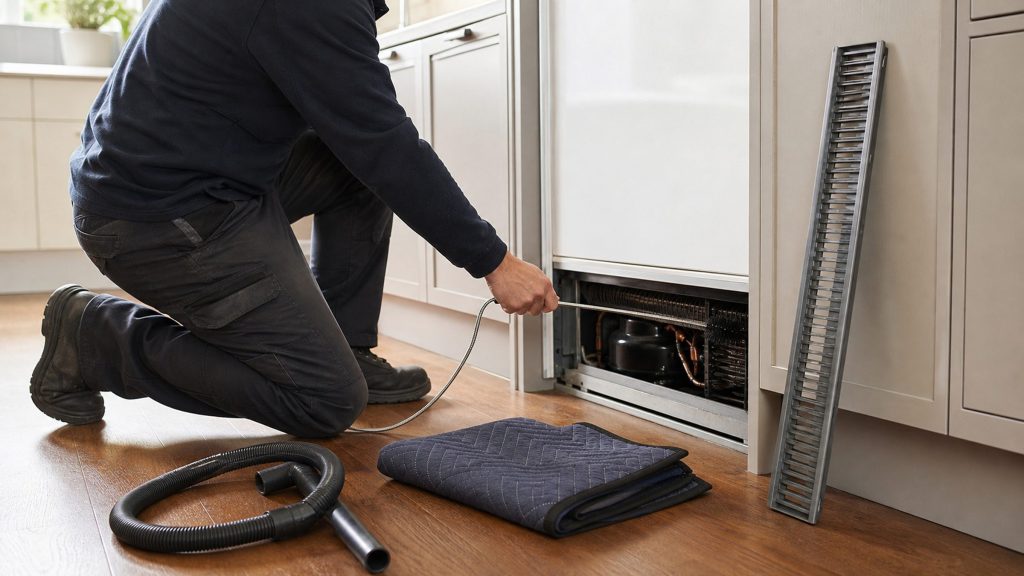
from $145 Appliance maintenance
One visit covering every condenser, filter, descale and seal in the kitchen and the laundry room. In a full Miele household that can be six appliances, and doing them together is meaningfully cheaper than three separate visits.
- Every appliance in the house on one trip
- The three things this climate is hard on, all in one visit
- Water hardness set so the appliances count correctly
-
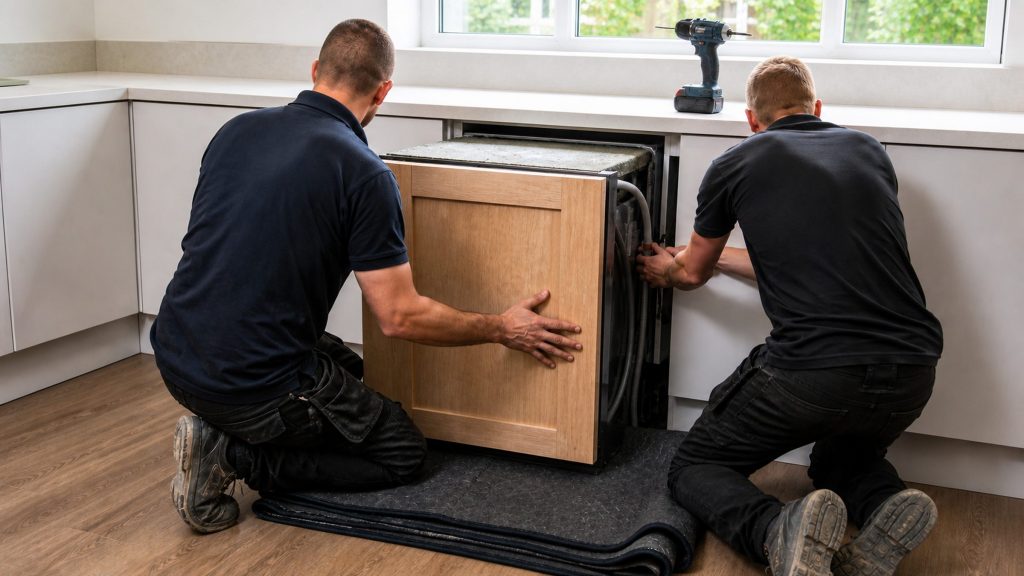
from $225 Appliance installation
Where a meaningful share of the repairs on this site are prevented or created. Ventilation under an induction cooktop, a drain that will actually take a heat-pump dryer, and water at the pressure the maker names as a minimum.
- Ventilation, drainage and flow pressure checked, not assumed
- Panel-ready doors hung and set with the panels on
- Leveling done properly, on every machine
In more detail
About Miele heat-pump dryers
Three machines, one circuit
TXB, TXF and TXR — the differences are programs and steam, not mechanism. All three are ventless, all three run on a standard household circuit, and all three collect their condensate in a container unless they have been plumbed to a drain.
What actually goes wrong
- The filters and the condenser block. The owner's half of the machine, and the cause of most "it does not dry" calls in this climate.
- The condensate path. The container, its float, the pump, or the drain it was plumbed into.
- The sealed circuit. Compressor, evaporator, refrigerant sensors. Not an owner's job and not improved by running it again.
- The moisture sensors in the drum, which decide when the cycle ends and which read wrongly when they are coated.
Why humidity here is part of the diagnosis
A ventless dryer takes its air from the room. In a South Florida laundry closet in August that air is already close to saturated, and the machine works harder and clogs faster for it. Ventilation into the room matters on this appliance in a way it does not on a ducted dryer, and it is worth saying where the machine stands when you book.
What to have ready when you call
The model number from inside the door, the number on the display, whether the machine drains to a container or to a pipe, and when the condenser block was last cleaned.
This article is based on:
- Official manufacturer documentation
- Internal repair procedures
- Technician repair history
- Company quality standards
Before you book
Questions about Miele heat-pump dryers
Why is a heat-pump dryer different to repair?
Because there is no element and no duct. It dries by moving heat around a sealed refrigerant loop, condensing the moisture out of the air and collecting it — so the parts are a compressor, an evaporator, a condenser block and the sensors watching them. Twenty-four of the twenty-eight conditions Miele publishes for its dryers are in that group, and that is the shape of the machine rather than a sign yours is unusual.
Everything comes out damp and there is no error at all.
Start with the two things the owner controls: the filters, both of them, and the condenser block behind the lower panel. In this climate they load faster than the interval in the book, because the air the machine is drawing already has water in it. A dryer that has never had its condenser cleaned will dry badly for a long time before it complains.
It says the container is full and I just emptied it.
Then it is not the container, it is the float or the pump that empties it — or, if the machine is plumbed to a drain, the drain. Worth mentioning when you book which way yours is set up, because they are two different checks.
Is it slower than my old dryer?
Yes, and that is by design rather than something to fix. A heat-pump dryer runs cooler and longer, which is why the clothes last. A cycle getting noticeably longer than it used to be, though, is a real signal — that is usually the filters or the condenser.
Can it be stacked on the washer?
Yes, with the maker's kit, and most of the ones we see are. It means both machines come apart to reach either, which is planned time on the appointment.
Where we do it
Across Miami-Dade, Broward, and Palm Beach
Same terms everywhere we go: an on-site diagnostic first, the price agreed in writing, and the exact figure confirmed once we have seen the unit.
Neighborhoods people ask for by name
 English