MieleRepair Miami

Described the way you would describe it

What your Miele is doing, and what it usually means.

You do not need to know which part it is. Find the description that matches, read the free check at the top of the page — every one of them is something the manufacturer itself publishes — and if it does not solve it, the repair and its starting figure are on the same page.

  • 31 complaints with a page of their own
  • free the first check on every one
  • 175 display conditions decoded
  • from $95 diagnostic, credited to the repair

Book a visit

Book a diagnostic visit

Your model number and a line about what it is doing is enough to get started. We will confirm the earliest slot we can genuinely keep.

  • Diagnostic from $95, credited toward the repair when you go ahead
  • The work and the price in writing before anything is opened
  • A warranty on our workmanship
  • Miami-Dade, Broward and Palm Beach counties
  1. 01 You tell us the model and what the unit is doing. A photo of the display helps.
  2. 02 We come back with the earliest slot we can genuinely keep, not the earliest one that sounds good.
  3. 03 Diagnosis on site, then the scope and the price in writing before anything is opened.

Your details stay private. No spam, ever.

Loading the booking form…

The booking form is taking longer than it should. Call (305) 518-1594 and we will book the visit with you.

By symptom

Find the one that sounds like yours

Each page opens with the thing to try before calling anybody, then lists what it usually turns out to be and what that repair starts at.

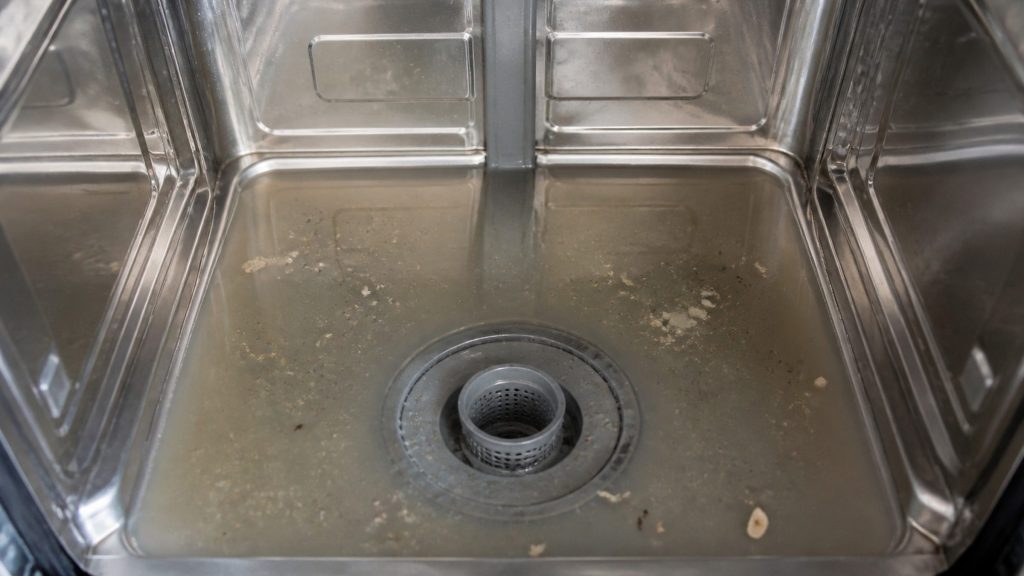
  • Cloudy water standing over the floor of a dishwasher tub around the filter, with food debris left in it
    Water still in the tub at the end

    Dishwasher will not drain

    A cycle that finishes — or stops — with water standing in the bottom of the tub. On a Miele this usually reports itself with a number, and more often than not the cause is outside the machine altogether.

    • Standing water after the cycle
    • A number on the display and a cycle that stopped
    • Water that drains if you run it again
    What it usually means
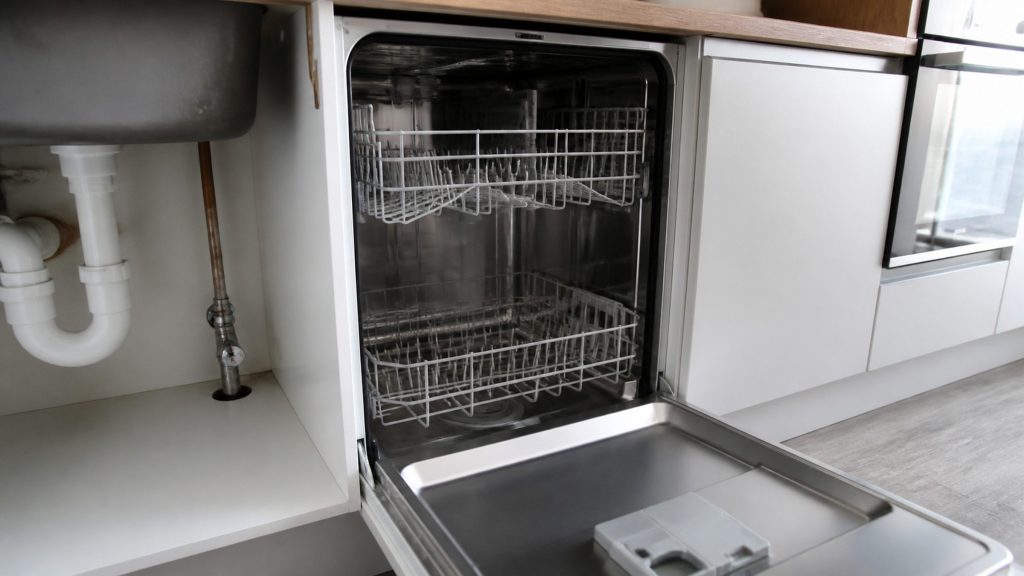
  • The empty dry tub of an integrated dishwasher standing open beside the under-sink cabinet, the water shutoff valve visible on the supply pipe
    The cycle starts and no water arrives

    Dishwasher will not fill

    The machine starts, waits and stops. Miele publishes several separate conditions for this and they point at four things, three of which are outside the appliance and free to check.

    • A cycle that stops early with dry dishes
    • A number naming the water inlet
    • Water arriving very slowly
    What it usually means
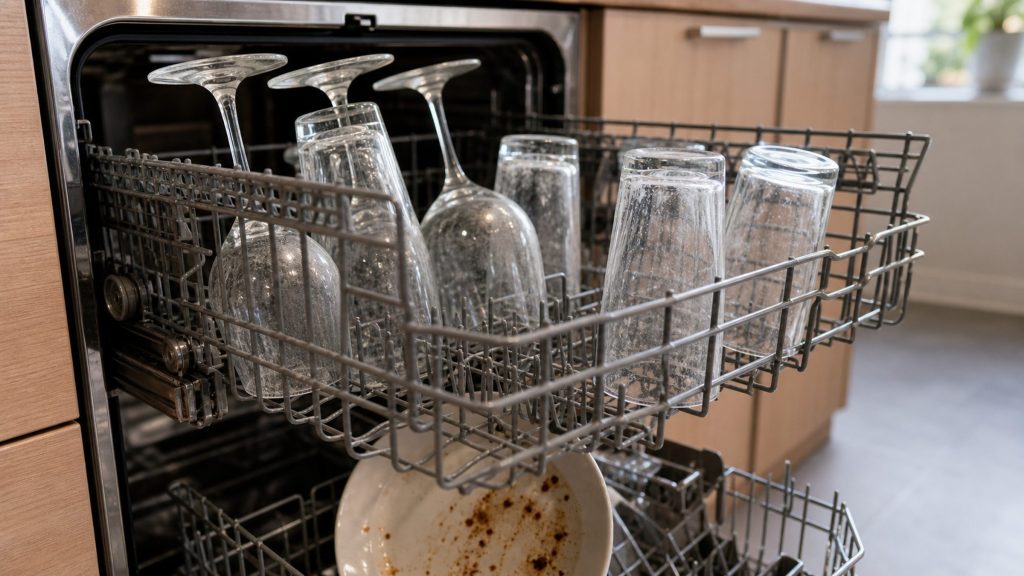
  • Wine glasses and tumblers standing upside down in a dishwasher basket, every one clouded with a white film after the cycle
    Water in and out normally, and still not clean

    Dishes come out dirty

    The machine fills, runs and empties, and the dishes are no better than when they went in. Which rack is failing is the useful clue and it is one you can read from the kitchen.

    • One rack clean and the other not
    • Gritty residue on everything
    • Worse on the short programs than the long ones
    What it usually means
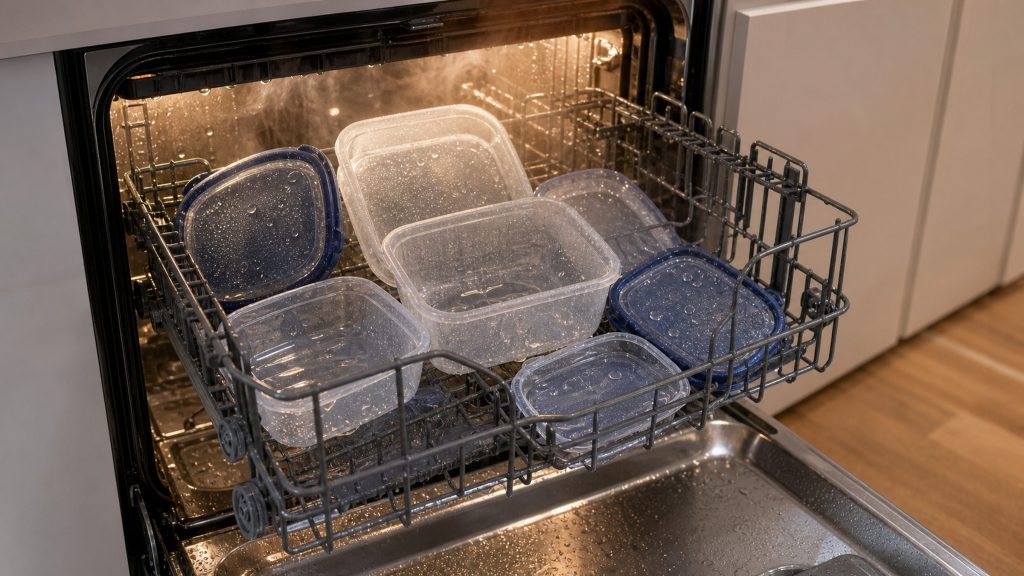
  • Plastic food containers standing in a dishwasher basket, every one still beaded with water at the end of the cycle
    Clean, and still soaking

    Dishes come out wet

    On this make that is frequently not a repair at all. A Miele dries with residual heat and, on the newer machines, by opening its own door at the end — so a machine that will not dry is often a door that is not opening or a rinse aid reservoir that is empty.

    • Plastics wet, china dry
    • Everything wet on every program
    • A door that used to open at the end and no longer does
    What it usually means
  • The door of an integrated dishwasher hanging part-way down under its own weight, the loaded lower basket sliding forward on it
    It falls open instead of holding

    Dishwasher door drops or will not shut

    A door that swings down instead of holding at an angle, or one that no longer latches. On a fully integrated machine the door is carrying your own cabinetry, and that weight is what the springs were set for.

    • The door falls open on its own
    • It will not stay shut when pushed to
    • Steam escaping at the top edge
    What it usually means
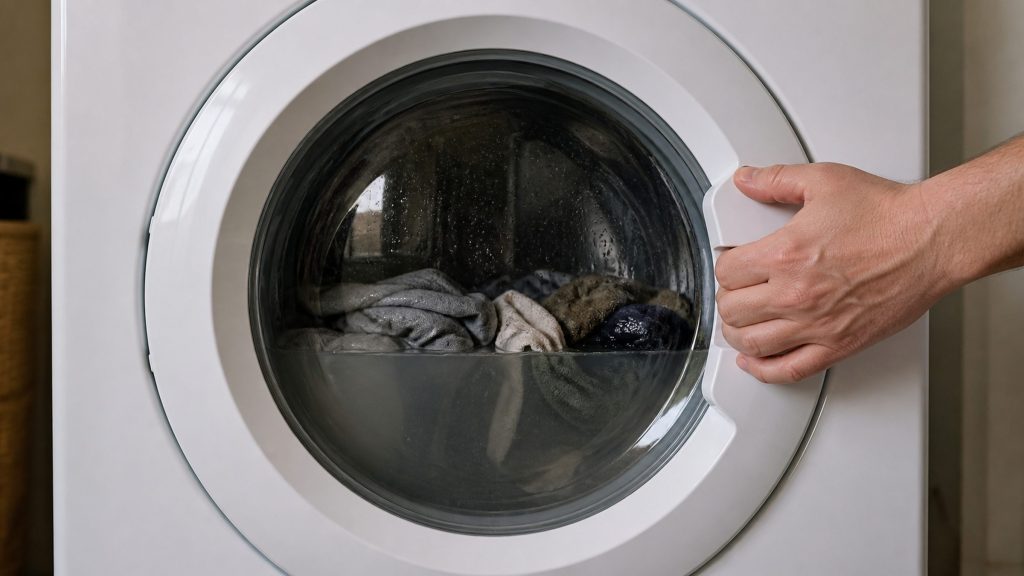
  • A hand pulling at the door of a washing machine that will not open, water standing halfway up the glass with the load submerged
    Laundry locked inside

    Washing machine door will not open

    One of the very few conditions this maker prints in words as well as a number. With a wet load behind the glass it is a same-day call, and forcing the door is the one thing that turns a part into a panel.

    • The door stays locked after the cycle
    • The display says the lock is jammed
    • Water still visible in the drum
    What it usually means
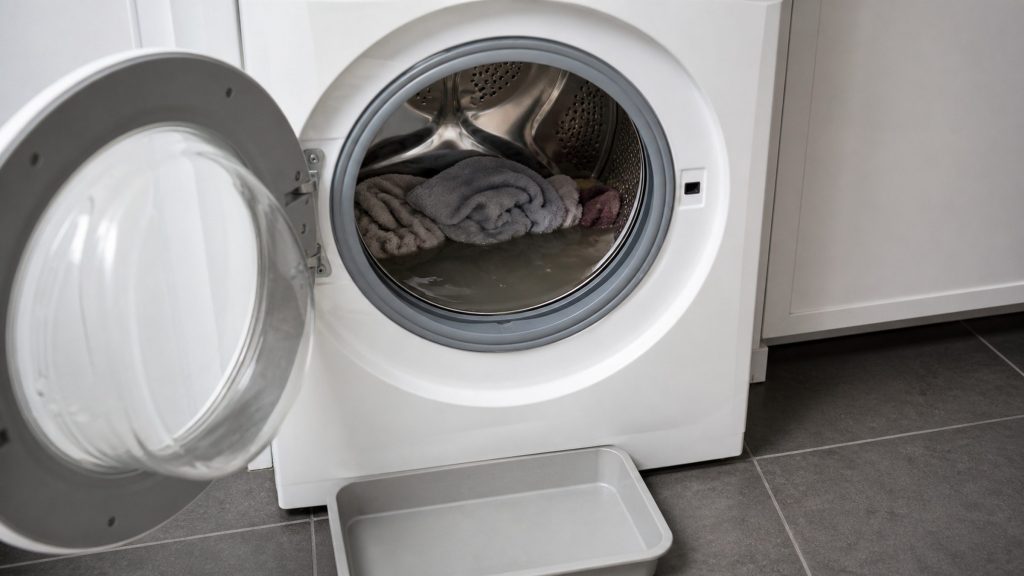
  • A washing machine standing open with water still lying in the bottom of the drum under the load, a drip tray on the floor
    The cycle stops with water in the drum

    Washing machine will not drain

    A cycle that halts part-way with the drum full, or one that finishes and leaves water behind. The W1 machines report the water path in detail, so this is usually a short diagnosis.

    • Water left in the drum at the end
    • A cycle that stops before the spin
    • Draining, but very slowly
    What it usually means
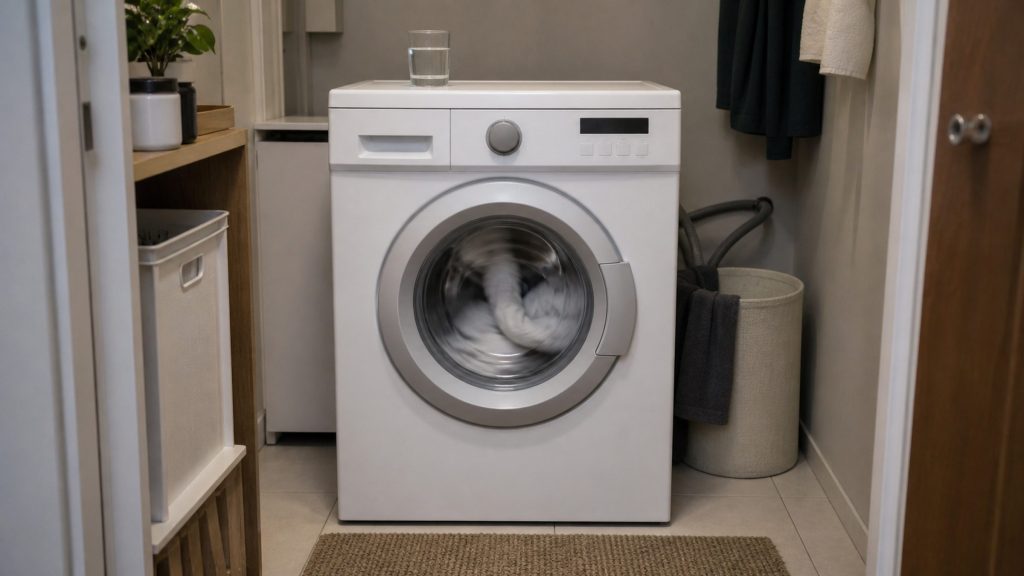
  • A washing machine mid-spin in a narrow laundry closet with a glass of water standing on its lid
    A rumble that rises with the speed

    Washing machine is loud on the spin

    Noise that arrives with the spin and quiets as it slows is the classic bearing signature — and it is worth acting on early, because a bearing allowed to run to failure can take the drum with it.

    • A rumble or roar that rises with the spin
    • Knocking during the wash rather than the spin
    • A machine that moves across the floor
    What it usually means
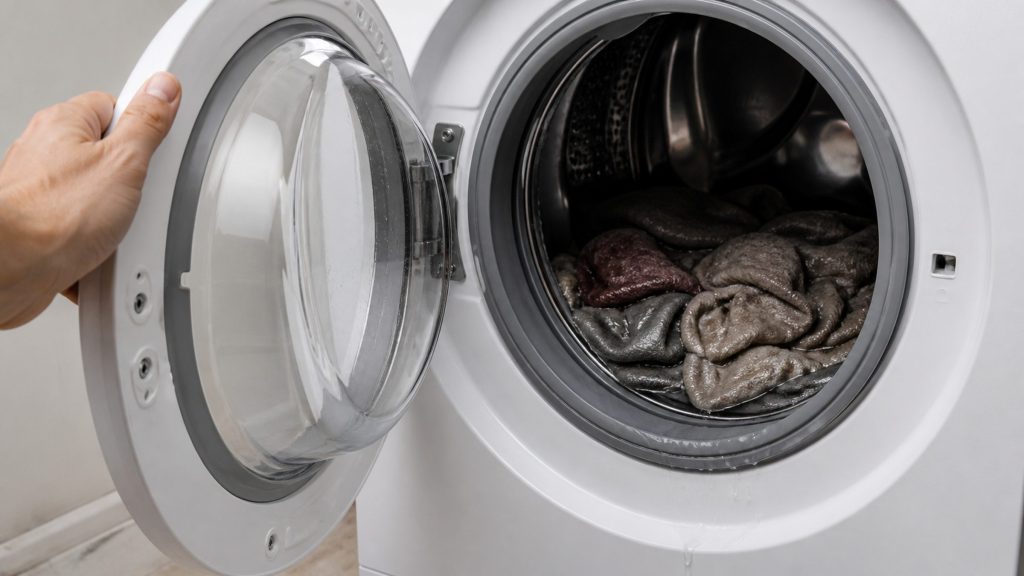
  • The door of a washing machine held open on a load so wet it is still dripping, water beaded across the drum and the gasket
    Clothes come out soaked

    Washing machine will not spin

    A machine that washes and rinses and then leaves the load dripping. On this make the first question is whether it is refusing to spin or unable to — and the difference is usually the load.

    • Clothes soaking wet at the end
    • The machine trying to spin and giving up
    • It spins on some programs and not others
    What it usually means
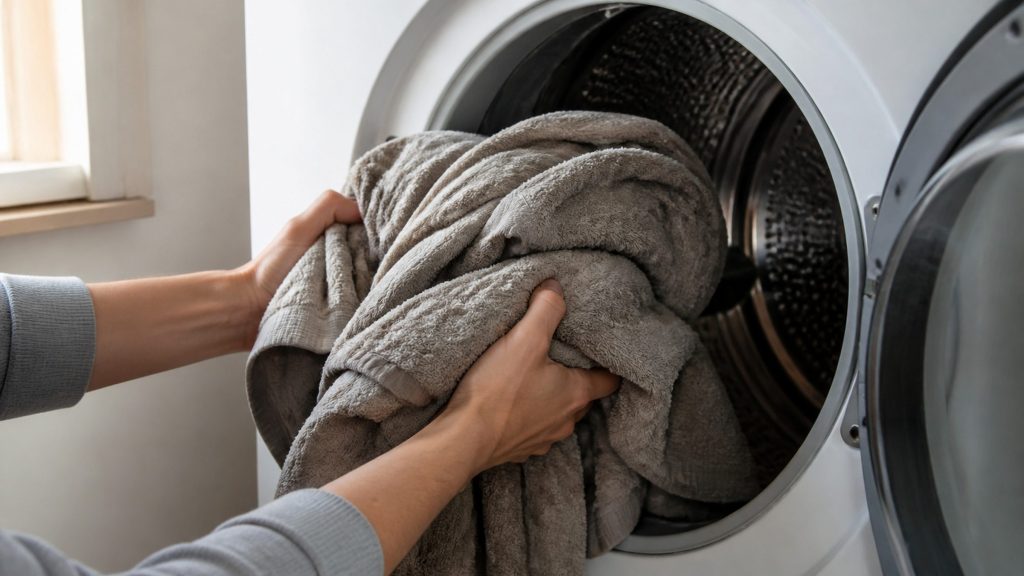
  • Two hands pulling a bundle of heavy towels out of a dryer drum, the pile still visibly damp
    Damp clothes and no error on the display

    Dryer will not dry

    The commonest complaint on a heat-pump dryer and the one most often solved without a part. This machine has no heating element — it moves heat around a sealed loop — and everything about that depends on air moving freely.

    • Damp clothes after a full cycle
    • Cycles getting steadily longer
    • No error message at all
    What it usually means
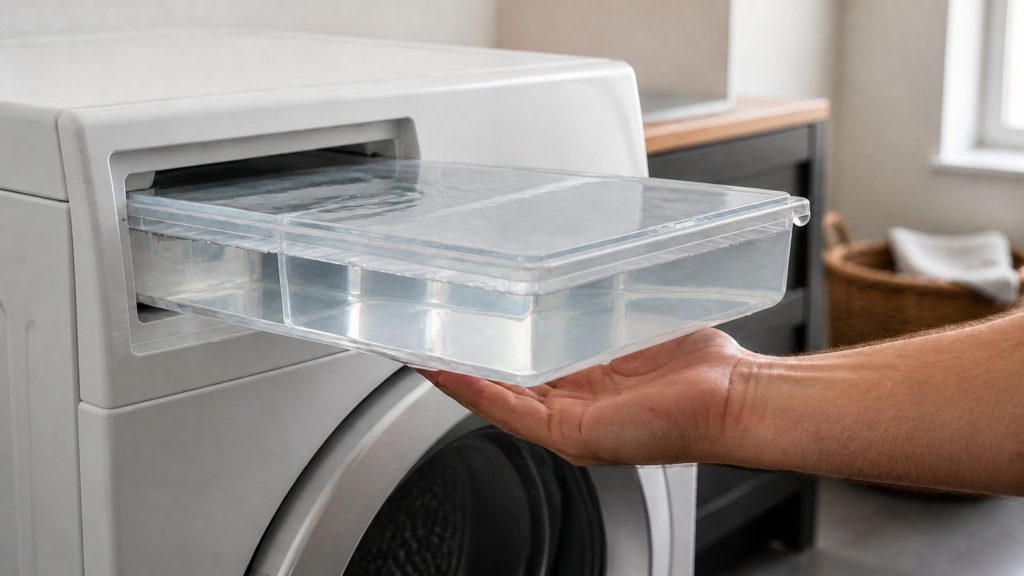
  • A hand withdrawing the condensate container of a heat-pump dryer, water standing right up to the brim
    And you have just emptied it

    Dryer says the container is full

    A ventless dryer collects the water it takes out of your clothes. When it reports a full container an hour after being emptied, the container is not the problem — the float, the pump or the drain is.

    • The message returns immediately after emptying
    • Water visible in the base of the machine
    • A plumbed machine reporting it at all
    What it usually means
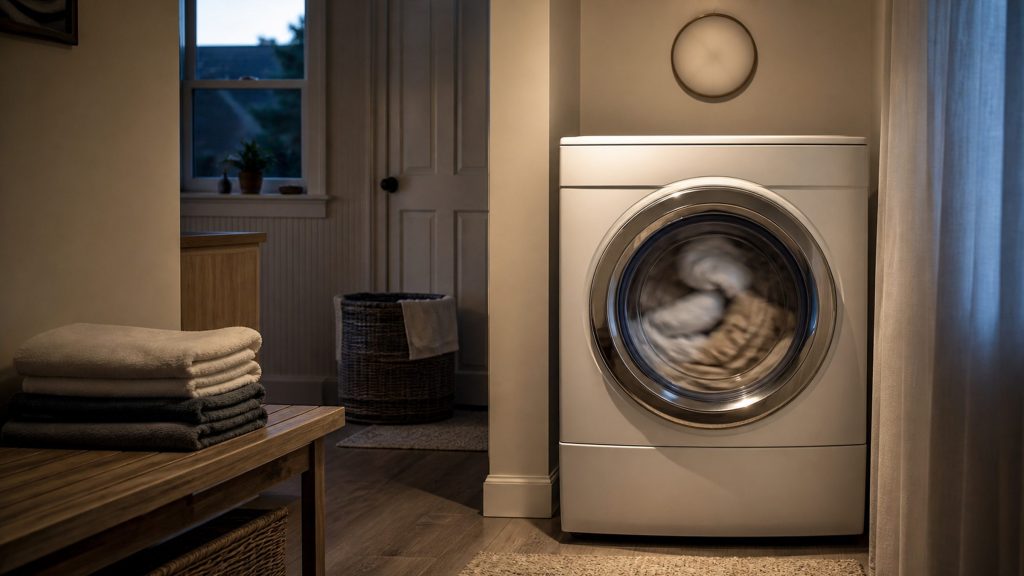
  • A washing machine still running late in the evening in a warm laundry room, a plain wall clock above it
    It finishes, eventually

    Dryer cycles are getting longer

    A heat-pump dryer is slower than a vented one by design, and that is not a problem. A cycle that is getting steadily longer than it used to be is — and it is nearly always the air path.

    • Cycles noticeably longer than a year ago
    • The machine warm to the touch on the outside
    • Clothes dry but only just
    What it usually means
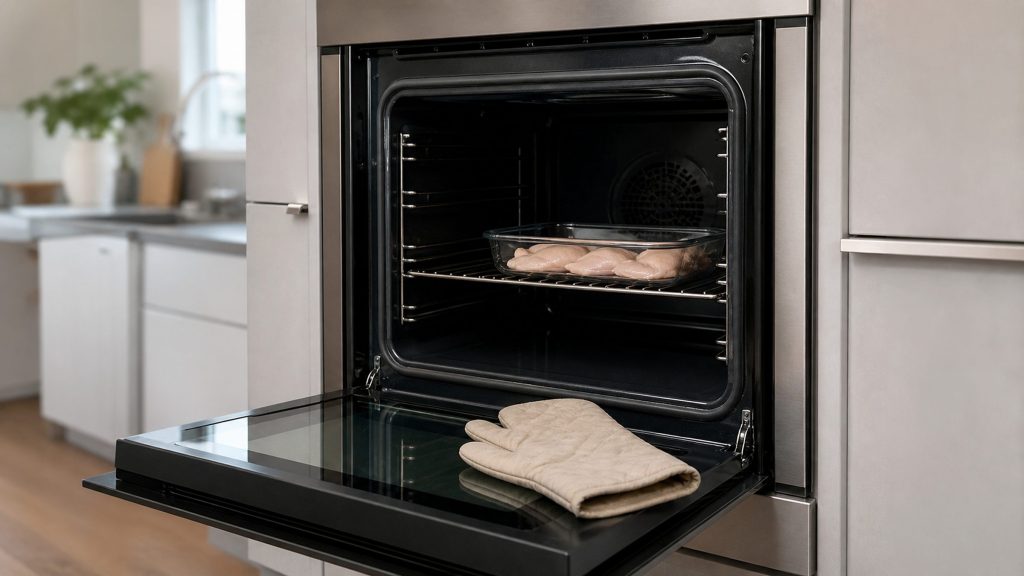
  • A glass dish of raw chicken standing on the shelf of a built-in oven whose cavity is cold and unlit, an oven glove on the open door
    Or will not hold the temperature

    Oven will not heat

    Cold, or simply wrong. An oven that is out by a consistent amount and one that swings between are different problems, and only one of them is the sensor everybody blames.

    • The cavity never reaches temperature
    • Food browning on one side only
    • An oven consistently thirty degrees out
    What it usually means
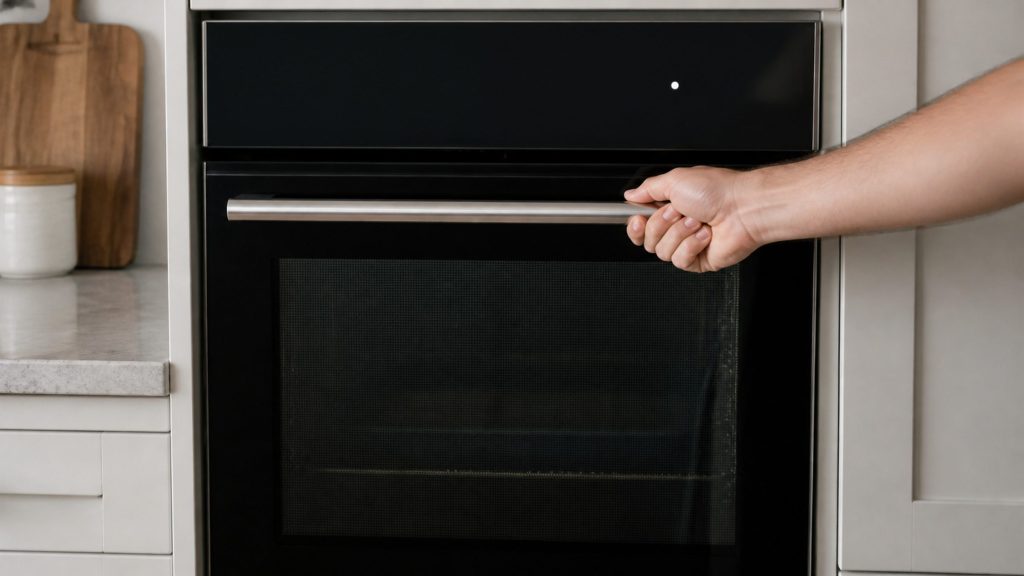
  • A hand pulling on the handle of a built-in oven whose door will not open, a single indicator lit on the dark control panel
    The cycle finished hours ago

    Oven door locked after self-clean

    The oven holds its door shut during a self-clean deliberately and releases as it cools. When it does not, that is the latch — and it is a same-day call rather than something to live with.

    • Still locked hours after the cycle
    • The clean cycle stopped part-way
    • A number on the display naming the door lock
    What it usually means
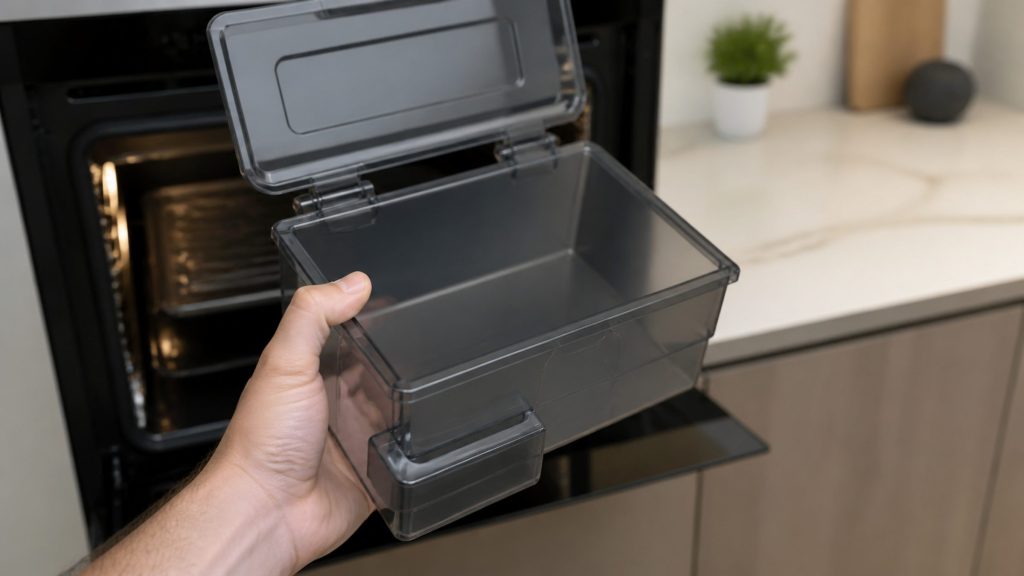
  • A hand holding the empty water container of a steam oven with its lid flipped open, the oven cavity lit behind
    With a full container in it

    Steam oven says there is no water

    A combi-steam oven that will not steam, with water sitting in front of it. There are five documented causes and one of them catches every house with a reverse-osmosis system.

    • A full container and a message about water
    • Steam programs stopping part-way
    • Weak steam and long cooking times
    What it usually means
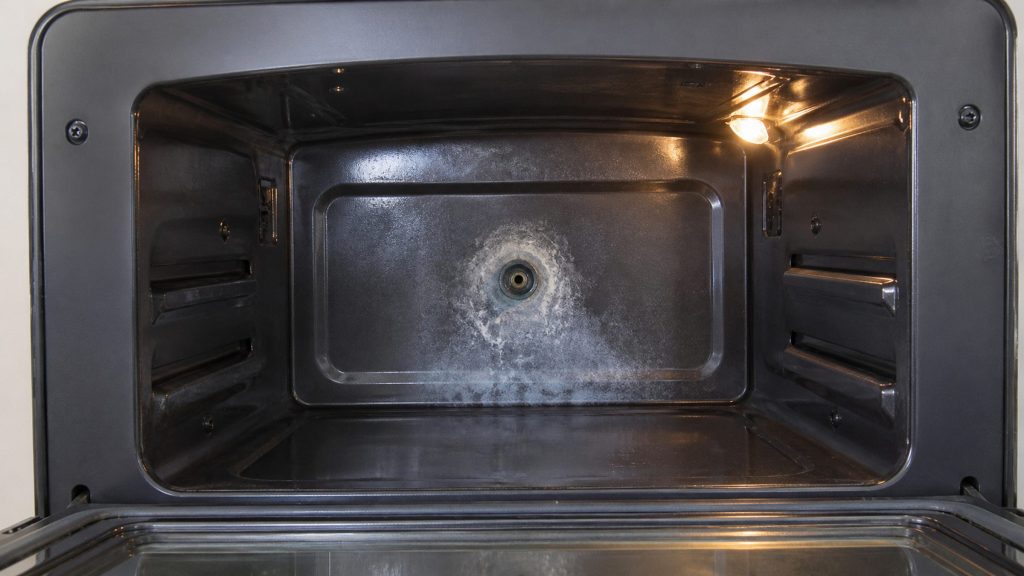
  • The stainless cavity of a steam oven with a white ring of scale spreading around the steam inlet in its back wall
    Or should be, and has not asked

    Steam oven is asking to be descaled

    The reminder is calculated from a water-hardness figure set at the factory, and South Florida water is harder than that figure — so on this coast the message arrives after the scale, not before it.

    • A descaling reminder on the display
    • Steam that is weaker than it was
    • Descaling tablets not dissolving fully
    What it usually means
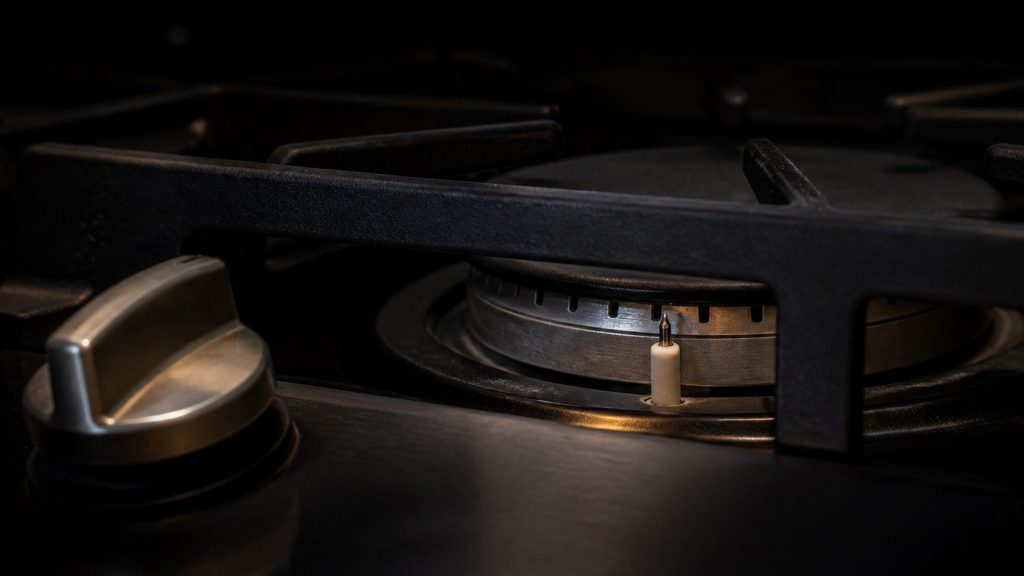
  • A gas burner ring and its white ceramic igniter under a cast grate, no flame lit, the knob turned on
    It clicks and nothing catches

    Gas burner will not light

    The appliance will tell you nothing about this — Miele publishes no code for its gas surfaces — so the whole diagnosis is in what the burner does, and the questions on the phone are more detailed for a gas call than for an electric one.

    • Clicks and never catches
    • Lights and goes out a few seconds later
    • One burner out while the others are fine
    What it usually means
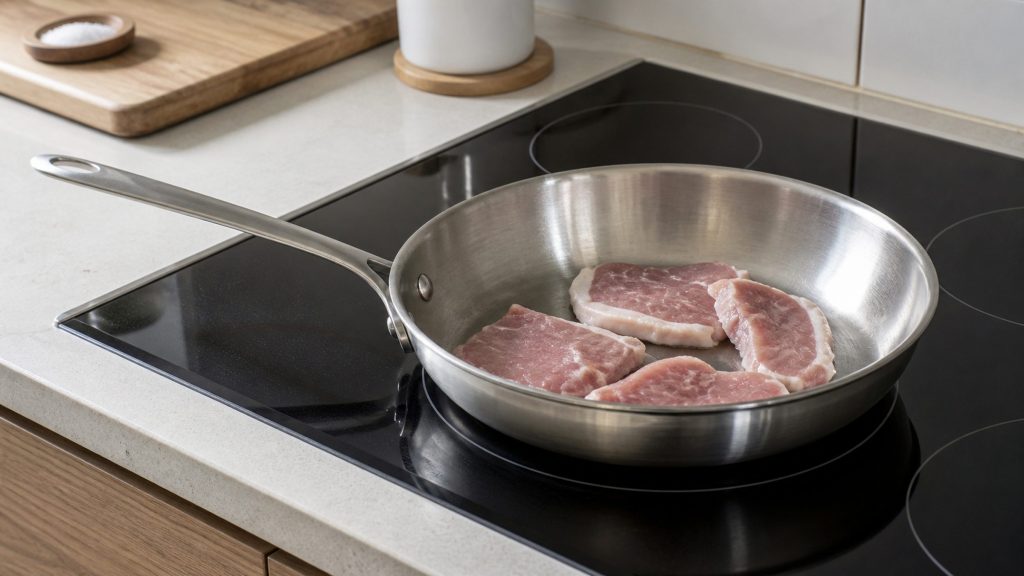
  • A stainless pan of raw pork chops standing on a black glass cooktop zone that is not heating
    Part-way through cooking

    Induction zone switches itself off

    Usually the overheating protection doing exactly what it was built to do. Miele documents what it does — cancels the Booster, reduces the power level, or switches zones off — and lists the four circumstances that trigger it.

    • A zone dropping power or switching off
    • The Booster cancelling itself
    • Worse when the oven underneath is on
    What it usually means
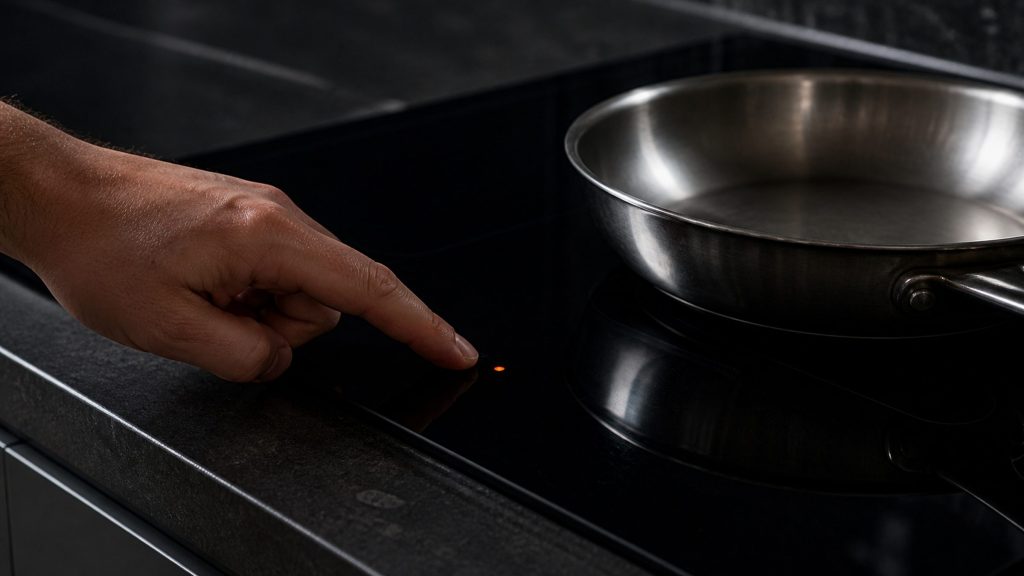
  • A finger on the dark glass of an induction cooktop where a single orange indicator is lit, a pan standing unheated on the zone beside it
    The touch panel has stopped answering

    Cooktop controls will not respond

    A sensor control reads a wet patch or a pan lid as a finger held down, and locks out. That is the free version. The other version is the touch board, and telling them apart takes five minutes.

    • No response to touch at all
    • A lock symbol that will not clear
    • It works again once the top is cold
    What it usually means
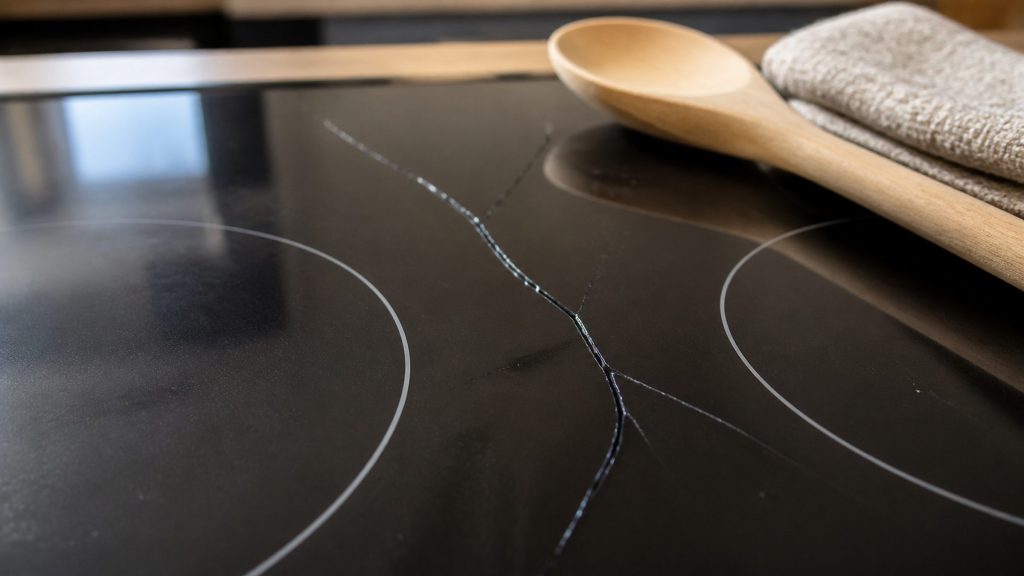
  • A branching crack running across a black glass cooktop between two zone circles, a wooden spoon and cloth resting at the back
    Stop using it

    Cooktop glass is cracked

    On an induction or radiant top the glass is the barrier between spills and the electronics underneath. A crack that reaches the edge lets liquid straight in, and this is the one thing on this site we ask people to stop using immediately.

    • A crack running to the edge
    • A chip at the frame
    • Crazing around one zone
    What it usually means
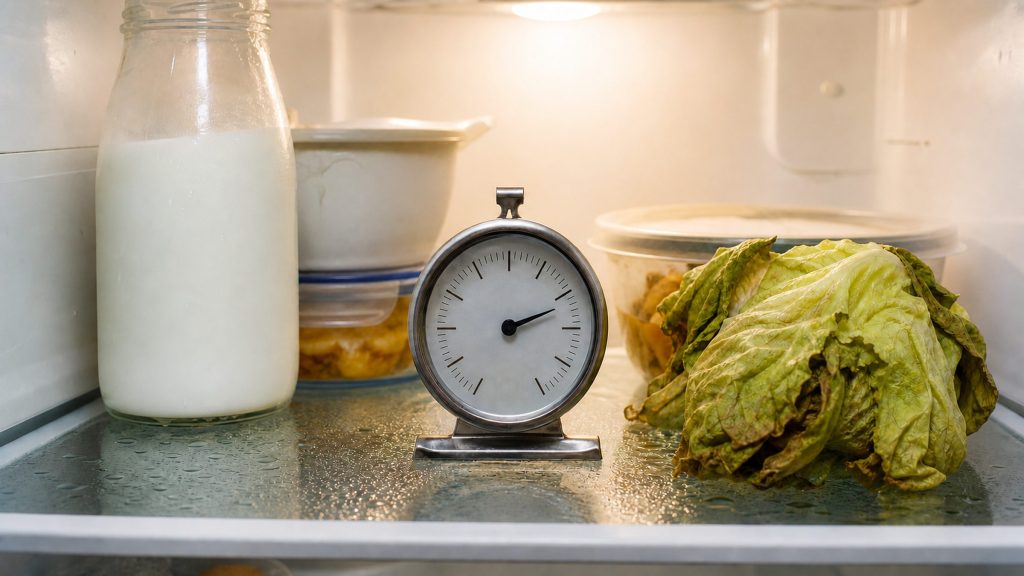
  • A dial thermometer standing on a refrigerator shelf beside curdled milk and a wilted lettuce, condensation across the glass
    The compressor sounds normal

    Refrigerator is not cold enough

    A cabinet that is running and not holding temperature. Before anything expensive is considered, one cheap thing is checked, and on a built-in cabinet in this climate it is right often enough to check first every time.

    • Fresh food warm, freezer fine
    • Everything a few degrees out
    • The cabinet running constantly
    What it usually means
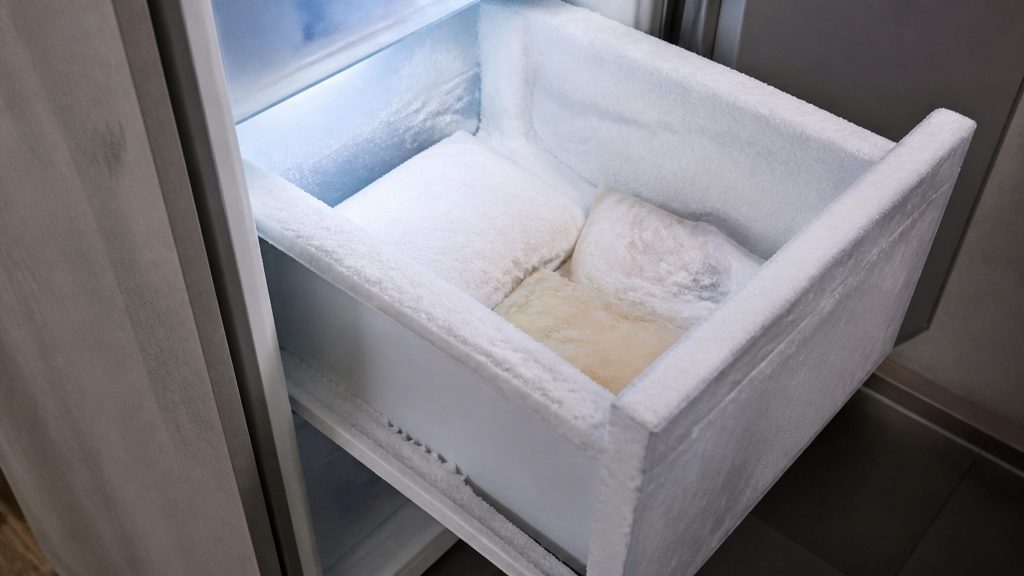
  • A freezer drawer pulled open on walls thick with frost, the packets inside welded into the ice
    On the back wall, or around the door

    Frost building up in the freezer

    Frost is moist air meeting a cold surface, so the question is always where the moist air is getting in — and in this humidity a door seal a few millimeters proud is enough to do it.

    • Frost on the back wall of the freezer
    • Ice around the door opening
    • A fresh-food side getting warmer as the frost grows
    What it usually means
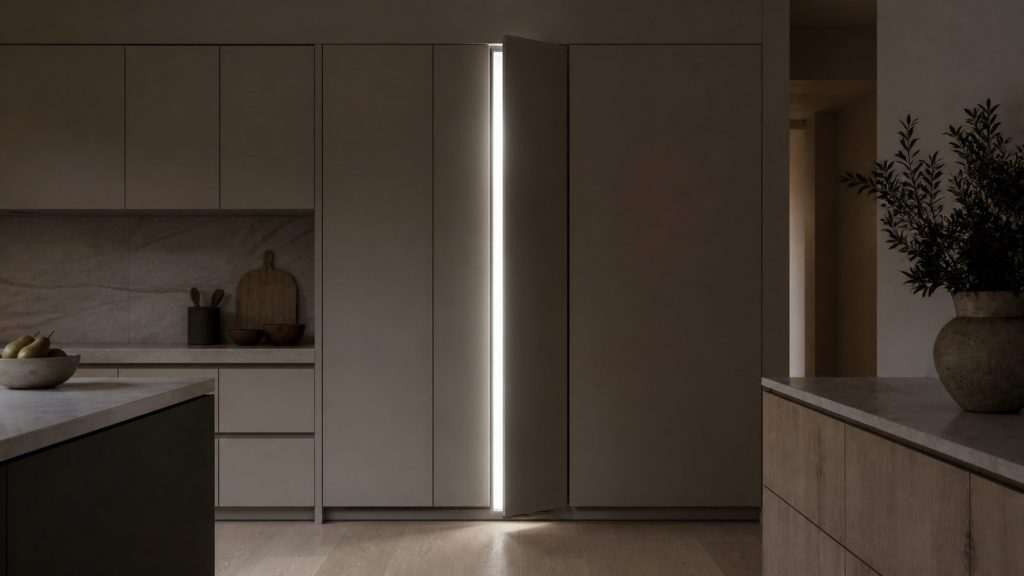
  • A vertical strip of light spilling from an integrated refrigerator door left standing ajar in a dark kitchen
    It stands a fraction open

    Refrigerator door does not close properly

    A panel-ready door is carrying your cabinetry and cabinetry is heavy. Over years it settles — and in this climate a door standing a few millimeters open is a frost problem within days, not a cosmetic one.

    • The door no longer pulls itself the last inch
    • A visible gap at the top or bottom
    • Two columns whose doors do not line up
    What it usually means
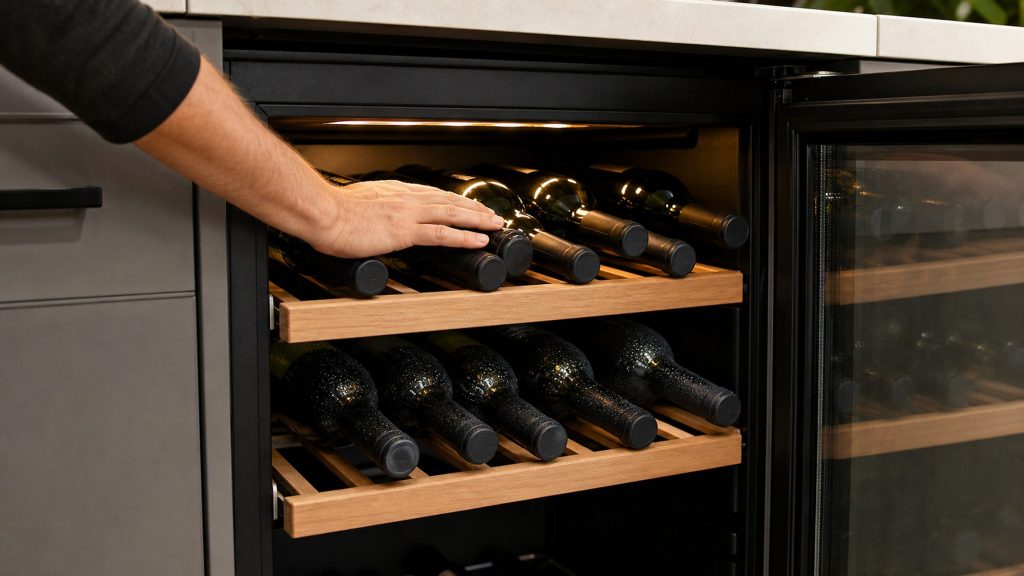
  • A hand feeling bottles on the upper shelf of a two-zone wine cabinet, the bottles on the lower shelf beaded with condensation
    And the other is perfect

    One wine zone is warm

    Diagnostically this is good news. One compressor and one condenser serve the whole cabinet, so a zone that holds correctly proves both — and the problem is downstream, smaller and cheaper.

    • The upper zone warm, the lower fine, or the reverse
    • A zone that will not come down to its setting
    • Both zones drifting together
    What it usually means
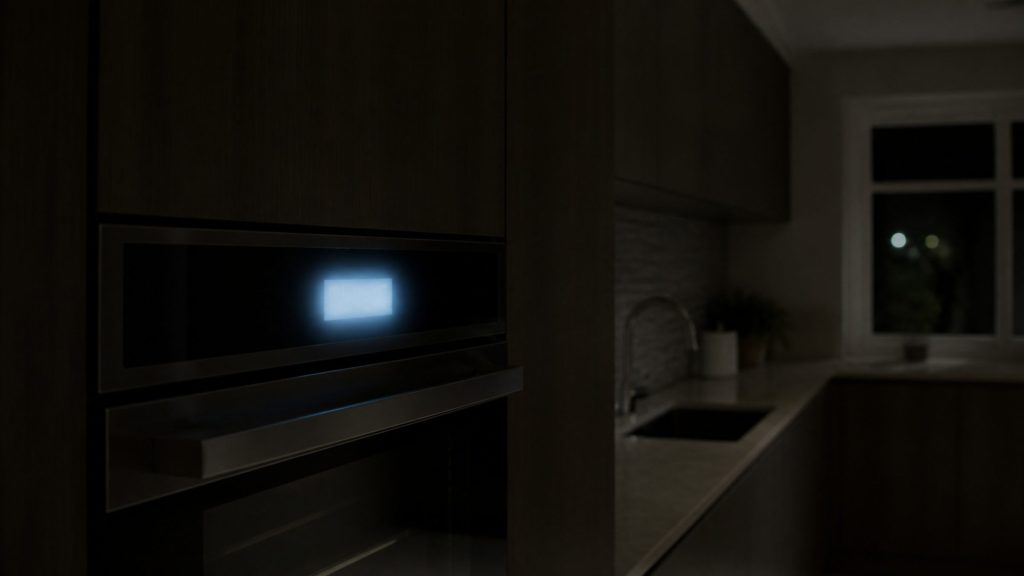
  • The lit display of a built-in appliance glowing in an otherwise dark kitchen, the readout too washed out to carry a character
    And the cycle has stopped

    There is an F number on the display

    Miele writes an F and a number on every appliance it builds. The number on its own is not the condition — the number plus the appliance is — and a good share of them are things the manufacturer asks the owner to try first.

    • A number that returns after every reset
    • The same number on two different appliances
    • A number with words beside it
    What it usually means
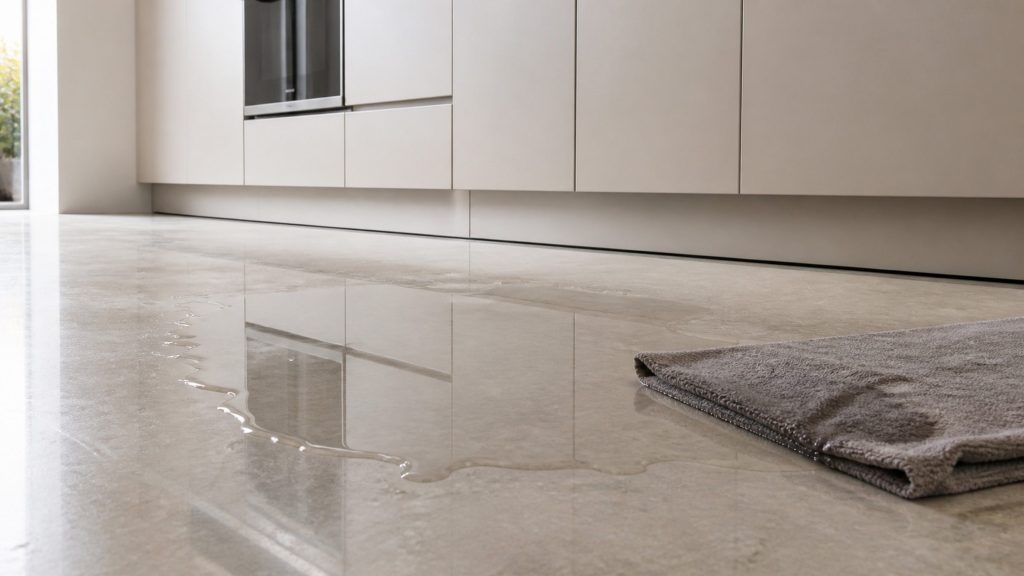
  • A thin sheet of water spread across a pale stone kitchen floor in front of a run of handleless cabinetry, a folded towel at its edge
    Under the dishwasher or the washing machine

    There is water on the floor

    Water where it should not be, and the first job is finding out whether it is coming from the appliance at all. In a kitchen with stone counters and a laundry closet with a wooden floor, the answer matters within hours rather than days.

    • A puddle at the front of the machine
    • Water appearing only during one part of the cycle
    • Damp at the back that nobody can see
    What it usually means
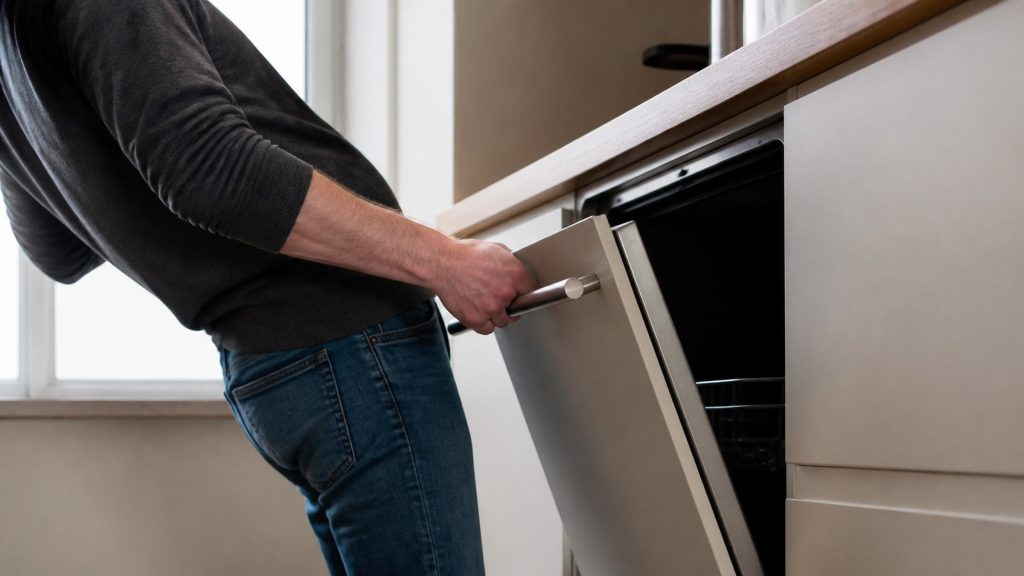
  • A person opening the door of an integrated dishwasher and leaning back and away from the opening, head out of frame
    A dishwasher, a washer, or both

    The machine smells

    Warm, damp and closed is what both of these machines are between uses, and in this climate that is all it takes. Almost none of it is a repair, and all of it is worth dealing with before it becomes one.

    • A musty smell when the door is opened
    • A smell that comes back within days of cleaning
    • Black marks in the door seal
    What it usually means
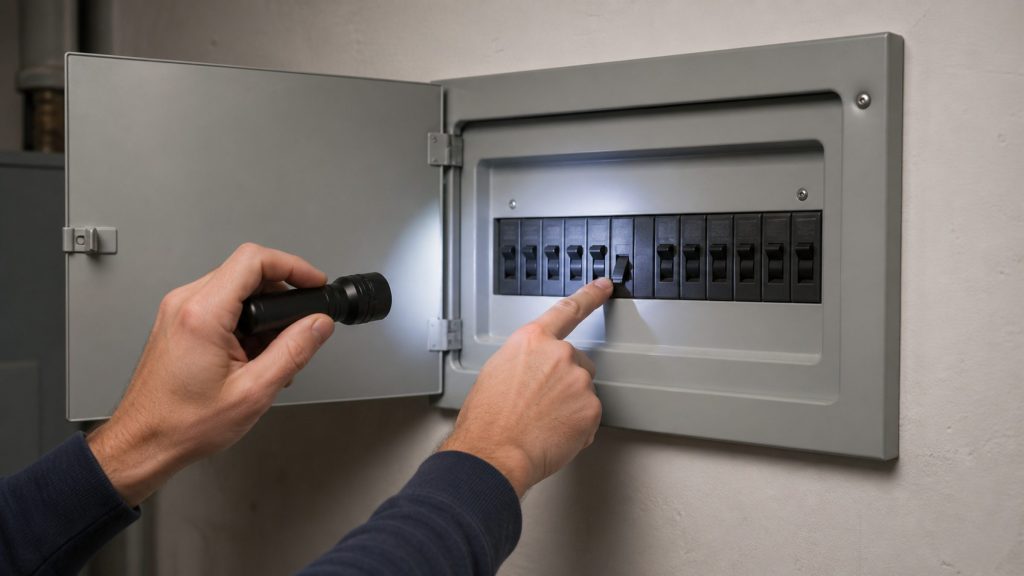
  • A finger on one tripped breaker in an opened electrical panel, a flashlight held in the other hand
    Or the RCD, every time it runs

    The appliance trips the breaker

    An appliance that trips its protection is telling you something specific, and the one thing not to do is keep resetting it. On this make the maker itself names a residual-current device tripping as a condition to report rather than to work around.

    • It trips as soon as the appliance starts
    • It trips part-way through, at the same point each time
    • It only trips when one particular appliance runs
    What it usually means
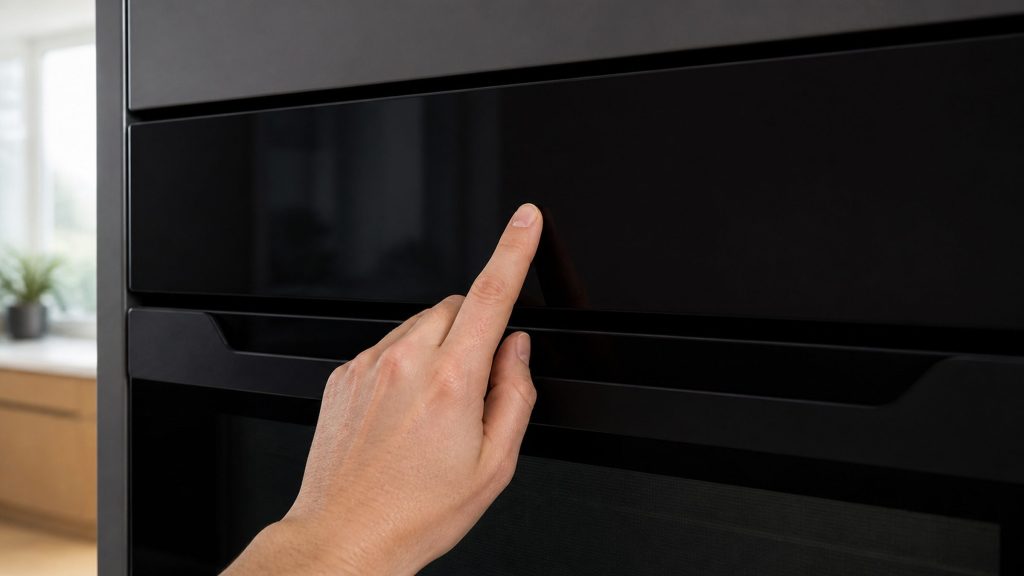
  • A finger pressing a dark glass control panel on a black built-in oven that shows nothing at all
    No lights, no response

    The appliance will not start at all

    Nothing at all is a different problem from a cycle that stops, and it has a much shorter list behind it. Half of that list is outside the appliance.

    • A completely dead panel
    • Lights on, and nothing happens when a program is started
    • It came back once and then stopped again
    What it usually means
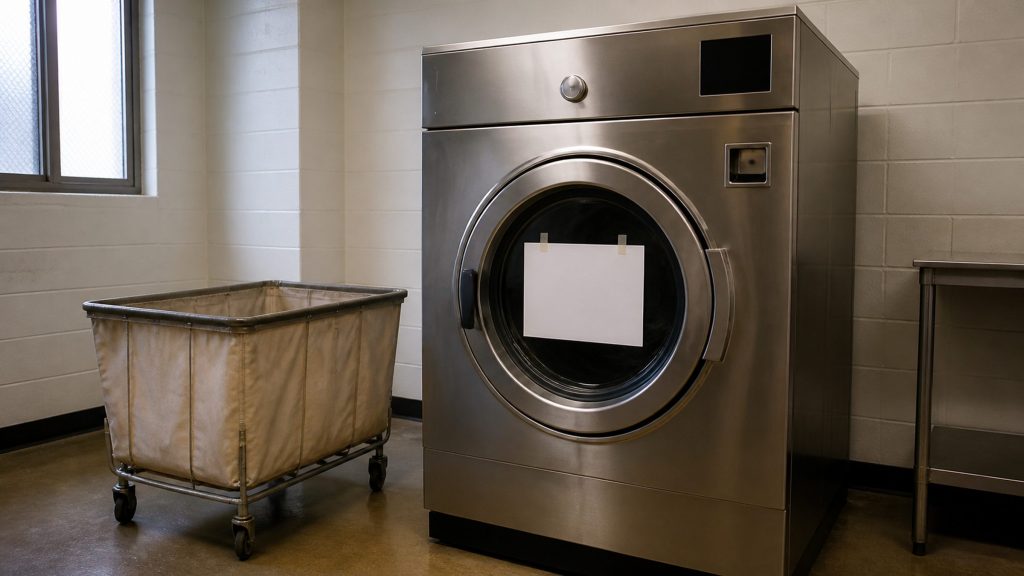
  • A stainless commercial washing machine standing idle in a block-walled laundry room with a blank sheet of paper taped across its door
    And the room is open for business

    A professional machine is down

    A Little Giants washer in a salon or a PFD dishwasher in a restaurant is not a household appliance with a busy schedule — it is equipment whose downtime costs money by the hour, and it is treated that way.

    • A machine out of service during opening hours
    • A laundry room running one machine short
    • A dishwasher that will not finish between services
    What it usually means
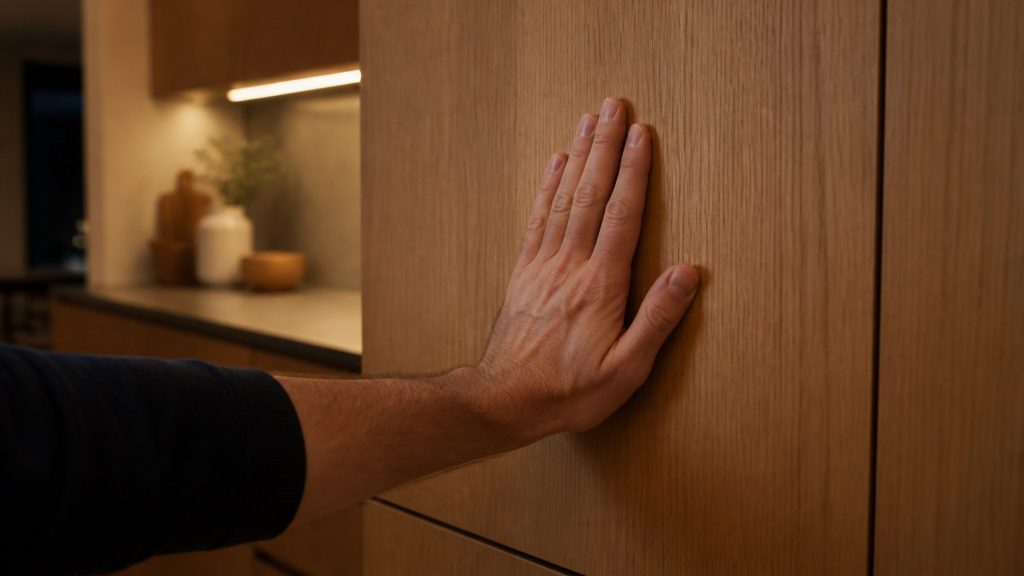
  • A flat palm pressed against the wood door front of a kitchen cabinet housing an appliance, feeling for vibration
    Nothing else has changed

    It has started making a new noise

    This equipment is quiet by design, so a change in what it sounds like is a real signal rather than a nuisance. Caught early, most of the causes are small.

    • A hum, a rattle or a grinding that was not there
    • Noise only during one part of the cycle
    • A refrigerator that has become audible from another room
    What it usually means

Why the free check is at the top of every page

The manufacturer publishes more of this than any other make we work on.

Miele names the tap, the inlet filter at the water connection, the suction hose inside a steam oven’s container, the pan a magnet will not hold, and the ventilation under an induction cooktop — as causes, in its own words, on its own support pages. So the advice at the top of each page here is not our guess at what might help. It is the maker’s own answer, repeated where you will actually find it.

The other side of that honesty: where the manufacturer says a condition cannot be remedied by the owner, this site says the same and stops. A ten-step routine that ends in booking a visit anyway is not help, and it is not here.
Look up what the display is showing
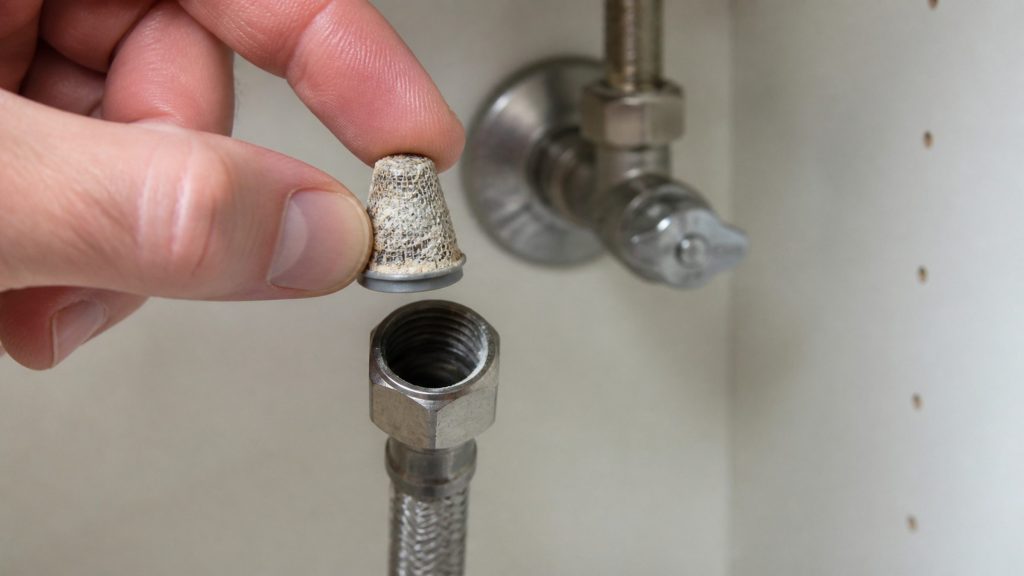
Fingers holding the small conical inlet filter from an appliance hose, its mesh clogged with scale, the shutoff valve behind

By appliance

Or start from the machine

If several of these sound like yours, the appliance page gathers them and explains how they relate.

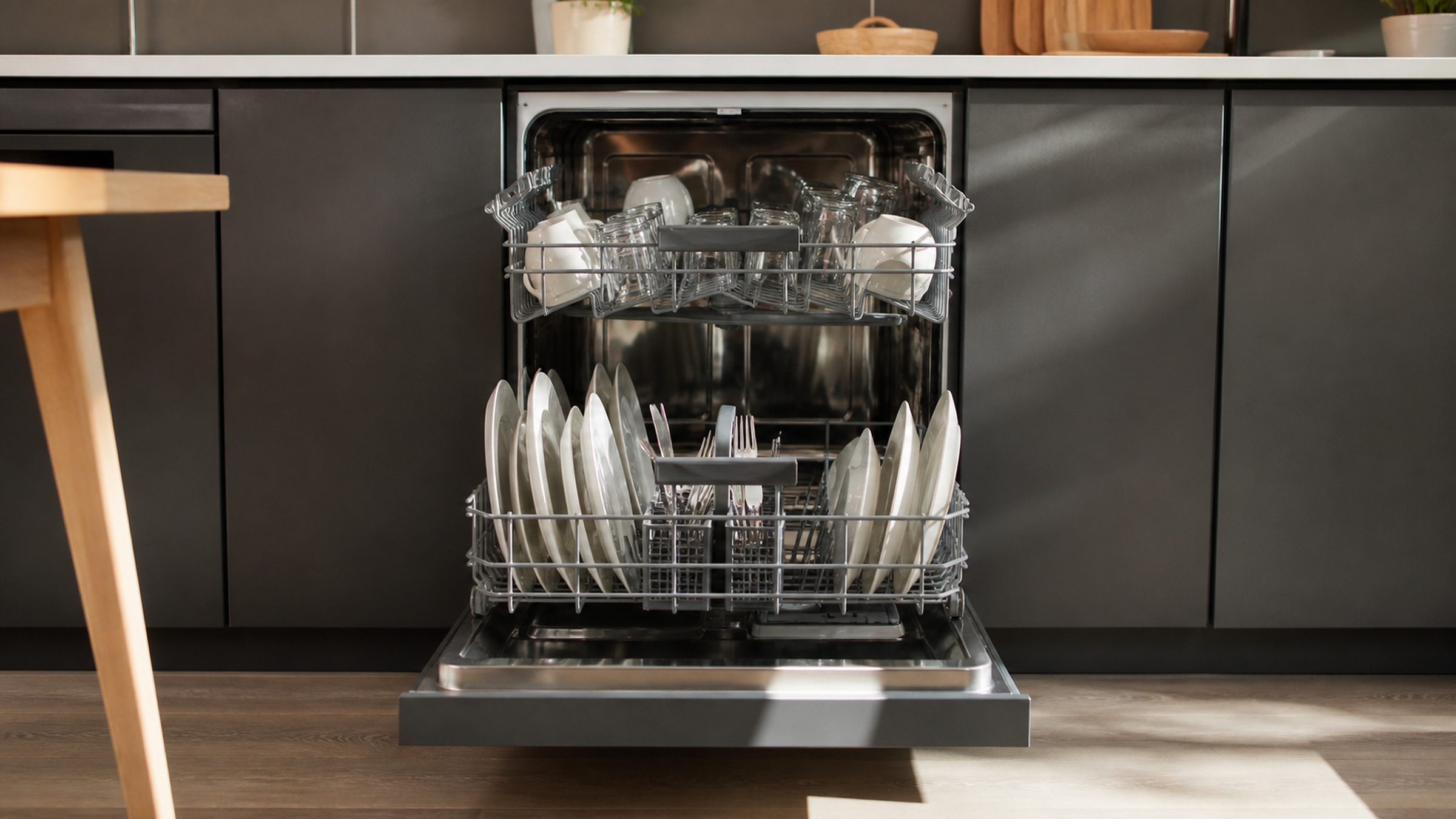
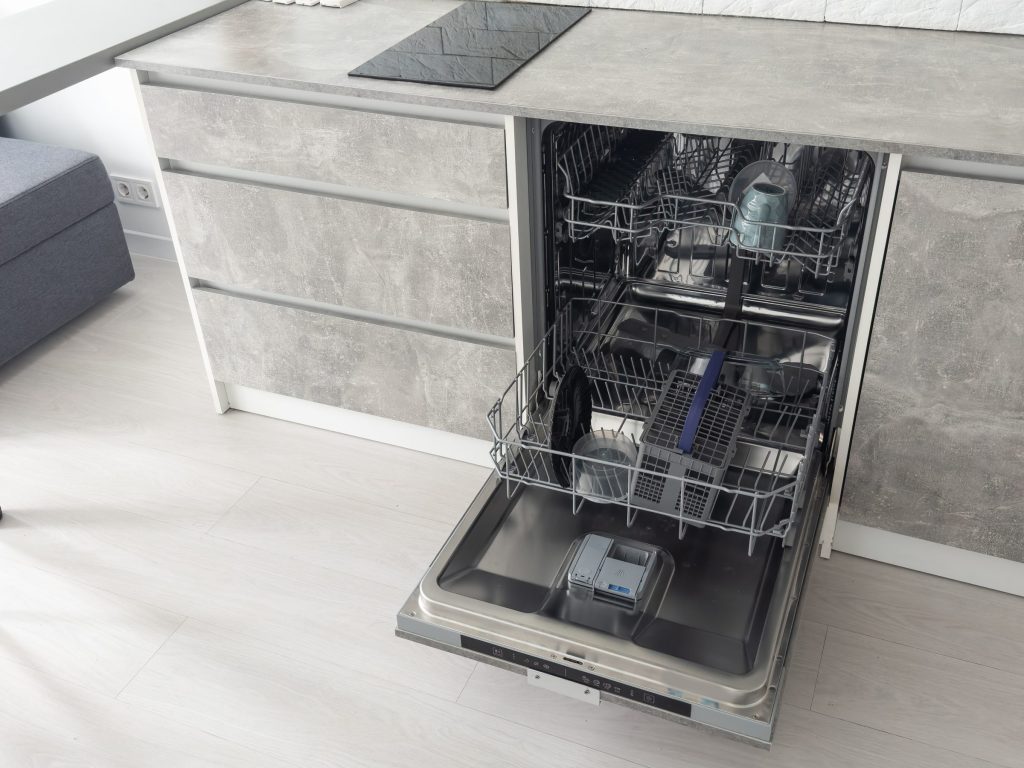
  • A fully integrated dishwasher standing open on a light floor, its stainless tub and detergent dispenser in view
    Fully integrated · Semi-integrated · Built-under · ADA · AutoDos · 18" and 24"

    Dishwashers

    The appliance this name means in most American kitchens, and the one that tells you the most about itself. A Miele dishwasher reports the water path in detail — the tap, the inlet filter, the hose, the drain — which is why more of these calls end without a part than on any other appliance in the house.

    Dishwasher repair
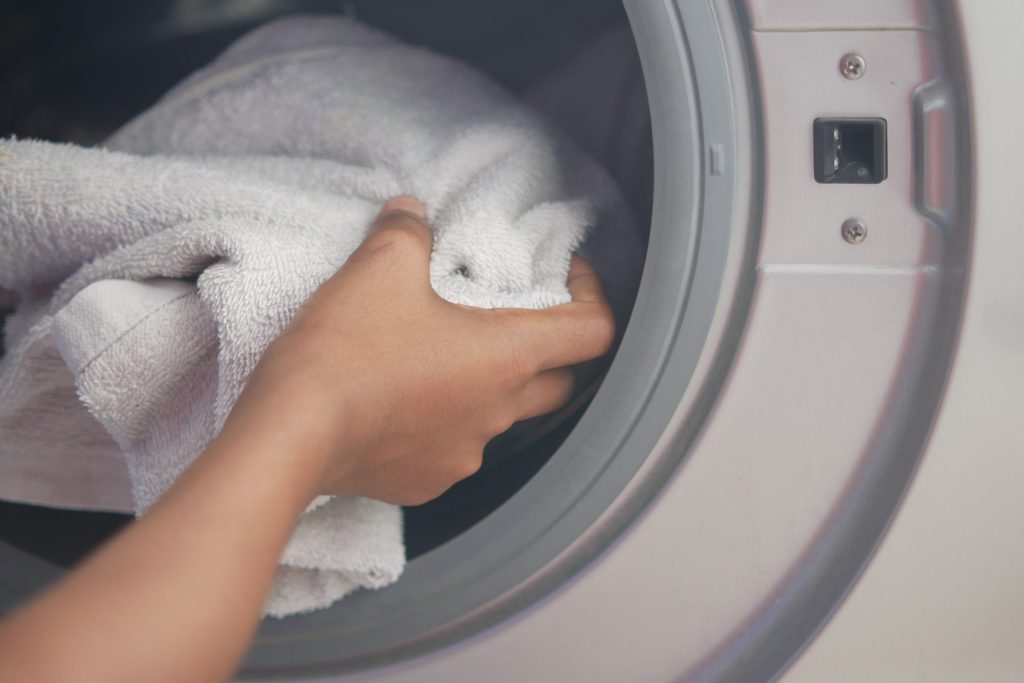
  • A hand pushing a white towel past the door seal into a washing machine drum
    W1 front-loading · TwinDos · CapDosing · 24" · 120V

    Washing machines

    A small line and a deep one: Miele sells three washing machines in the United States and builds all of them to a twenty-year design life. That changes the repair question — on a machine this age, the honest answer is usually which single part has worn rather than whether the machine is finished.

    Washing machine repair
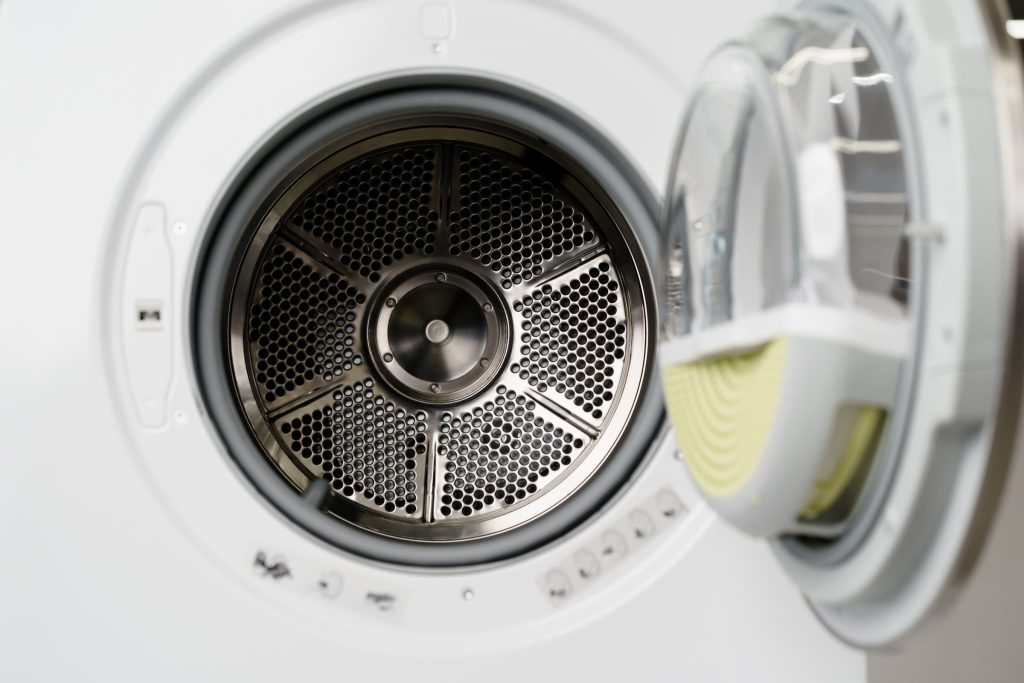
  • A tumble dryer standing open, the perforated stainless drum and its vanes lit from the door
    T1 heat pump · Ventless · 24" · 120V · No duct required

    Heat-pump dryers

    Every dryer Miele sells in the United States is a heat pump, and there is no vented model to compare it to. That is the single most useful thing to know before booking: this machine has a sealed refrigerant circuit rather than a heating element, so almost nothing that goes wrong with it is what goes wrong with an ordinary dryer.

    Dryer repair
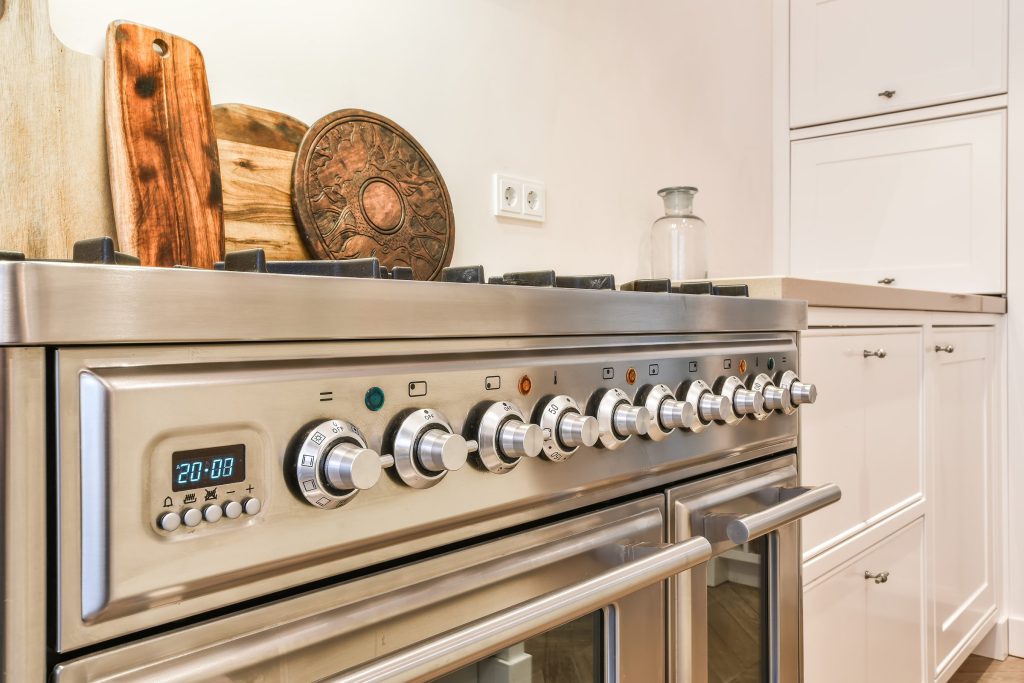
  • The control fascia of a stainless range: a row of knurled knobs, program symbols and a blue clock
    HR dual fuel · HR induction · 30", 36", 48" · Gas and LP

    Ranges

    Two appliances on one chassis, and on this make they report separately. The cooking surface and the oven cavity are different boards, so the first thing worth establishing is which half is unwell — it changes the parts, the access and the figure.

    Range repair
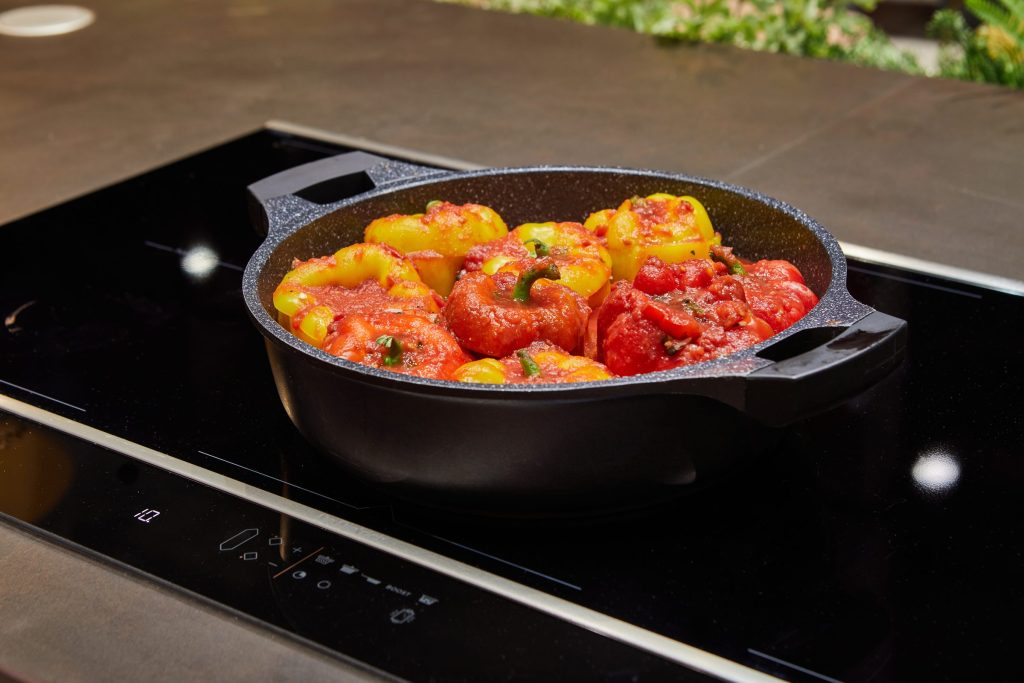
  • A black induction cooktop with its touch control strip lit, a pan of stuffed peppers on the ring
    KM induction · KM gas · KM electric · KMR rangetops · 24" to 48"

    Cooktops and rangetops

    The one place this make writes something other than F and a number: the induction tops write FE, and a bare F with nothing after it is its own condition. Induction also reports more than any other cooking surface Miele builds — and most of what it reports is about heat and about the glass rather than about a part.

    Cooktop repair
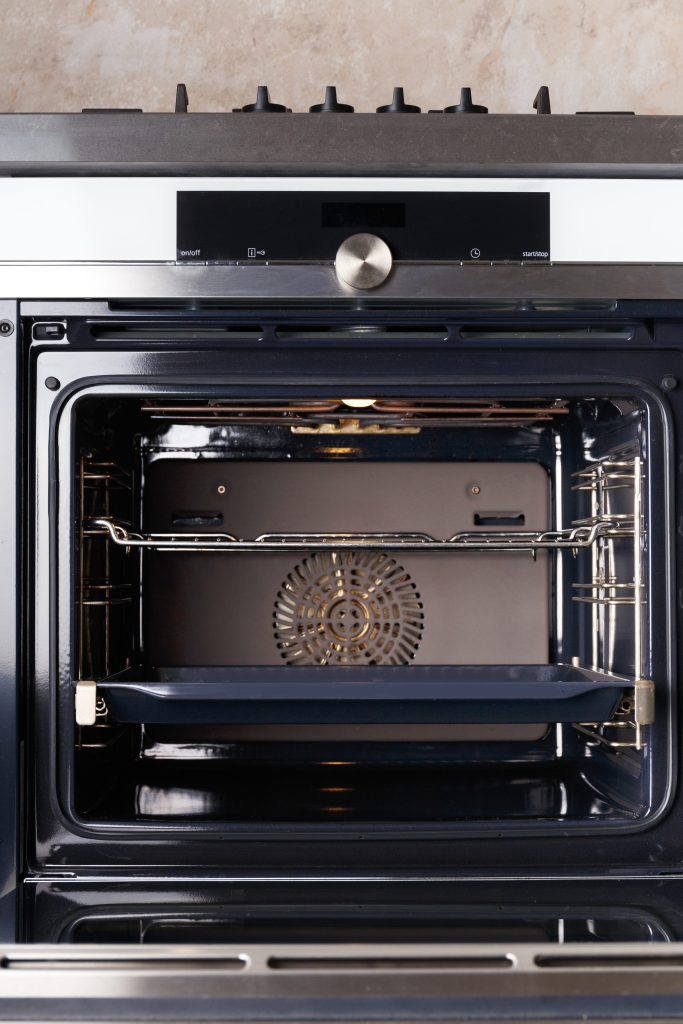
  • A built-in oven standing open on an enamelled cavity, the fan cover at the back, a tray on the lowest runner
    H wall ovens · DGC combi-steam · Speed ovens · Warming and vacuum drawers

    Ovens, steam ovens and drawers

    One control family covers the wall ovens, the combi-steam ovens, the speed ovens and the drawers, which is why they share a page. The steam side adds a set of conditions all its own — about the intake valve, the nozzle, the container, and the hardness of the water itself.

    Oven repair
  • The lit interior of a tall refrigerator column, fruit and salad on glass shelves and a crisper drawer below
    MasterCool columns · Built-in bottom mounts · Built-in freezers · Panel-ready

    Refrigeration

    MasterCool columns and built-in cabinets, most of them behind your own panels. What is distinctive about their conditions is that the cabinet usually keeps running while it reports: it is telling you a reading has stopped making sense, not that it has stopped cooling — so there is normally time to act rather than to empty it.

    Refrigerator repair
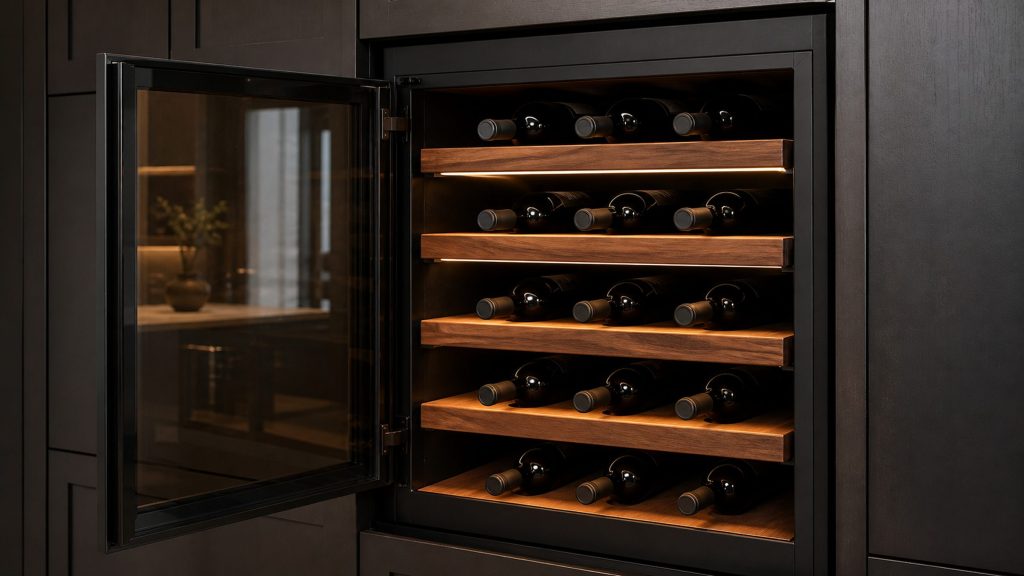
  • A built-in wine cabinet standing open in dark cabinetry, bottles lying on lit wooden shelves
    KWT built-under · MasterCool wine · Multi-zone · Panel-ready

    Wine refrigerators

    A cabinet with a job that is stricter than cold: hold a temperature steadily, hold humidity with it, and do neither of those things loudly. Zone count and access decide most of what a repair costs here, and a single wrong zone rules out the compressor immediately.

    Wine refrigerator repair
  • An on-premise laundry: white professional washers and dryers along a tiled room, a linen cart of white sheets being wheeled past
    Little Giants PWM and PDR · PFD professional dishwashers · Rotary ironers

    Commercial and professional

    The line Miele builds for places that are open for business: the Little Giants washers and dryers, the PFD professional dishwashers, and the ironers behind them. Same engineering, a different appointment — this equipment runs all day, and being down costs money by the hour.

    Commercial appliance repair

What to have ready

Three things that shorten every call

None of them takes more than a minute and together they change what comes on the van.

The model number

  • Dishwasher: on the edge of the door, visible when it is open
  • Washer or dryer: inside the door opening
  • Oven: on the frame inside the door. Refrigeration: upper interior wall

What the display says

  • The F number, exactly — and which appliance is showing it
  • Any words printed beside it, which the washing machines sometimes add
  • Whether it comes back after the power has been off for five minutes

Where the machine stands

  • Built in behind a custom panel, or free-standing
  • In a closet, a garage, or stacked on another machine
  • Whether anything else on the same circuit is affected

Not seeing yours?

This list is not the limit of what we look at.

Thirty-one descriptions cannot cover every way an appliance can go wrong, and the ones missing from a list like this are usually the odd ones — a noise only on Tuesdays, a smell only after a long cycle, a machine that behaves differently when the air conditioning is running. Those are real and we have seen most of them.

Call (305) 518-1594 or use the form above and describe it however it makes sense to you. You will get a straight answer about what it is likely to be before anybody is booked.

If there is a number on the display

A hundred and seventy-five conditions, decoded

This maker writes an F and a number on everything it builds. Every one it publishes has a page here — what it covers, what the manufacturer asks you to check, and whether it says an owner can clear it at all.

  • Miele cooktop error code E2

    Miele cooktop error code E2: the manufacturer publishes this for overheating protection has been triggered. What the code covers, what to check before you book, and why the same token means something else on another Miele machine.

    What this one means
  • Miele cooktop error code F31

    Miele cooktop error code F31: the manufacturer publishes this for a power supply condition has occurred. What the code covers, what to check before you book, and why the same token means something else on another Miele machine.

    What this one means
  • Miele cooktop error code FE44

    Miele cooktop error code FE44: the manufacturer publishes this for the cooktop has overheated. What the code covers, what to check before you book, and why the same token means something else on another Miele machine.

    What this one means
  • Miele cooktop error code FE47

    Miele cooktop error code FE47: the manufacturer publishes this for the fan is being blocked by objects in a drawer below the cooktop,…. What the code covers, what to check before you book, and why the same token means something else on another Miele machine.

    What this one means
  • Miele cooktop error code FE48

    Miele cooktop error code FE48: the manufacturer publishes this for the fan is being blocked by objects in a drawer below the cooktop,…. What the code covers, what to check before you book, and why the same token means something else on another Miele machine.

    What this one means
  • Miele cooktop error code FE49

    Miele cooktop error code FE49: the manufacturer publishes this for the fan is being blocked by objects in a drawer below the cooktop,…. What the code covers, what to check before you book, and why the same token means something else on another Miele machine.

    What this one means
  • Miele dishwasher error code F1

    Miele dishwasher error code F1: the manufacturer publishes this for water/heating temperature sensor short-circuited. What the code covers, what to check before you book, and why the same token means something else on another Miele machine.

    What this one means
  • Miele dishwasher error code F2

    Miele dishwasher error code F2: the manufacturer publishes this for water/heating temperature sensor open-circuited. What the code covers, what to check before you book, and why the same token means something else on another Miele machine.

    What this one means
  • Miele dishwasher error code F11

    Miele dishwasher error code F11: the manufacturer publishes this for the non-return valve is incorrectly positioned in the dishwasher. What the code covers, what to check before you book, and why the same token means something else on another Miele machine.

    What this one means

Describe it in your own words.

You do not need to know which part it is. What it does, when it started, and the model number are enough for us to say what is likely and what it should cost.

This article is based on:

  • Official manufacturer documentation
  • Internal repair procedures
  • Technician repair history
  • Company quality standards
Call (305) 518-1594