Common Problems
Why a Miele Dishwasher Gets Through So Much Rinse Aid
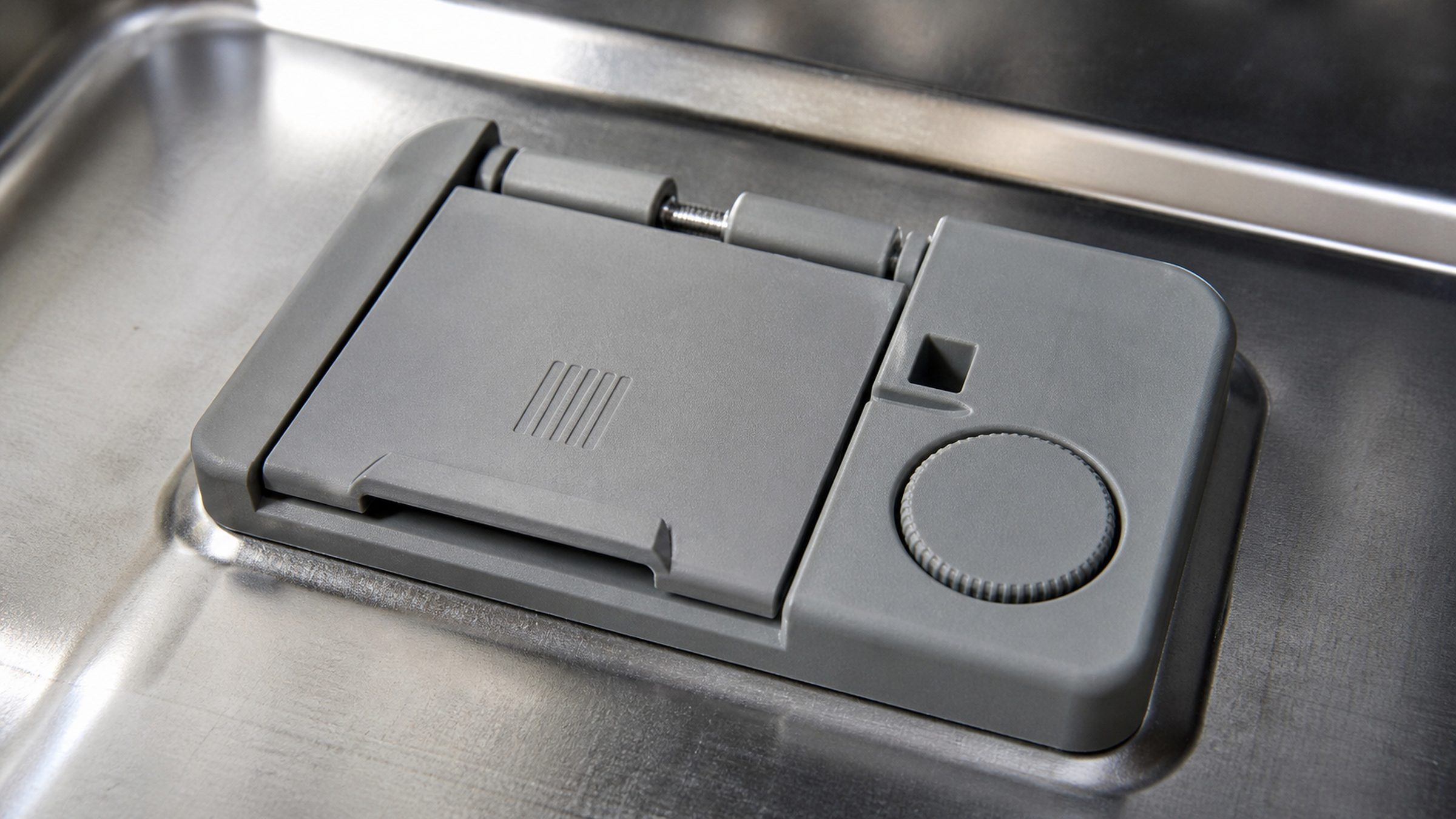
A Miele dishwasher that empties its rinse aid reservoir every couple of weeks is almost always set to a dosage higher than it needs — the setting is adjustable from roughly one to six and is often left high. The second cause is the drying method: this machine dries with residual heat and genuinely uses more rinse aid than a heated-dry dishwasher. The third, and the only one that is a repair, is a dispenser leaking into the tub, which shows as streaked glass and a reservoir that empties even on short cycles.
The full guide
Why a Miele dishwasher gets through rinse aid faster than you expect
Three separate things are usually behind it, and only one of them is a repair. Working out which you have takes about ten minutes and no tools, and it is worth doing before ordering anything, because two of the three are settings.
Start from what the stuff actually does. Rinse aid is not a cleaning product. It is a surfactant that lowers the surface tension of the final rinse so water leaves the load as a sheet rather than sitting on it as droplets. Droplets dry into spots; a sheet runs off and takes the heat of the load with it.
Cause one: the dosage is set higher than you need
The machine doses a measured amount per cycle, and that amount is adjustable — usually across a range of about one to six in the appliance's own settings. It ships in the middle, installers frequently leave it wherever it was, and nobody looks at it again.
If you are refilling every two weeks on ordinary use, this is the first place to go. Move it down one step, run a week of normal loads, and judge by the glassware rather than by the reservoir. What you are looking for is the point where glasses come out clear with no droplet marks and no faint film. Too low and you get spotting. Too high and you get streaking and a slightly slippery feel.
Cause two: this machine genuinely uses more, and here is why
A Miele dishwasher does not have a long heated-dry phase. It dries using the heat left in the load and the tub at the end of the cycle, and on the newer machines by opening its own door to let the moisture out.
That method is quieter, gentler on plastics and considerably more efficient. It is also much more dependent on water leaving the load properly, which is precisely what rinse aid is for. So a Miele on a correct dosage will get through more of it than an American dishwasher with an element in the base — and that is the appliance working as designed rather than a problem to solve.
Worth knowing before you spend an afternoon hunting for a leak that is not there.
Cause three: the dispenser is leaking, and this one is a repair
The version that is genuinely wrong. A dispenser that no longer seals lets its contents seep into the tub continuously rather than releasing a measured dose at the right moment.
How to prove it in one cycle: empty the machine completely, add no detergent, and run the shortest rinse program. When it finishes, feel the water in the base of the tub and look at the inside of the door. Slippery water, foam, or streaks on the glass mean the dispenser is emptying itself. A correctly working machine on a rinse-only cycle should have added nothing at all.
That is a part rather than a setting, and it is worth dealing with — apart from the cost of the product, a load washed in a tub full of surfactant comes out streaked no matter what you do.
What people mistake it for
Wet dishes. That is the opposite problem: rinse aid empty rather than overused. If plastics come out soaking, fill the reservoir before assuming anything.
Cloudy glass. That is the salt reservoir and the water softener, which is a different reservoir with a different job. Cloudiness that does not wash off is mineral, and no amount of rinse aid fixes it.
A film on everything. Could be too much rinse aid, and could be detergent that is not dissolving because the water is cold or the compartment is blocked. Run the same rinse-only test above: if the film appears with no detergent in the machine, it is the dispenser.
Getting the setting right, once
Do this over three weeks and then forget about it. Week one, note the current dosage and change nothing. Week two, drop it one step. Week three, drop it one more if the glasses are still clear.
Stop when you see the first hint of droplet marks and go back up one. That is your number for this water and this detergent, and the only thing that will change it is switching detergent — which is worth remembering, because a machine that suddenly seems to overdose is very often a machine that changed products.
What it costs to get this wrong in either direction
Set too low, the load comes out spotted, and people respond by running hotter or longer programs — which uses more energy and does not fix a surface-tension problem.
Set too high, the machine gets through the product quickly and leaves a faint film that people mistake for hard-water residue, which then sends them to the salt reservoir looking for a problem that is not there.
Neither costs a great deal in money. Both cost the same thing: a fortnight of blaming the wrong reservoir. That is why the ten-minute rinse-only test above is worth doing before adjusting anything — it separates the dispenser from the setting, and the setting from the water, in one cycle with nothing in the machine.
Independent Miele service across Miami-Dade, Broward and Palm Beach. We are not affiliated with, authorized by or endorsed by any manufacturer.
If it turns out to be a repair
What this leads to, and what it costs
Every job on this site is priced the same way: an on-site diagnostic first, the figure agreed in writing before anybody starts.
-
Fully integrated · Semi-integrated · Built-under · ADA · AutoDos · 18" and 24" Dishwashers
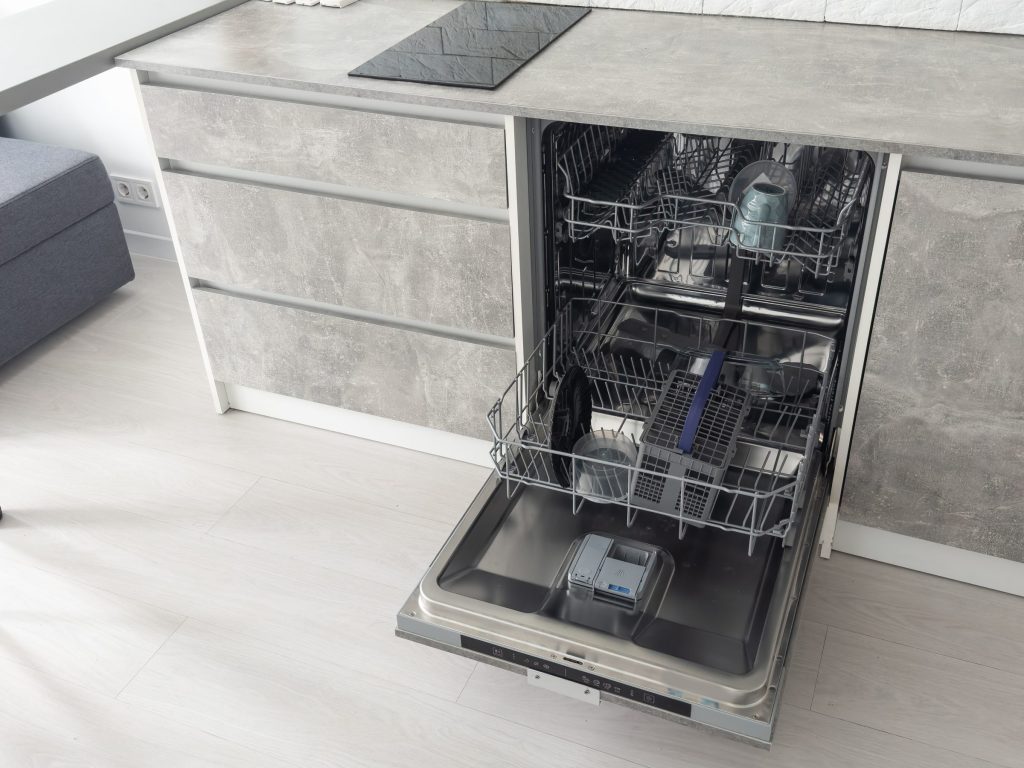
The appliance this name means in most American kitchens, and the one that tells you the most about itself. A Miele dishwasher reports the water path in detail — the tap, the inlet filter, the hose, the drain — which is why more of these calls end without a part than on any other appliance in the house.
- A cycle that stops with water still in the tub
- A number on the display that comes back after every reset
- Dishes coming out spotted, or coming out wet
-
Clean, and still soaking Dishes come out wet
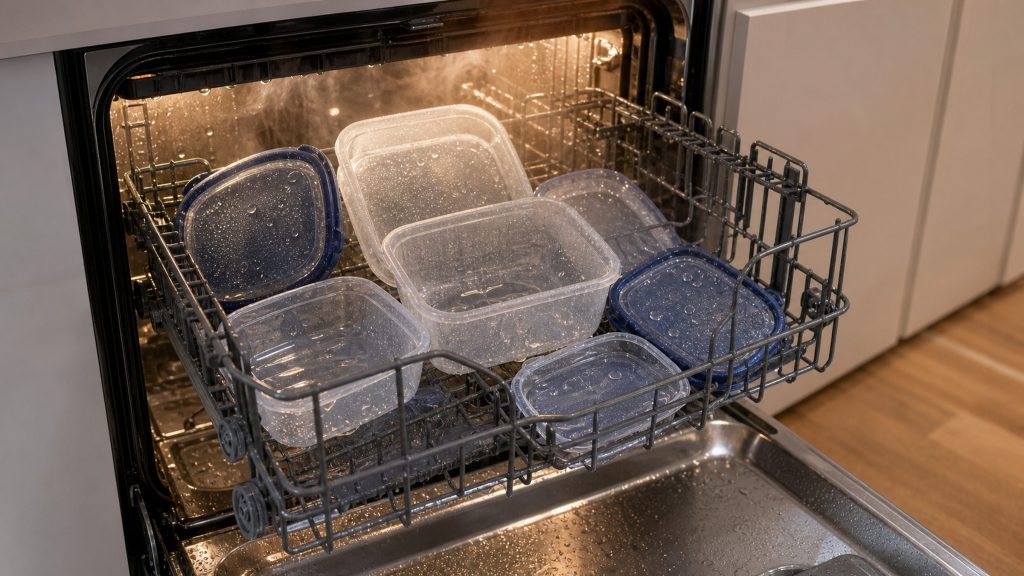
On this make that is frequently not a repair at all. A Miele dries with residual heat and, on the newer machines, by opening its own door at the end — so a machine that will not dry is often a door that is not opening or a rinse aid reservoir that is empty.
- Plastics wet, china dry
- Everything wet on every program
- A door that used to open at the end and no longer does
Questions people ask about this
What dosage should it be on?
Start in the middle and move one step at a time, judging by the glasses rather than by the reservoir. Too low leaves droplets that dry as spots; too high leaves a faint film and streaking. One step a week is enough to find the right setting.
Can I turn rinse aid off completely?
You can, and on this make you probably should not. Because it dries with residual heat rather than a heating element, rinse aid is doing structural work here — turning it off is the fastest way to a machine that washes perfectly and dries nothing.
How do I know the dispenser is leaking rather than dosing?
Run a rinse-only cycle with nothing in the machine and no detergent. If the water in the tub feels slippery or the glass door has streaks afterwards, the dispenser is letting go of its contents when it should not be.
Does hard water make it use more?
Indirectly. Hard water needs more help to sheet off, so on this supply the correct dosage is genuinely higher than it would be elsewhere. That is not the same as the setting being wrong — it is why the middle of the range is a starting point rather than an answer.
It only started after I switched detergent.
Then that is very likely it. All-in-one tablets contain their own rinse agent, and a machine dosing on top of them can look like overconsumption while actually producing over-treated dishes. Drop the dosage a step or two and see.
Common Problems
More guides like this one
-
Why Does My Miele Oven Take So Long to Preheat? Cavity Size, or a Sensor
An oven that says it is ready is making a claim you can check with a $10 thermometer. That check separates characteristic from failing in twenty minutes.
Read more -
Why Does My Miele Dryer Take So Long to Dry? Design, or a Problem
Slow is the design. Slower than last year is a message. Telling the two apart takes one cycle and no tools.
Read more -
When a Miele Dishwasher Smells Bad: Four Smells, Four Causes
Rotten eggs, wet dog, fish and burning are four different problems, and only the last one is urgent. Which one you have decides everything.
Read more
Tell us the model number and what it is doing.
This article is based on:
- Official manufacturer documentation
- Internal repair procedures
- Technician repair history
- Company quality standards