Safety & Risks
Hurricane Season: How Long Food Will Last in Fridge and Freezer After an Outage
Food will last about four hours in an unopened refrigerator after a power outage, and 24 to 48 hours in a freezer — 24 if it is half full, 48 if it is full. Both figures assume the door stays shut, which is the part that fails in practice. A heavy built-in column holds a little longer than a freestanding unit because of its mass and insulation, but not enough to change the rule. Throw out perishable food that has been above 40°F for more than two hours.
The full guide
How long food will last in fridge and freezer when the power goes out
The federal guidance is clear and it is worth committing to memory before the season starts, because nobody looks anything up during a storm.
A refrigerator holds safe temperatures for about four hours with the door kept shut.
A freezer holds for about 48 hours if it is full, and about 24 hours if it is half full. Also with the door kept shut.
Both numbers assume the door stays closed, and that is the assumption that fails. Every opening costs a meaningful fraction of the remaining time, and in a house where several people are getting through a long afternoon, the four hours becomes two and a half without anybody noticing.
The rule that actually decides what to throw away
Not the clock on the wall. This one:
Perishable food that has been above 40°F for more than two hours should be discarded.
Meat, poultry, seafood, eggs, milk, soft cheese, cut fruit, cooked leftovers, anything with mayonnaise. When in doubt, out — and specifically, do not judge by smell or appearance. The microbes that matter here do not reliably announce themselves, and that is exactly why the rule is written in degrees and hours instead of adjectives.
Hard cheeses, butter, whole uncut fruit and vegetables, jams, condiments and anything shelf-stable are a different category and are generally fine.
Whether a built-in column helps
A little, and it is worth understanding the limit.
A MasterCool or a built-in column is heavier, better insulated and installed into cabinetry that itself adds thermal mass. A full cabinet holds cold longer than an empty one, and the food in it is part of the thermal mass.
So yes, you get some margin. Not a different rule — treat the four hours as the number and any extra as luck.
The one genuinely useful thing about built-in refrigeration during an outage is that it is heavy and awkward to open casually, which turns out to matter more than the insulation does.
What to do before the storm rather than during it
This is the part worth acting on, because everything above is what you do when it is too late.
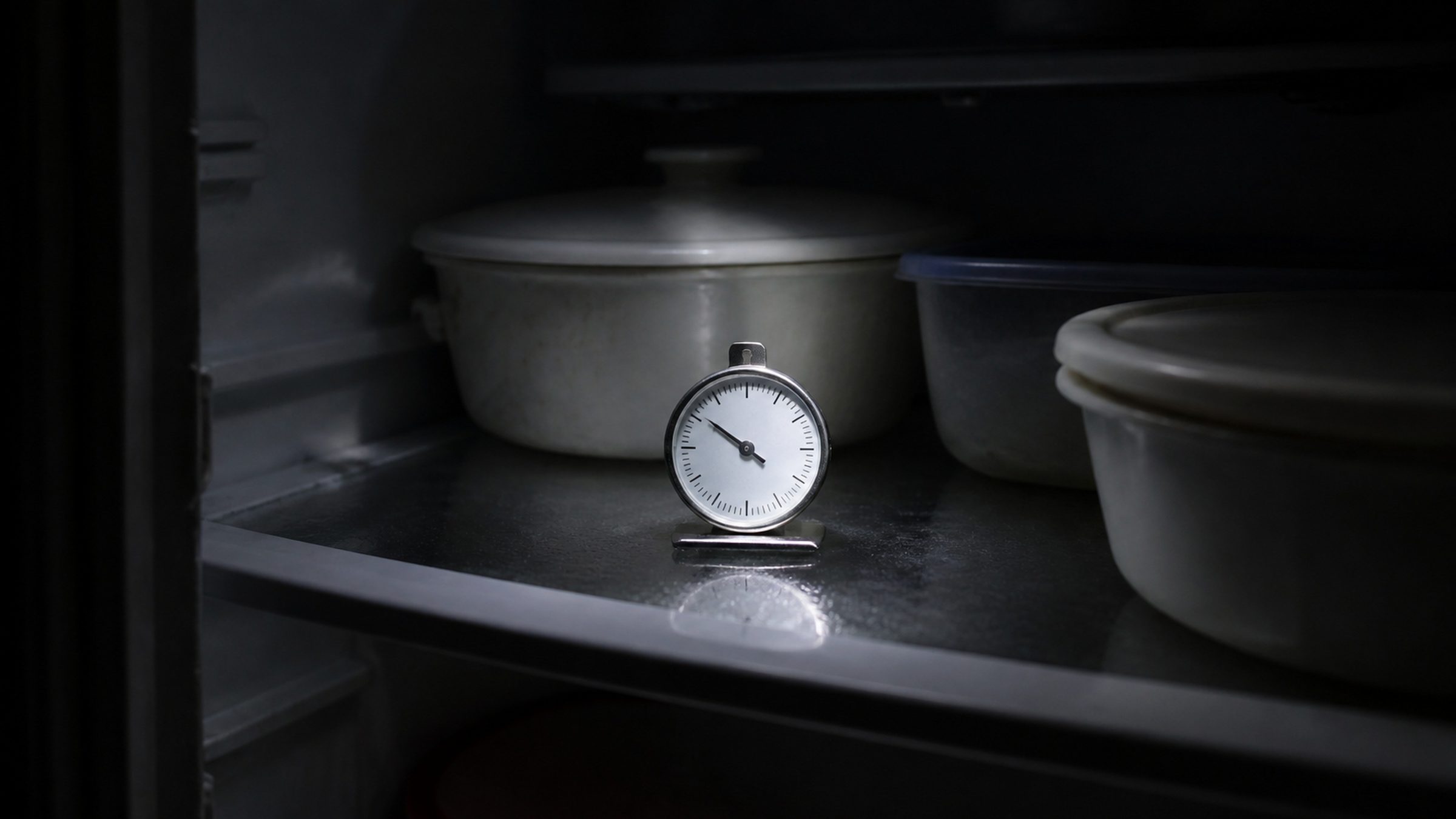
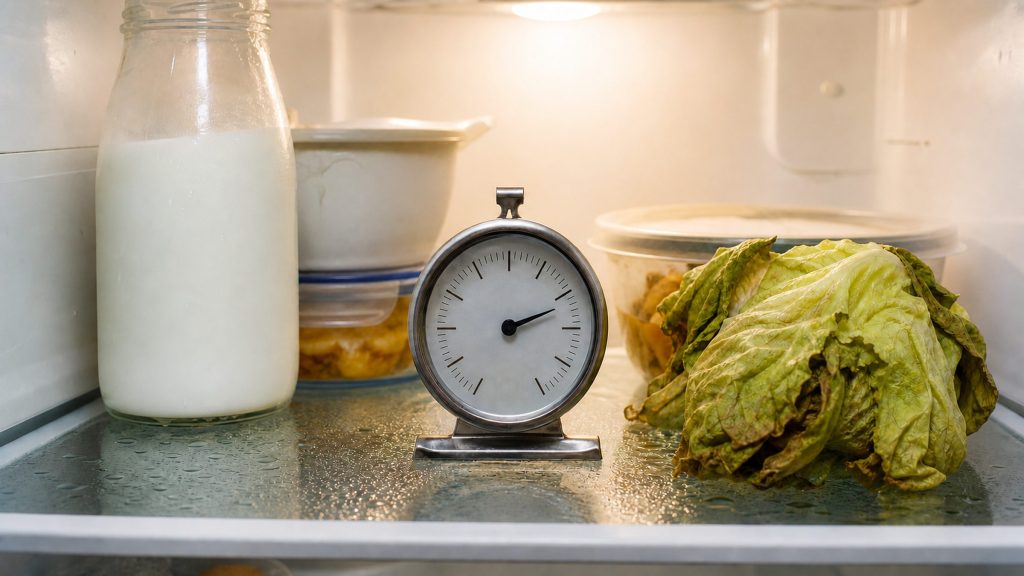
Put a thermometer in each compartment. A cheap dial or digital one, permanently. When the power comes back, you have a reading rather than a guess, and the whole decision becomes a fact instead of an argument.
Freeze water bottles a week ahead. They keep the freezer colder for longer by adding mass, and they can be moved into the fresh food compartment when the power goes to buy hours there.
Turn both compartments colder the day before, if the forecast is bad. A cabinet starting from a lower temperature has further to climb.
Fill the empty space in the freezer. With bottles, with bread, with anything. A full freezer holds roughly twice as long as a half-empty one, and that is the single biggest lever you have.
Agree who opens it. Ideally nobody. Decide before the power goes what is coming out in the first hour, take it all out at once, and then leave the door shut.
When the power comes back
Read the display before you clear it. Some refrigeration records that a long-term power loss occurred, and on some cabinets you can read back how warm it got. That is precisely the information the two-hour rule needs, and it disappears the moment somebody dismisses the message.
Read your thermometers, if you put them in.
Then decide, compartment by compartment, rather than opening everything and judging item by item on the counter while it warms up further.
The appliance side of it
An outage can leave the control confused rather than the cabinet damaged. This maker publishes a condition specifically for the power supply being interrupted during operation, so a number on the display after a storm is a documented event rather than a sign of harm.
If something is displayed after the power returns, write it down, then switch the appliance off at the breaker for five full minutes and back on. What clears was the interruption. What comes back is real, and worth a call — particularly if the cabinet is not pulling its temperature back down within a few hours of the power returning.
The freezer is the one worth planning around
The refrigerator's four hours is short enough that there is nothing much to do about it beyond keeping the door shut. The freezer is different: the gap between 24 hours and 48 hours is entirely under your control, and it is the difference between losing a week's food and losing nothing.
What decides it is how full the freezer is. Ice and frozen food are thermal mass; empty space is not. A half-empty freezer warms roughly twice as fast as a full one holding the same food, because the air in the gaps has almost no capacity to hold cold.
So the preparation is simple and it is worth doing at the start of the season rather than the day before a storm: fill the empty space. Bottles of water, bread, anything. They cost nothing, they come out again when you need the room, and they double the time you have.
The same logic applies to the fresh food side once the power is off. Moving frozen bottles down into the refrigerator compartment buys hours there at no cost to the freezer, because they were doing nothing but sitting cold anyway.
Independent Miele service across Miami-Dade, Broward and Palm Beach. We are not affiliated with, authorized by or endorsed by any manufacturer.
If it turns out to be a repair
What this leads to, and what it costs
Every job on this site is priced the same way: an on-site diagnostic first, the figure agreed in writing before anybody starts.
-
MasterCool columns · Built-in bottom mounts · Built-in freezers · Panel-ready Refrigeration
MasterCool columns and built-in cabinets, most of them behind your own panels. What is distinctive about their conditions is that the cabinet usually keeps running while it reports: it is telling you a reading has stopped making sense, not that it has stopped cooling — so there is normally time to act rather than to empty it.
- A cabinet running warm while the compressor sounds normal
- Frost building on the back wall of the freezer
- A door that no longer pulls itself shut
-
The compressor sounds normal Refrigerator is not cold enough
A cabinet that is running and not holding temperature. Before anything expensive is considered, one cheap thing is checked, and on a built-in cabinet in this climate it is right often enough to check first every time.
- Fresh food warm, freezer fine
- Everything a few degrees out
- The cabinet running constantly
-
And the cycle has stopped There is an F number on the display
Miele writes an F and a number on every appliance it builds. The number on its own is not the condition — the number plus the appliance is — and a good share of them are things the manufacturer asks the owner to try first.
- A number that returns after every reset
- The same number on two different appliances
- A number with words beside it
Questions people ask about this
Does a built-in column hold longer than a freestanding unit?
A little. More mass, better insulation and a tighter installation all help, and a full cabinet holds longer than an empty one regardless of type. It is not enough of a difference to change the four-hour rule — treat it as a margin rather than a plan.
Can I judge by smell or by how it looks?
No, and this is the one place we would push back firmly. The microbes that make food unsafe do not necessarily make it smell or look wrong. Temperature and time are the test, which is why a thermometer in each compartment before the season starts is worth ten dollars.
Can I refreeze food that thawed?
If it still has ice crystals in it and has stayed at or below 40°F, generally yes, with some loss of quality. If it is fully thawed and has been warm, no. Meat and seafood deserve the strictest reading of that.
Should I put ice in the refrigerator?
Blocks of ice or frozen water bottles, yes, and it is worth planning before the storm rather than hunting for ice afterwards. Freeze bottles a week ahead and move them into the fresh food side when the power goes.
The cabinet showed a message when the power came back.
Read it before clearing it. Some refrigeration records that the power was lost, and a few units record how warm the cabinet got — which is exactly the information you need for the decision and it is gone once the message is dismissed.
Safety & Risks
More guides like this one
-

How to Clean Mold from a Refrigerator Door Gasket — and Why It Came Back
Cleaning it is twenty minutes. It returning within a month means the seal is no longer closing along that section — which is a repair, not a cleaning schedule.
Read more -
How to Clean a Glass Cooktop Without Scratching It — Including the Controls
The scraper everybody is frightened of is the correct tool. The cloth everybody trusts is what dulls the surface. And liquid on the sensor area locks the top out.
Read more -
How Long Does Miele Oven Self Cleaning Take, and the Step Before It
The duration is the easy half. The important half is that the maker publishes a condition for the clean temperature not being reached because of soiling left in the cavity.
Read more
Tell us the model number and what it is doing.
This article is based on:
- Official manufacturer documentation
- Internal repair procedures
- Technician repair history
- Company quality standards