Common Problems
A Miele Dryer Needs No Vent. It Still Needs Air.
No. Every dryer Miele sells in the United States is a ventless heat-pump machine and needs no duct to the outside, which is why they are installed in closets, garages and stacked columns. What they do need is air from the room: the machine draws room air across a condenser to shed heat and moisture. In a closed South Florida laundry closet in summer that air is already close to saturated, so cycles run long and the condenser loads quickly. Ventilation into the room is part of how the appliance works.
The full guide
Does a Miele dryer need a vent? No — and that is the whole selling point
Every dryer this maker sells in the United States is a heat-pump machine, and heat-pump dryers are ventless. There is no duct, nothing goes through an exterior wall, and no hole has to be cut anywhere. That is why they end up in condo closets, in garages, in kitchens and stacked on top of washing machines in spaces where a conventional dryer could never go.
All of that is true and it is why people buy them. What nobody says at the point of sale is the sentence that follows it.
What it needs instead of a vent
The machine still has to get rid of heat and moisture. It just does it differently.
A vented dryer heats air, passes it through the clothes and blows it outside — moisture, heat and all. A heat-pump dryer keeps the air. It runs it in a loop: through the drum, across a cold surface where the moisture condenses out and is collected, then back across a warm surface and into the drum again.
The refrigerant circuit that makes that possible has to shed its own waste heat somewhere, and it sheds it into the room. So the appliance is quietly dependent on the room being able to absorb heat and supply reasonably dry air.
In a laundry room with a door open, that is a non-issue. In a sealed closet in Miami in August, it is the single most important thing about the installation.
What that looks like when it goes wrong
Not a failure. A slow decline that nobody can point to.
- Cycles get longer. The machine is working against warmer, wetter air, so it takes more time to reach the same result.
- The condenser loads faster. Damp lint packs rather than lifting off, and a packed condenser restricts the airflow the machine depends on. That accelerates the first problem.
- Clothes come out slightly damp, with no error at all. The moisture sensors read the load as done because the machine has run its full program, and the program was fighting the room.
None of that produces a number on the display. It produces a customer who thinks the dryer is failing after two years.
The test that costs nothing
Run one normal load with the laundry closet or room door open, and note the time. Run the same kind of load with it shut, and note that.
If the open-door cycle is meaningfully shorter, you have your answer and it is not a repair. It is an installation question with three ordinary fixes: a louvered door, a gap top and bottom, or a small vent grille into the room.
That is worth doing before anybody is called, because it is the difference between a $0 answer and a service visit.
The other thing that is not a vent: the condensate
The water taken out of your clothes has to go somewhere. On most installations it goes into a container you slide out and empty; on plumbed installations it goes to a drain.
In this climate, plumbing it to a drain is worth the small cost at installation. Loads here carry a lot of water, containers fill quickly, and emptying one after every cycle is the habit that gets dropped first. A machine that has stopped because its container is full presents exactly like a machine that has stopped because something is wrong.
If yours already uses a container and you are emptying it constantly, that is not a sign of a problem — it is the appliance doing its job and telling you how humid your laundry actually was.
What a ventless dryer is genuinely better at
Worth saying, because the paragraphs above read like a list of drawbacks and they are not.
It is much gentler on fabric, because the drum runs at a far lower temperature than a vented machine. It uses substantially less energy. It does not pull conditioned air out of your house and throw it outside, which in a place where you are paying to cool that air is not a small consideration. And it has no duct to block, which removes the single most common fire risk in a laundry room.
The trade is that it wants air, and in South Florida that is a real requirement rather than a footnote. Give it a louvered door and it will run for years.
Three installations, and what each one needs
In a laundry room with a normal door. Nothing to think about. Leave the door open when it runs if you remember; it is not critical.
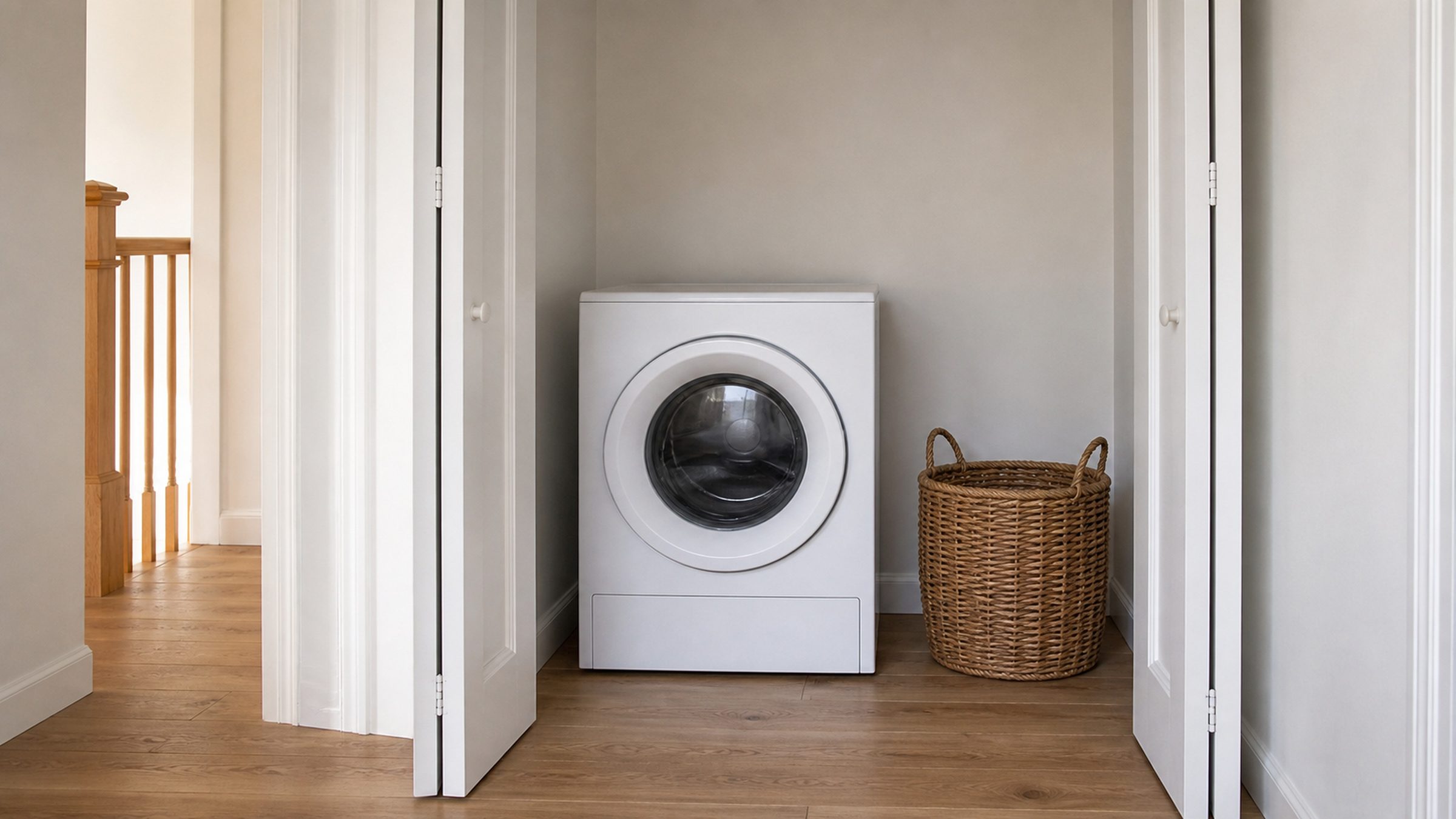
In a closet. This is the common case in a South Florida condo and the one worth getting right. A louvered door, or a gap of an inch at the top and bottom of a solid one, is enough. What does not work is a sealed closet the same size as the machine.
In a garage. Air is not the problem; salt-carrying air and temperature swings are. The machine will run fine, and the things that age faster are the hoses and the electronics rather than the drum. Worth a look at the inlet hose once a year.
What to say when you book, if it does need looking at
Where the machine stands, whether it is stacked, and whether the condensate goes to a container or a drain. Those three sentences decide how long the appointment takes on a ventless dryer more than the symptom does — a stacked pair in a closet has to come apart before either half can be reached, and that is planned time rather than a surprise on the day.
Independent Miele service across Miami-Dade, Broward and Palm Beach. We are not affiliated with, authorized by or endorsed by any manufacturer.
If it turns out to be a repair
What this leads to, and what it costs
Every job on this site is priced the same way: an on-site diagnostic first, the figure agreed in writing before anybody starts.
-
T1 heat pump · Ventless · 24" · 120V · No duct required Heat-pump dryers
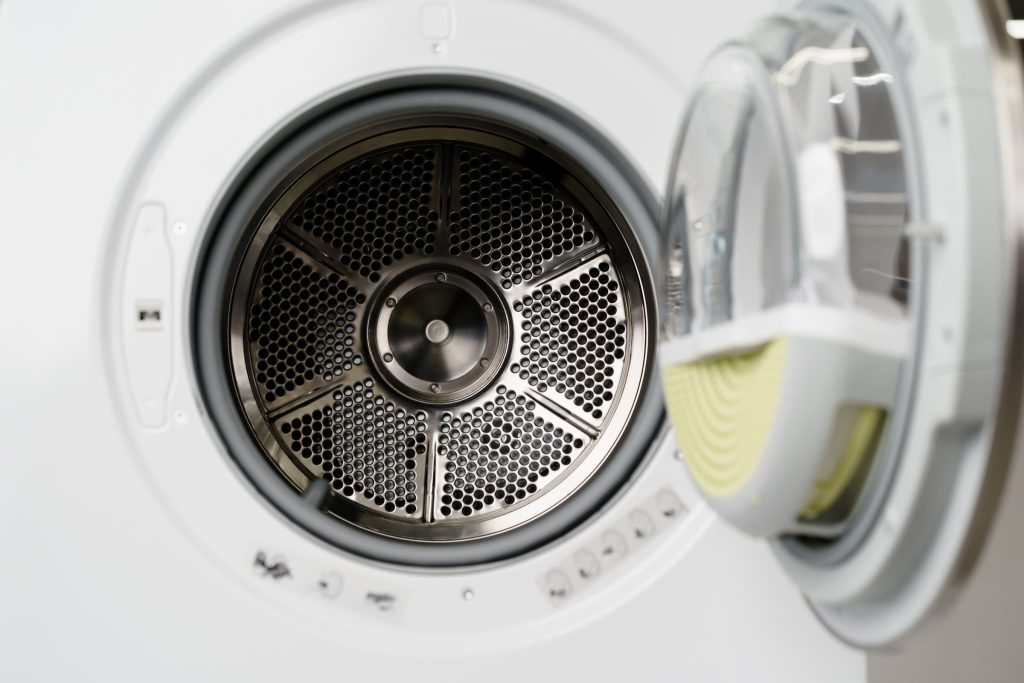
Every dryer Miele sells in the United States is a heat pump, and there is no vented model to compare it to. That is the single most useful thing to know before booking: this machine has a sealed refrigerant circuit rather than a heating element, so almost nothing that goes wrong with it is what goes wrong with an ordinary dryer.
- Clothes coming out damp after a full cycle
- A cycle that stops and shows a number
- A machine that runs and never gets warm
-
Damp clothes and no error on the display Dryer will not dry
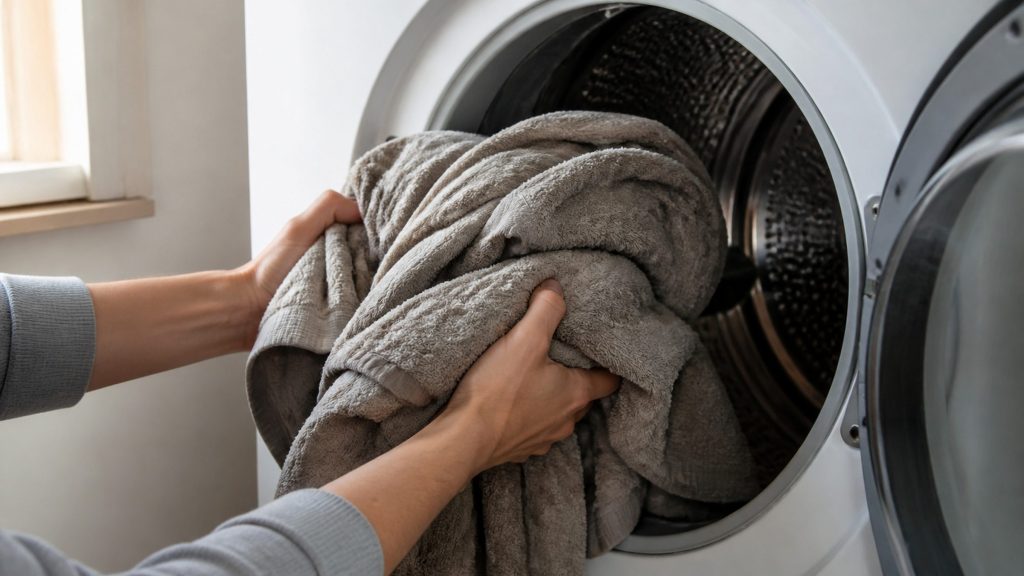
The commonest complaint on a heat-pump dryer and the one most often solved without a part. This machine has no heating element — it moves heat around a sealed loop — and everything about that depends on air moving freely.
- Damp clothes after a full cycle
- Cycles getting steadily longer
- No error message at all
-
from $225 Appliance installation
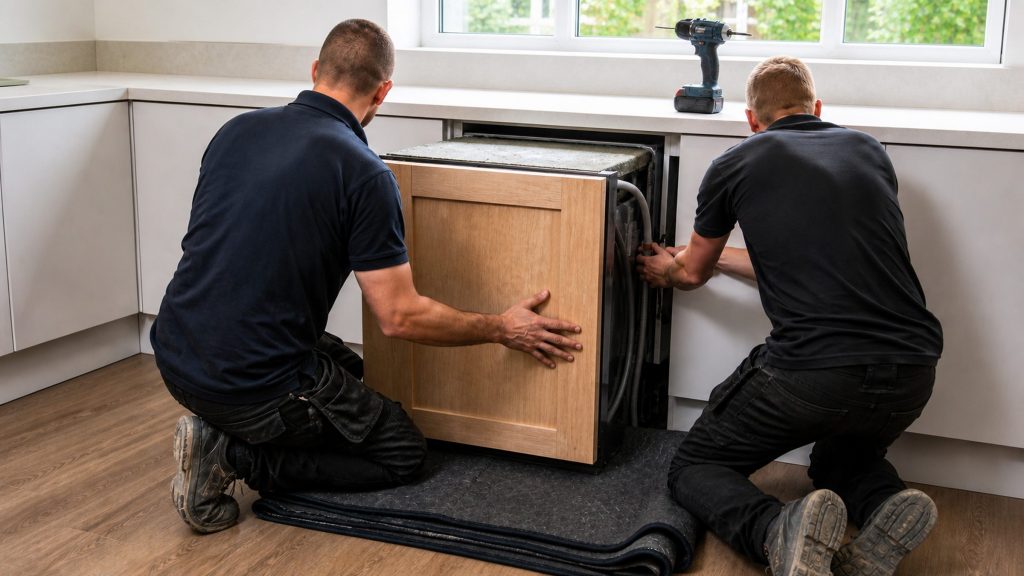
Where a meaningful share of the repairs on this site are prevented or created. Ventilation under an induction cooktop, a drain that will actually take a heat-pump dryer, and water at the pressure the maker names as a minimum.
- Ventilation, drainage and flow pressure checked, not assumed
- Panel-ready doors hung and set with the panels on
- Levelling done properly, on every machine

Questions people ask about this
So I can put it anywhere?
Almost. It needs a socket, somewhere for the condensate — a container you empty or a drain — and air. The third is the one that gets forgotten, because nothing about the installation looks wrong when it is missing.
Does it make the room humid?
Less than people expect, because the water is condensed and collected rather than blown into the room. What it does do is warm the room, and a small closed closet warms noticeably.
Why does it take so much longer than my old dryer?
Because it runs cooler by design — that is what makes it gentle on fabrics and efficient. A long cycle is normal. A cycle that has got longer than it used to be is not, and that is usually the air path rather than the machine.
Can it be plumbed to a drain instead of using the container?
Usually yes, and in this climate it is worth doing. Emptying a container after every load is the habit people stop keeping, and a machine that stops because nobody emptied it reads as a broken dryer.
Is a louvered closet door enough?
Often yes, and it is the cheapest fix there is. What does not work is a solid door in a tight closet with no gap top or bottom — that is a sealed box, and the machine is competing with itself.
Common Problems
More guides like this one
-
Why Does My Miele Oven Take So Long to Preheat? Cavity Size, or a Sensor
An oven that says it is ready is making a claim you can check with a $10 thermometer. That check separates characteristic from failing in twenty minutes.
Read more -
Why Does My Miele Dryer Take So Long to Dry? Design, or a Problem
Slow is the design. Slower than last year is a message. Telling the two apart takes one cycle and no tools.
Read more -
Why a Miele Dishwasher Gets Through So Much Rinse Aid
Usually the dosage setting nobody has ever opened — and occasionally a dispenser that is leaking its contents into the tub every cycle.
Read more
Tell us the model number and what it is doing.
This article is based on:
- Official manufacturer documentation
- Internal repair procedures
- Technician repair history
- Company quality standards