Common Problems
When a Miele Dishwasher Smells Bad: Four Smells, Four Causes
A Miele dishwasher smell is diagnosable from the smell itself. Rotten eggs or drains means standing water or a drain hose that has lost its high loop. A musty, wet-dog smell means the filters and a machine kept closed between cycles, which is normal in a humid climate. A fishy smell is usually the filters plus warm standing water. A burning or electrical smell is different in kind and the machine should be switched off at the breaker and looked at rather than run again.
The full guide
A Miele dishwasher smell is diagnosable by what it smells of
That sounds obvious and almost nobody uses it. People describe the problem as "it smells," try a cleaning product, and get a machine that smells of lemon and then of the original thing again a fortnight later.
Four distinct smells turn up on these machines, they have four different causes, and three of them are free to fix. The fourth is the only one that matters today.
Rotten eggs, or straightforwardly like a drain
Sulfurous, worst when the door is first opened, sometimes noticeable in the kitchen without opening it at all.
This is standing water — either in the machine or, more often, in the path between the machine and the sink. The single most common cause is a drain hose that has lost its high loop. The hose is supposed to rise above the level of the sink outlet before it drops, so that nothing can run back. When a machine is pushed into its opening after a repair or a kitchen change, that loop is the thing that gets flattened, and afterwards the sink drains gently into the dishwasher.
Look behind or under the machine if you can reach, or under the sink where the hose connects. If the hose runs flat or downhill the whole way, that is your answer, and it is a bracket rather than a part.
The other version is water that never left the tub. If there is visible water in the base after a cycle, that is a drain problem wearing a smell as a symptom, and it belongs on a different page.
Musty, damp, like a wet dog
The commonest one in this city and the least alarming. Two causes, both environmental, and they compound.
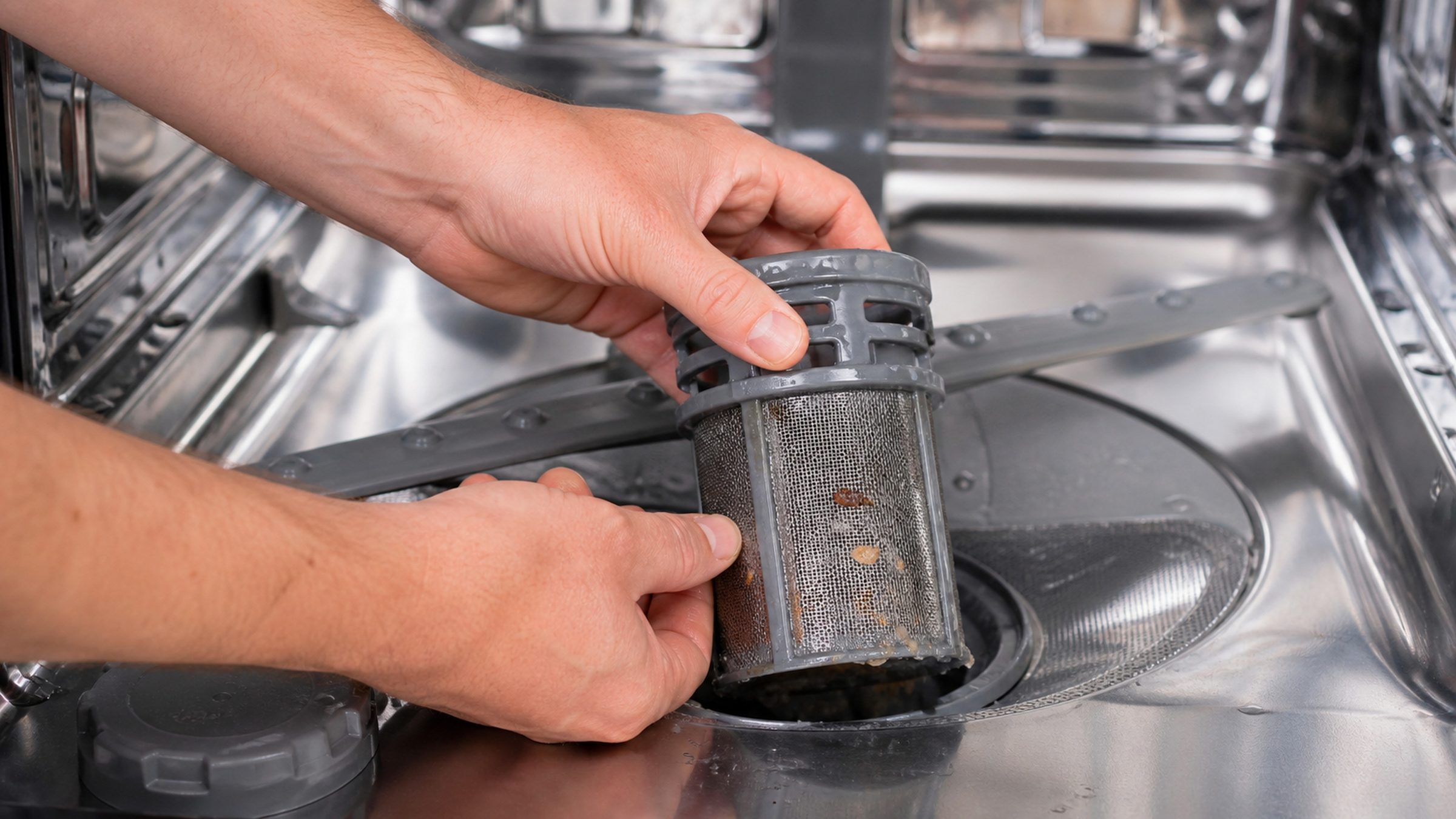
The filters. In the base of the tub, they twist out in two parts and they collect everything the machine washed off. Rinse them under a hot tap with a washing-up brush — not a rinse, a brush — and pay attention to the fine mesh rather than the coarse basket.
A closed machine in a humid room. A dishwasher shut immediately after a cycle in a South Florida kitchen in August is a warm, wet, sealed box. Leave the door on the latch for an hour or two after the cycle finishes and the difference within a week is more than any product will give you.
Fishy
Distinct from musty and it tends to alarm people more. Usually the same two causes as above — filters plus warm standing water — with the particular note that comes from protein residue rather than starch.
The treatment is identical: filters out and properly brushed, hottest program the machine has run empty, door left ajar afterwards. If it comes back within a fortnight, look at the drain path rather than washing the filters again.
Burning, or electrical
Different in kind from the other three, and this is the paragraph to act on rather than read.
Switch the machine off at the breaker and do not run it again. A burning smell — plastic, hot electrics, scorching — is not an odor problem and it does not need airing out. It needs somebody to look at it before the next cycle.
Two things make it more likely on a dishwasher than people assume: something plastic that has fallen onto the heating element in the base, and a heating circuit that is genuinely failing. The first is harmless once removed and looks exactly like the second from the kitchen. Neither is worth a guess.
What actually keeps it away
Three habits, in order of how much they are worth:
- Leave the door on the latch between cycles. Costs nothing, does more than everything else combined in this climate.
- Brush the filters monthly. Not rinse — brush. Ten seconds each.
- Run the hottest program empty once a month, with the machine empty and a detergent tablet in the dispenser. This is the one point where a dishwasher cleaner is genuinely useful, because everything mechanical has already been dealt with.
When it is not the dishwasher at all
If the sink smells when the dishwasher has not run, the plumbing is the source and the appliance is just the nearest opening. A slow-draining sink, a disposal that has not been cleaned, or a trap that has dried out in a rarely-used kitchen will all present as an appliance problem.
Test it by running water into the sink alone for a minute with the dishwasher door shut. If the smell arrives anyway, you are chasing the wrong appliance.
Why this is more common here than almost anywhere
Two things about South Florida make a dishwasher smell that would not in a drier place, and neither of them is a defect.
Ambient humidity. A machine that finishes a cycle and is immediately closed never dries out. In a kitchen where the air itself is carrying water, the interior stays damp between uses indefinitely rather than for a couple of hours.
Water hardness. Scale on the tub walls, the filters and the spray jets gives residue somewhere to hold on to. A machine that has been on the correct hardness setting with salt in it has visibly less to grip, which is why the smell question and the salt question turn out to be related.
Neither means the appliance is wrong for the climate. Both mean the maintenance interval that came in the box was written for somewhere else.
Independent Miele service across Miami-Dade, Broward and Palm Beach. We are not affiliated with, authorized by or endorsed by any manufacturer.
If it turns out to be a repair
What this leads to, and what it costs
Every job on this site is priced the same way: an on-site diagnostic first, the figure agreed in writing before anybody starts.
-
Fully integrated · Semi-integrated · Built-under · ADA · AutoDos · 18" and 24" Dishwashers
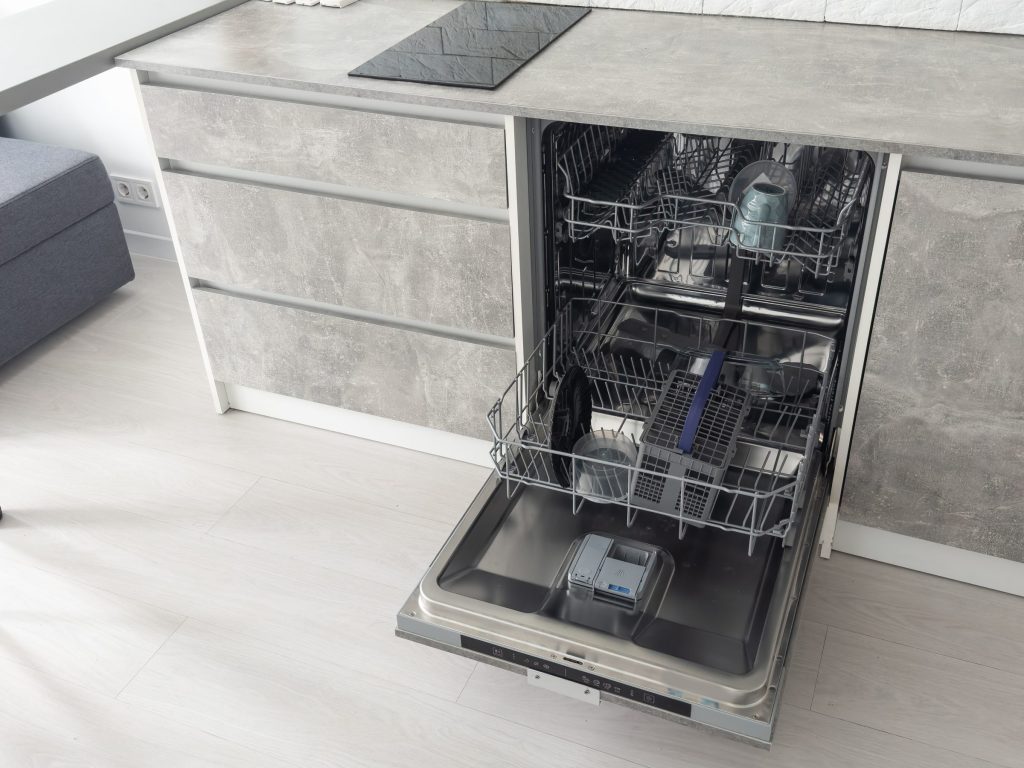
The appliance this name means in most American kitchens, and the one that tells you the most about itself. A Miele dishwasher reports the water path in detail — the tap, the inlet filter, the hose, the drain — which is why more of these calls end without a part than on any other appliance in the house.
- A cycle that stops with water still in the tub
- A number on the display that comes back after every reset
- Dishes coming out spotted, or coming out wet
-
A dishwasher, a washer, or both The machine smells
Warm, damp and closed is what both of these machines are between uses, and in this climate that is all it takes. Almost none of it is a repair, and all of it is worth dealing with before it becomes one.
- A musty smell when the door is opened
- A smell that comes back within days of cleaning
- Black marks in the door seal
-

from $145 Appliance maintenance
One visit covering every condenser, filter, descale and seal in the kitchen and the laundry room. In a full Miele household that can be six appliances, and doing them together is meaningfully cheaper than three separate visits.
- Every appliance in the house on one trip
- The three things this climate is hard on, all in one visit
- Water hardness set so the appliances count correctly
Questions people ask about this
I run it every day and it still smells.
Frequent use does not clean the filters, and in a warm kitchen it can make things worse by keeping the tub permanently damp. Lift the filters out, wash them under a tap with a brush, and leave the door ajar between cycles for a week.
Is a dishwasher cleaner worth buying?
As a finish rather than a fix. A cleaner run on a machine whose filters are loaded and whose drain hose has lost its loop will accomplish very little. Do the two mechanical things first, then use one if you like.
Why does it smell worse in summer?
Because the whole machine sits warmer and never fully dries out. In this climate a closed dishwasher between cycles is a warm damp box, which is exactly the condition the smell needs. Leaving the door on the latch changes it more than any product.
The smell comes from the sink as well.
Then it is very likely the plumbing rather than the appliance, and the dishwasher is simply connected to it. A drain that smells on its own will smell through anything attached to it.
It smells of burning plastic.
Switch it off at the breaker and do not run it again. An electrical or burning smell from any appliance is in a different category from an odor problem, and it needs looking at rather than airing out.
Common Problems
More guides like this one
-
Why Does My Miele Oven Take So Long to Preheat? Cavity Size, or a Sensor
An oven that says it is ready is making a claim you can check with a $10 thermometer. That check separates characteristic from failing in twenty minutes.
Read more -
Why Does My Miele Dryer Take So Long to Dry? Design, or a Problem
Slow is the design. Slower than last year is a message. Telling the two apart takes one cycle and no tools.
Read more -
Why a Miele Dishwasher Gets Through So Much Rinse Aid
Usually the dosage setting nobody has ever opened — and occasionally a dispenser that is leaking its contents into the tub every cycle.
Read more
Tell us the model number and what it is doing.
This article is based on:
- Official manufacturer documentation
- Internal repair procedures
- Technician repair history
- Company quality standards