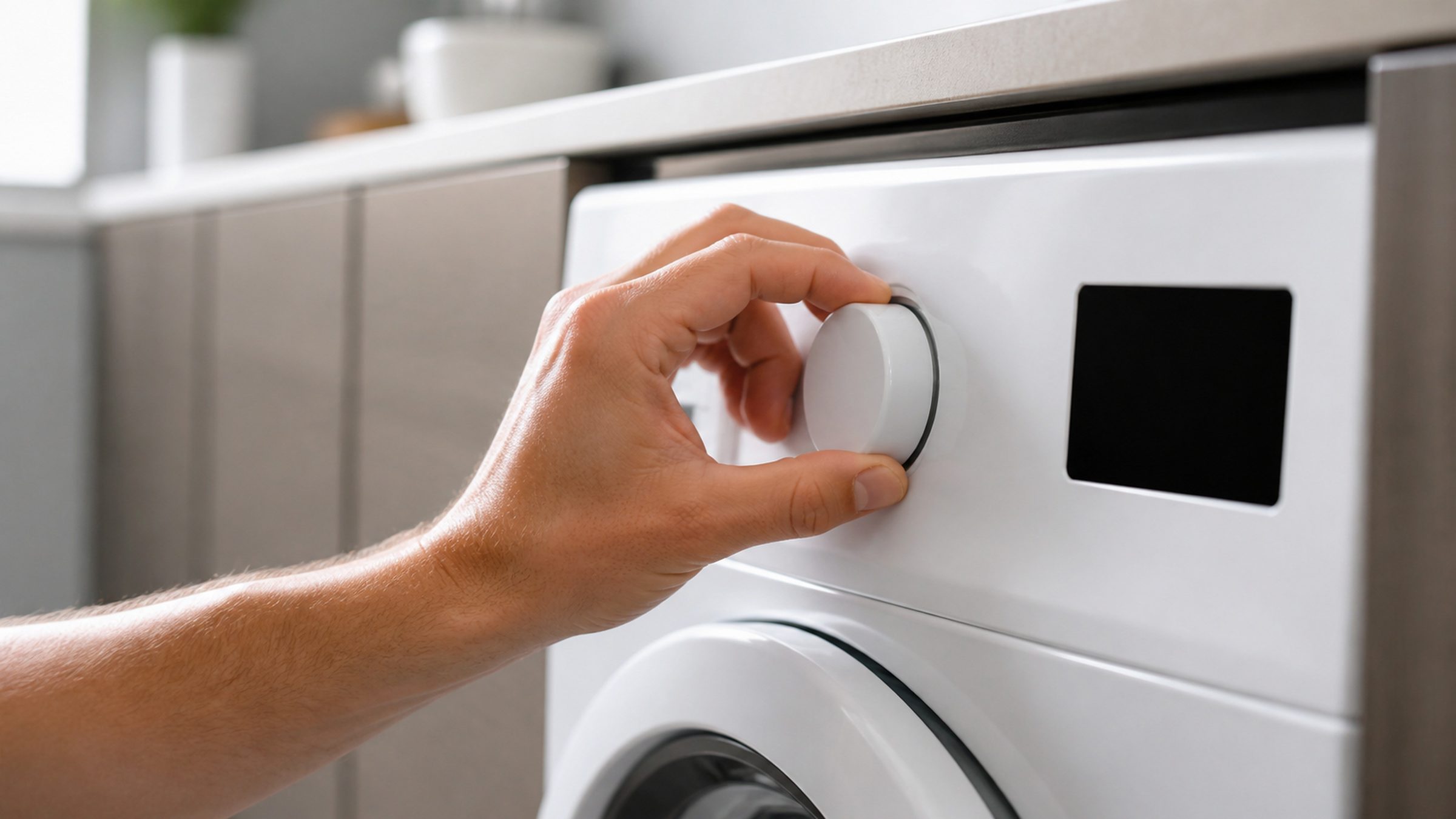
Troubleshooting
How to Reset Miele Washing Machine Controls on a W1, and When Not To
To reset Miele washing machine controls on a W1, cancel the program first — usually by turning the selector to stop or holding the start button — then switch the machine off at the wall or breaker for five full minutes. If the door is locked with water in the drum, drain it through the hose behind the filter flap before resetting anything: the lock will not release above the door line by design, and no reset overrides that. A condition that returns after a proper five-minute power cycle is real.
The full guide
How to reset Miele washing machine controls, in the order that matters
The reset itself is two steps. The reason this page opens somewhere else is that most people looking for it are standing in front of a machine with a locked door and wet laundry behind the glass, and for that situation the reset is the wrong first move.
So the order below starts with the drum.
If the door is locked with water inside, drain it before anything
A front-loading washing machine will not release its door while there is water above the door line. That is deliberate — it is the machine refusing to empty itself across your floor — and no reset, no button combination and no amount of switching off overrides it.
The way out is built in. Behind the flap at the bottom front of the machine there is a short drain hose, next to the drain filter, put there for exactly this. Switch the machine off at the wall, pull the hose out, and run it into a shallow tray — a roasting tin works, a bucket does not fit under it. Empty the tray as needed until nothing more comes.
On a good share of these calls, the door then opens on its own and there was never anything else wrong. On the rest, you now know it is the lock rather than the water, which is a genuinely useful thing to know before booking anybody.
Do not lever the door. The interlock is a small part. The door, its hinge and the front panel are not.
Write the number down before you clear it
The washing machines are the one appliance where this maker sometimes prints a condition in English as well as as a number — a door that will not lock, a lock that is jammed. Write down both, exactly.
While you are there, note where in the cycle it stopped: filling, washing, draining or spinning. A machine that always stops at the same stage is reporting something real, and a machine that stops at different stages usually is not.
Cancelling the program
On a W1 Classic, turn the program selector to the stop position. On the Excellence machines the equivalent is a press-and-hold on the start button, or the stop entry in the menu.
That difference is why people follow instructions that do not match their machine and conclude nothing works. If the rotary selector is the main control, use it. If the front is mostly a display, use the menu.
Cancelling abandons the cycle and, on most programs, drains the drum. It does not restart the control.
The actual reset
Switch the machine off at the wall socket or at the breaker. Not the on/off button on the panel, which puts it into standby with the control still powered — that is why a quick press appears to do nothing.
Five full minutes. The control holds enough charge to keep its state through a short interruption, and thirty seconds is the interval at which people give up on the whole idea.
Then power up and run the shortest program with the machine empty.
What the reset fixes, and what it proves
It fixes a control caught mid-write. In a South Florida summer, brownouts and momentary cuts are routine, and a machine interrupted while writing to its own memory can come back in a state it cannot leave. A five-minute power cycle clears that completely.
It proves everything else. A condition that survives a proper reset is real. That is not a failure of the reset — it is the reset doing the one diagnostic job it can do, for free, in five minutes.
Which means the useful question is not "how do I reset it" but "what happened when I did." Cleared and never came back: the supply. Came straight back: book it, and bring the number.
The one time not to reset at all
If the machine trips the breaker or an RCD when it runs, stop there. Repeatedly restoring the supply removes the protection that is doing its job, and this maker itself lists a residual current device tripping as something to report rather than to work around.
Everything else: drain it, write it down, cancel, five minutes off. In that order, and the order is the point.
What people mean when they say the reset "did not work"
Three different things, and only one of them is a machine problem.
They used the panel button. It puts the appliance into standby and leaves the control powered. The reset that matters is at the wall or the breaker.
They waited thirty seconds. Not long enough on this control. Five full minutes, and it is worth timing rather than estimating.
The condition was real. The reset worked perfectly and told them so. A number that comes back is information, not a failed procedure — and it is the point at which the number is worth looking up rather than clearing again.
Two things to have ready if it does come back
The model number, which is inside the door opening on these machines, and where the machine stands — free, in a closet, or stacked on a dryer. The second one is not a diagnostic question; it is what decides how long the appointment takes, because a stacked pair has to come apart before either half can be reached.
Independent Miele service across Miami-Dade, Broward and Palm Beach. We are not affiliated with, authorized by or endorsed by any manufacturer.
If it turns out to be a repair
What this leads to, and what it costs
Every job on this site is priced the same way: an on-site diagnostic first, the figure agreed in writing before anybody starts.
-
W1 front-loading · TwinDos · CapDosing · 24" · 120V Washing machines
A small line and a deep one: Miele sells three washing machines in the United States and builds all of them to a twenty-year design life. That changes the repair question — on a machine this age, the honest answer is usually which single part has worn rather than whether the machine is finished.
- A door that will not lock, or will not release
- A cycle that stops part-way with water in the drum
- A number on the display that returns after every reset
-
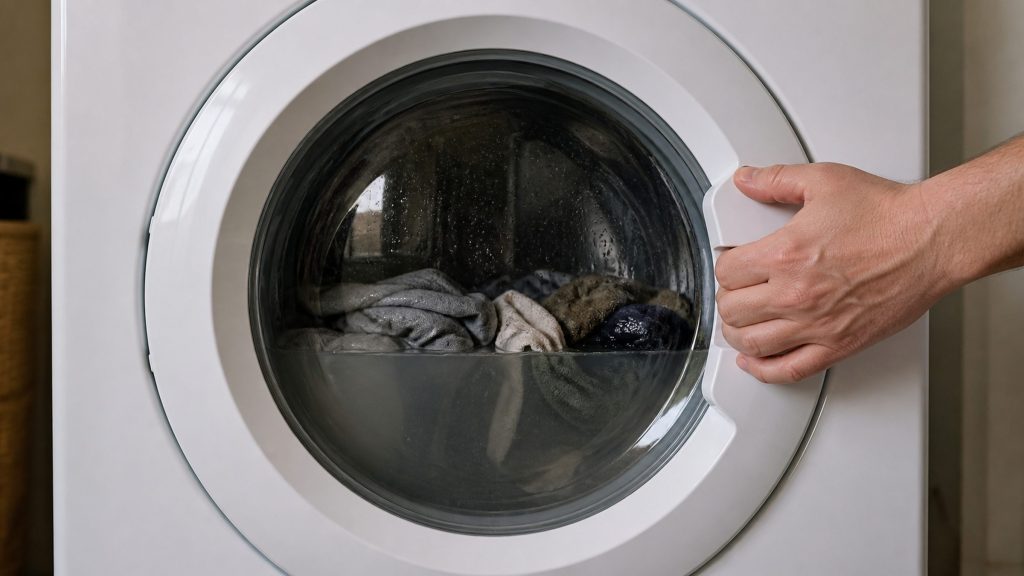
Laundry locked inside Washing machine door will not open
One of the very few conditions this maker prints in words as well as a number. With a wet load behind the glass it is a same-day call, and forcing the door is the one thing that turns a part into a panel.
- The door stays locked after the cycle
- The display says the lock is jammed
- Water still visible in the drum
-
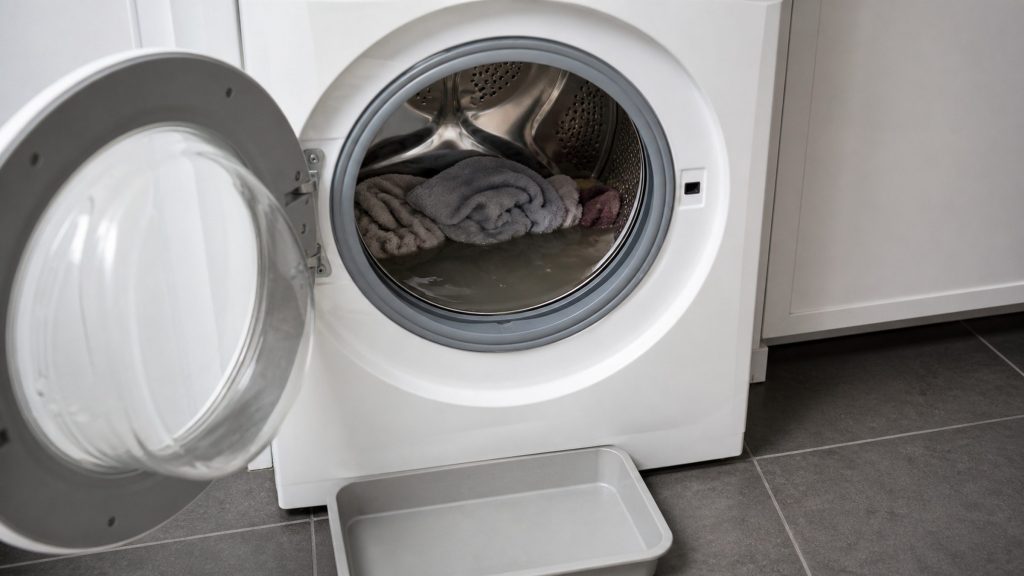
The cycle stops with water in the drum Washing machine will not drain
A cycle that halts part-way with the drum full, or one that finishes and leaves water behind. The W1 machines report the water path in detail, so this is usually a short diagnosis.
- Water left in the drum at the end
- A cycle that stops before the spin
- Draining, but very slowly
Questions people ask about this
Classic or Excellence — does the procedure differ?
Slightly, and it is why people follow instructions that do not match their machine. The Classic uses the rotary selector; the Excellence is more menu-driven. What is identical on both is the power cycle, and that is the reset that actually matters.
My laundry is locked inside right now.
Do not lever the door. Switch off at the wall, empty the drum through the drain hose behind the flap at the bottom front into a shallow tray, and try the door again. If it still will not open once the water is out, that is the lock rather than the water, and it is a same-day call.
Will a reset clear the TwinDos counters?
No. Dosing counters, water hardness, language and program settings are all stored and survive it. What clears is the current cycle and anything the machine was displaying about it.
It resets fine and then stops at the same point every cycle.
Then it is not a control problem at all — it is the machine reaching the same stage and finding the same thing wrong. Note which stage: filling, washing, draining or spinning. That single observation is most of the diagnosis.
Is there a service mode I should use instead?
There is, and it is not for owners. Nothing on this page requires it, and entering it by following a video is a reliable way to change a setting nobody meant to change.
Troubleshooting
More guides like this one
-
After a South Florida Power Cut: How to Reset Miele Oven Controls
The manufacturer publishes a condition specifically for the supply being interrupted mid-cycle. That makes this a documented event rather than a mystery — and it has a documented answer.
Read more -
How to Reset Miele Dryer Filter Reminders — Three Reasons They Return
A message that survives cleaning is either a reminder that needs acknowledging, a filter cleaner than it looks, or a condenser the reminder was never about.
Read more -
How to Level a Refrigerator, and Why the Door Depends On It
On a panel-ready column the door is carrying your cabinetry. Level is what lets it pull itself the last inch — and in this humidity that inch is a frost problem.
Read more
Tell us the model number and what it is doing.
This article is based on:
- Official manufacturer documentation
- Internal repair procedures
- Technician repair history
- Company quality standards