Troubleshooting
How to Reset Miele Dryer Filter Reminders — Three Reasons They Return
To reset Miele dryer filter reminders, acknowledge the message on the display with the OK or confirm control after cleaning, or switch the machine off at the wall for five minutes if it will not clear. If it returns straight away there are three likely reasons: the reminder was never acknowledged, the filter is less clean than it looks against the light, or the message is about the condenser block behind the plinth filter rather than the door filter you cleaned.
The full guide
How to reset Miele dryer filter reminders — and why they come back
The reset itself is usually a single button press. The reason people search for this is that the press does not seem to work, and there are three quite different explanations for that.
Work through them in order. Only the third one is a job.
Reason one: the reminder needs acknowledging, not just satisfying
This is the answer most of the time and it surprises people.
On most of these machines the filter reminder is driven by cycle count and by airflow, not by the machine looking at the filter. So cleaning the filter does not clear the message. Confirming the message clears the message.
Look for the OK or confirm control while the reminder is displayed, and press it. That is it. If the machine has a touch display, the reminder itself is usually the thing to touch.
People clean the filter, close the door, run a cycle, see the message again and conclude the reset failed — when in fact nothing was ever acknowledged.
Reason two: there are two filters, and you probably cleaned one
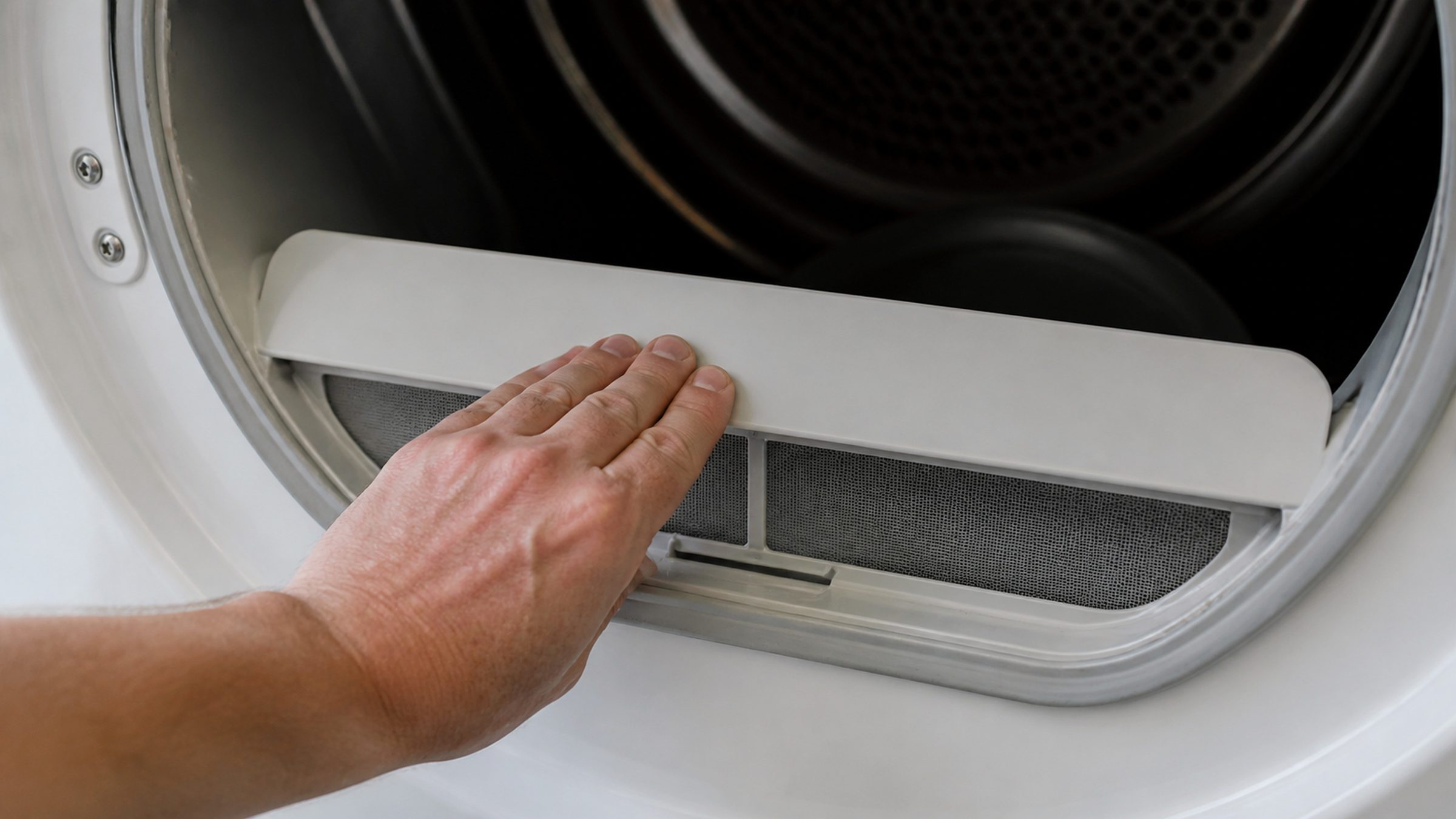
The door filter is the one everybody knows. It is in the opening, it is visible at every unload, and it catches the coarse lint.
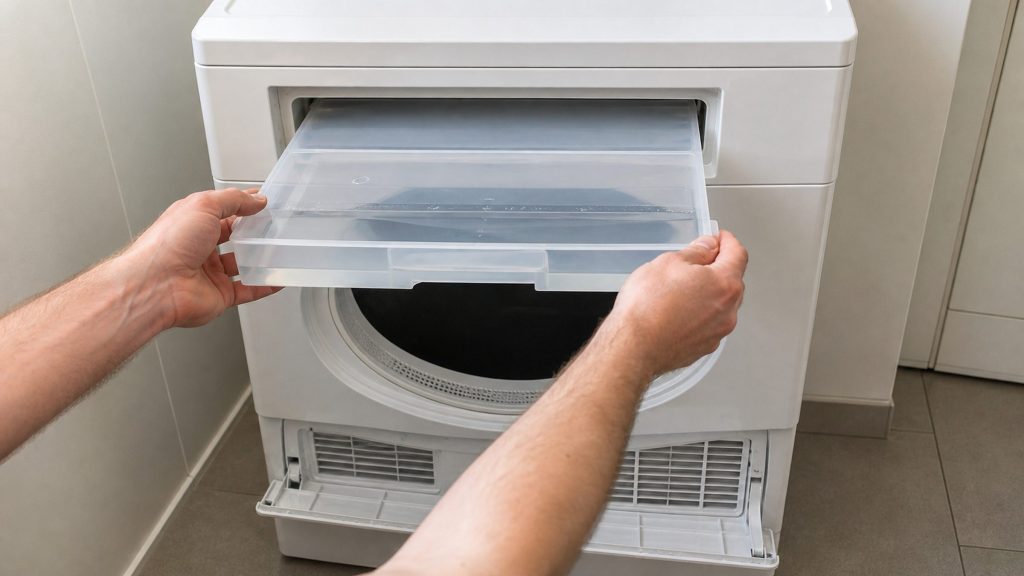
The plinth filter is behind the panel at the bottom front. It is finer, it protects the condenser, and on the machines we open in South Florida it has very often never been touched.
If the message is about the second one, cleaning the first will never clear it — and telling which one the machine means is harder than it should be.
The practical answer: clean both. The door filter takes thirty seconds. The plinth filter takes ten minutes, and it is worth doing anyway.
While the plinth filter is out, hold it up to a window. That is the moment that convinces most people. A loaded one looks unremarkable lying flat and is completely opaque against the light — and that mat is what the machine has been pushing air through.
Reason three: the condenser block, which the reminder was never about
Directly behind the plinth filter are the condenser fins. They should look like clean metal.
Felted with damp lint — and in this humidity the lint is damp and packs rather than lifting off — they restrict airflow more than either filter does. A machine whose message returns after every single cycle is usually telling you about this, not about a filter.
A soft brush or a vacuum with a brush head lifts what is loose. Never push a hard nozzle into the fins: they bend, they stay bent, and a bent fin is a permanent restriction in exactly the place that matters.
A block that has never been cleaned in years usually needs more than a brush, and that is a service rather than a Saturday job.
If none of that clears it
Switch the machine off at the wall or the breaker for five full minutes — not the panel button, which puts it into standby and leaves the control powered.
That clears a control that has got stuck, which happens after a summer brownout more often here than most places. If the message survives a proper five-minute power cycle and both filters and the condenser are genuinely clean, then it is real and worth a call.
The one mistake to avoid
Do not refit a filter damp. It goes back into a machine that will be warm within the hour, and a fortnight later there is a smell nobody can place.
Give it hours, not minutes. If that is inconvenient, do the job in the morning and run the machine in the evening.
Why the message is worth taking seriously rather than dismissing
Because the machine is not nagging. This maker publishes a condition naming the lint filters and the plinth filter as a cause — in its own documentation — which is the manufacturer saying that restricted airflow is the thing that goes wrong with these dryers.
The cost of ignoring it is not an irritating display. It is longer cycles, clothes that come out damp with no error at all, and a compressor working against a restriction for years. That last one is the most expensive part on the appliance, and this is the cheap end of protecting it.
A sensible rhythm, so the message stops being a nuisance
Every load: the door filter. Ten seconds, and it is the habit that prevents most of this.
Every few months here: the plinth filter, rinsed properly and dried fully before it goes back.
Once or twice a year: the condenser fins, brushed gently or done as part of a service.
That rhythm is shorter than the one in the book, and the reason is the climate rather than the appliance. Lint in a humid laundry closet is damp lint, and damp lint packs into a filter instead of sitting on it.
Keep to it and the reminder becomes what it was designed to be — a prompt, once in a while, that takes thirty seconds to satisfy.
Independent Miele service across Miami-Dade, Broward and Palm Beach. We are not affiliated with, authorized by or endorsed by any manufacturer.
If it turns out to be a repair
What this leads to, and what it costs
Every job on this site is priced the same way: an on-site diagnostic first, the figure agreed in writing before anybody starts.
-
T1 heat pump · Ventless · 24" · 120V · No duct required Heat-pump dryers
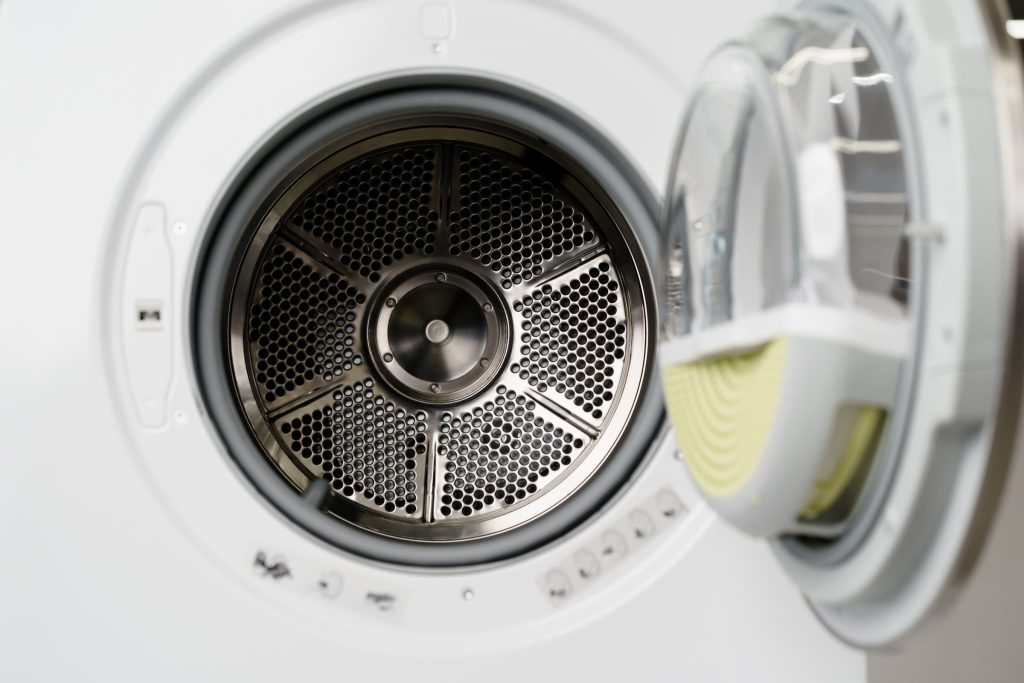
Every dryer Miele sells in the United States is a heat pump, and there is no vented model to compare it to. That is the single most useful thing to know before booking: this machine has a sealed refrigerant circuit rather than a heating element, so almost nothing that goes wrong with it is what goes wrong with an ordinary dryer.
- Clothes coming out damp after a full cycle
- A cycle that stops and shows a number
- A machine that runs and never gets warm
-
It finishes, eventually Dryer cycles are getting longer
A heat-pump dryer is slower than a vented one by design, and that is not a problem. A cycle that is getting steadily longer than it used to be is — and it is nearly always the air path.
- Cycles noticeably longer than a year ago
- The machine warm to the touch on the outside
- Clothes dry but only just
-
from $135 Dryer condensate & filter service
Priced as maintenance on purpose, because on a ventless dryer in this humidity it is the row that keeps the expensive one away. Filters, condenser block, condensate path and the sensors that all three affect.
- Both filters and the condenser block cleaned properly
- Condensate container, float and pump checked
- Drum sensors cleaned so the cycle ends when it should
Questions people ask about this
Does the machine detect a clean filter?
Not directly on most of these — the reminder is driven by cycle count and by airflow, and it is cleared by acknowledging it. That is why a genuinely spotless filter can still be attached to a message that will not go away until somebody presses confirm.
How do I know which filter it means?
Clean both and the question disappears. The door filter takes thirty seconds; the plinth filter behind the panel at the bottom takes ten minutes and is the one most owners have never opened.
The message comes back after every single cycle.
Then the airflow is genuinely restricted, and the condenser block behind the plinth filter is the usual reason. That is worth a proper clean rather than repeated dismissals — the machine is telling you something true.
Can I ignore it?
You can, and the cost is not the message. It is longer cycles, damp clothes and a compressor working against a restriction for years. The message is the cheap version of the problem.
It cleared and now cycles take longer than before.
That is odd enough to be worth a look. Cleaning should shorten cycles, not lengthen them, so a filter refitted damp or slightly out of position is the first thing to rule out.
Troubleshooting
More guides like this one
-
After a South Florida Power Cut: How to Reset Miele Oven Controls
The manufacturer publishes a condition specifically for the supply being interrupted mid-cycle. That makes this a documented event rather than a mystery — and it has a documented answer.
Read more -
How to Reset Miele Washing Machine Controls on a W1, and When Not To
If the door is locked with a load inside, the reset is not your first move — draining it is. That distinction is the whole page.
Read more -
How to Level a Refrigerator, and Why the Door Depends On It
On a panel-ready column the door is carrying your cabinetry. Level is what lets it pull itself the last inch — and in this humidity that inch is a frost problem.
Read more
Tell us the model number and what it is doing.
This article is based on:
- Official manufacturer documentation
- Internal repair procedures
- Technician repair history
- Company quality standards