Troubleshooting
How to Level a Refrigerator, and Why the Door Depends On It
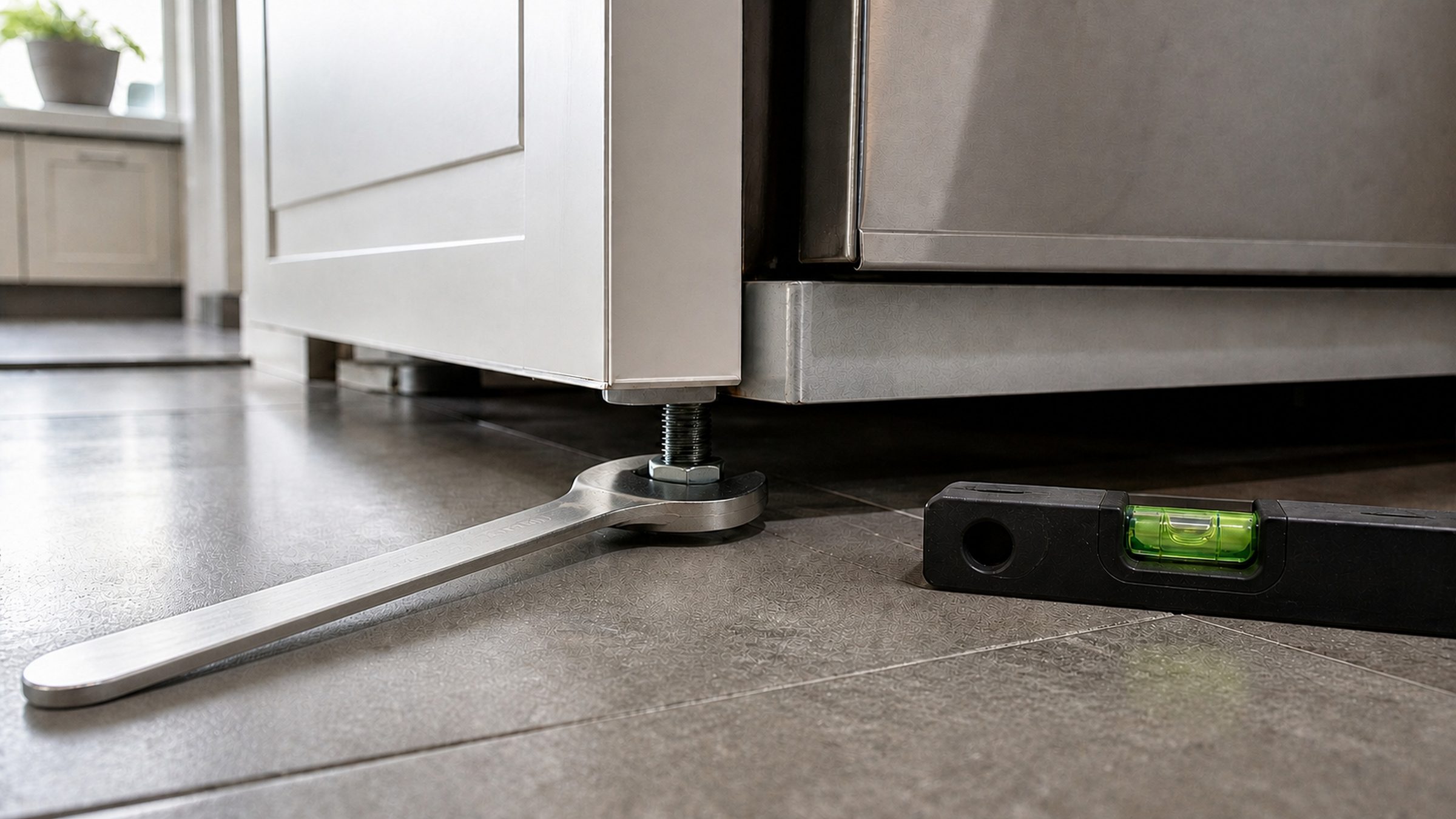
To level a refrigerator, set it level side to side and very slightly higher at the front than the back, so the door swings closed under its own weight. Use a spirit level across the top and adjust the front feet or rollers, then check the door pulls itself shut from an inch open. On a built-in or panel-ready cabinet this matters more than on a freestanding one, because the door carries cabinetry — and in South Florida a door standing a few millimeters open is a frost problem within days.
The full guide
How to level a refrigerator so the door closes itself
There are two measurements and only one of them is really about level.
Side to side, genuinely level. That is what makes the door sit square in its opening and the seal meet the frame evenly all the way round.
Front to back, a fraction high at the front. That is not about level at all — it is about gravity doing the last inch of the door's work for you.
The second one is the whole point, and the test for it is not a spirit level. It is the door.
The actual procedure
Get to the adjusters. On a freestanding cabinet they are the front feet or rollers. On a built-in or a panel-ready column they are usually behind the lower grille, which comes off with a couple of clips or screws — the appliance does not need to come out.
Level it side to side first, with a spirit level laid across the top of the cabinet or across the front frame. Adjust one front foot at a time, quarter turns.
Then add the rearward tilt. Wind both front feet up very slightly — a quarter turn each, then test. You are aiming for the point where a door released from about an inch open swings shut and stays shut.
Test properly. Open the door an inch and let go. It should close. Then open it wide and let go: it should swing back and either close or come to rest without bouncing off the seal. Too much tilt and it slams; too little and it stands open.
Lock the feet if they have locknuts, and re-check the door afterwards, because tightening them can move things.
The glass of water check. Put one on a shelf and look at it. It is cruder than a spirit level and it catches a cabinet that is level at the top and twisted at the base.
Why a few millimeters matters more in South Florida than almost anywhere
This is the part worth understanding, because it turns a cosmetic adjustment into maintenance.
A door standing very slightly open is not a small inefficiency here. It is a continuous supply of warm, humid air onto a cold surface. The sequence is predictable:
- Moist air reaches the evaporator and condenses.
- It freezes, and the frost builds.
- The frost blocks the air path between the freezer and the fresh food compartment.
- The fresh food side warms up, the compressor runs longer, and the defrost circuit starts working against a problem it cannot solve because the source is still open.
People arrive at step four and call it a cooling problem. It started as a door standing two millimeters proud.
In a dry climate this takes months and is mild. Here it takes days.
The built-in complication
On a panel-ready column the door is hanging a piece of your cabinetry, and that changes two things.
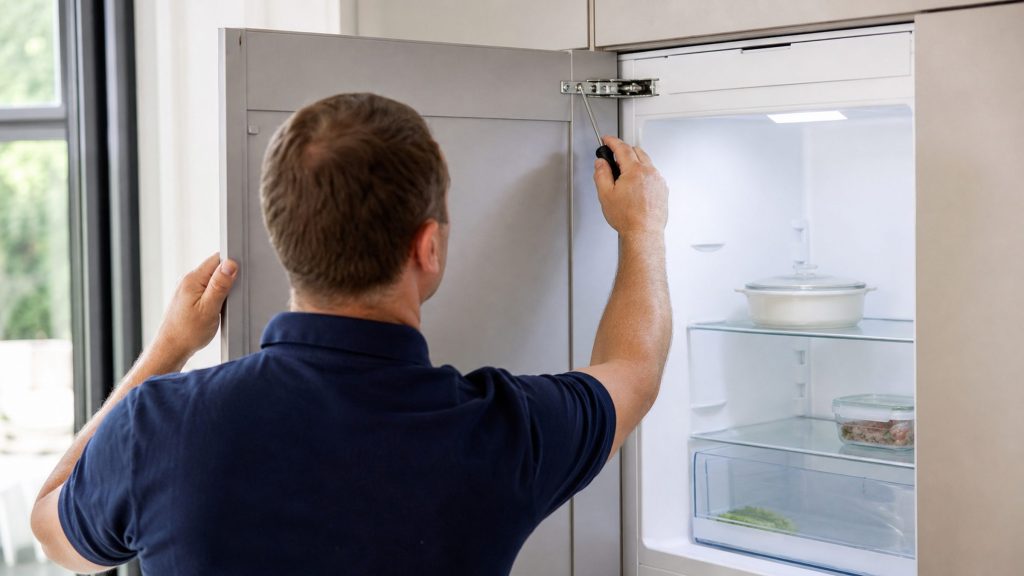
The weight is significant, so the hinge adjustment has to be done with the panel on. Setting a bare door and then hanging the cabinetry undoes the work.
And the door settles over years under that weight, which is exactly what the adjusters are there for. A column that closed itself perfectly for five years and no longer does has not developed a defect — it has settled, and it wants half an hour of adjustment rather than a part.
Two columns side by side
Common on this kind of refrigeration and worth saying: a refrigerator column next to a freezer column has to agree with the other one before either agrees with the room.
Level them individually and the joint between the two panels can still read wrong, because the eye picks up a two-millimeter difference between adjacent doors instantly and cannot see a two-millimeter error against a wall at all.
That one is done as a pair, with both panels hung, and it is fiddly enough to be worth having done.
When it is not the level
If the door closes properly and the seal still does not meet the frame in one place, that is the seal rather than the cabinet — hard, or lifted at a corner. It is a cheap part with a large effect and it is worth replacing rather than adjusting around.
The dollar-bill test tells you which: close the door on a bill and pull. If it slides out easily at one point and grips everywhere else, the seal has gone at that point. If it slides out easily all the way round, come back to the feet.
What to do if the cabinet rocks
A cabinet that rocks on three feet is not a leveling problem, it is a shimming problem, and winding the feet will not fix it — it just moves the rock to a different pair of corners.
Find which two diagonal feet are carrying the weight by pressing each corner in turn. Then wind the light one down until it makes contact and takes load, and re-check the door afterwards. If the foot runs out of travel before it touches, the floor needs a shim under it rather than the appliance needing adjustment.
On a heavy built-in column this is worth getting right rather than tolerating. A cabinet that rocks is a cabinet whose door geometry changes every time somebody opens it.
The three-minute version
Spirit level across the top: level side to side. Front feet up a fraction so the door self-closes. Release the door from an inch open and watch it. Dollar-bill test at six points round the seal.
If all four are good, the cabinet is set. If the last one fails at one point with the first three good, it is the seal rather than the level — and that is a different and equally cheap fix.
Independent Miele service across Miami-Dade, Broward and Palm Beach. We are not affiliated with, authorized by or endorsed by any manufacturer.
If it turns out to be a repair
What this leads to, and what it costs
Every job on this site is priced the same way: an on-site diagnostic first, the figure agreed in writing before anybody starts.
-

MasterCool columns · Built-in bottom mounts · Built-in freezers · Panel-ready Refrigeration
MasterCool columns and built-in cabinets, most of them behind your own panels. What is distinctive about their conditions is that the cabinet usually keeps running while it reports: it is telling you a reading has stopped making sense, not that it has stopped cooling — so there is normally time to act rather than to empty it.
- A cabinet running warm while the compressor sounds normal
- Frost building on the back wall of the freezer
- A door that no longer pulls itself shut
-

It stands a fraction open Refrigerator door does not close properly
A panel-ready door is carrying your cabinetry and cabinetry is heavy. Over years it settles — and in this climate a door standing a few millimeters open is a frost problem within days, not a cosmetic one.
- The door no longer pulls itself the last inch
- A visible gap at the top or bottom
- Two columns whose doors do not line up
-
from $165 Refrigerator door & panel alignment
A panel-ready door is carrying your cabinetry, and cabinetry is heavy. Over time it settles, and a door standing a fraction open in this humidity is not a cosmetic problem — it is frost on the evaporator and a cabinet that never stops running.
- Doors set with the panels on, not before
- Seals checked along their whole run
- Pairs of columns aligned to each other as well as to the room

Questions people ask about this
How much tilt is right?
Very little — enough that a door released from an inch open swings shut, and not so much that a full door slams. Adjust in quarter turns and test the door each time rather than aiming at a number on a level.
My built-in has no visible feet.
The adjusters are usually behind the lower grille, which comes off with a couple of screws or clips. On some columns there are also adjusters at the top of the cabinet for squaring the door itself, which is a different adjustment from leveling.
The floor is not level. Now what?
You level the appliance, not the floor. That is what the adjustable feet are for. The one case where it is not enough is a floor that slopes enough for the cabinet to sit on three feet — then it needs shimming rather than winding, and it is worth doing properly because the alternative is a cabinet that rocks.
Does leveling really affect cooling?
Indirectly and significantly. A cabinet that will not seal is drawing warm humid air in continuously, and in this climate that means frost on the evaporator, longer run times and a defrost circuit working against something it cannot fix.
Two columns side by side do not line up.
They have to agree with each other before either agrees with the room, and it is a fiddly job done as a pair rather than one at a time. It is worth having done rather than fought with, particularly with heavy panels hung.
Troubleshooting
More guides like this one
-
After a South Florida Power Cut: How to Reset Miele Oven Controls
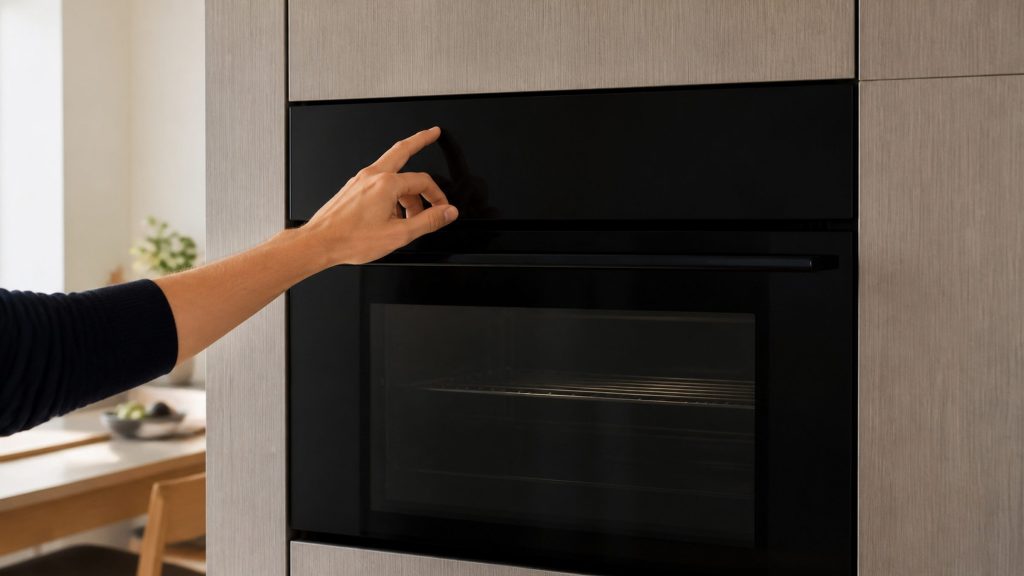
The manufacturer publishes a condition specifically for the supply being interrupted mid-cycle. That makes this a documented event rather than a mystery — and it has a documented answer.
Read more -
How to Reset Miele Washing Machine Controls on a W1, and When Not To
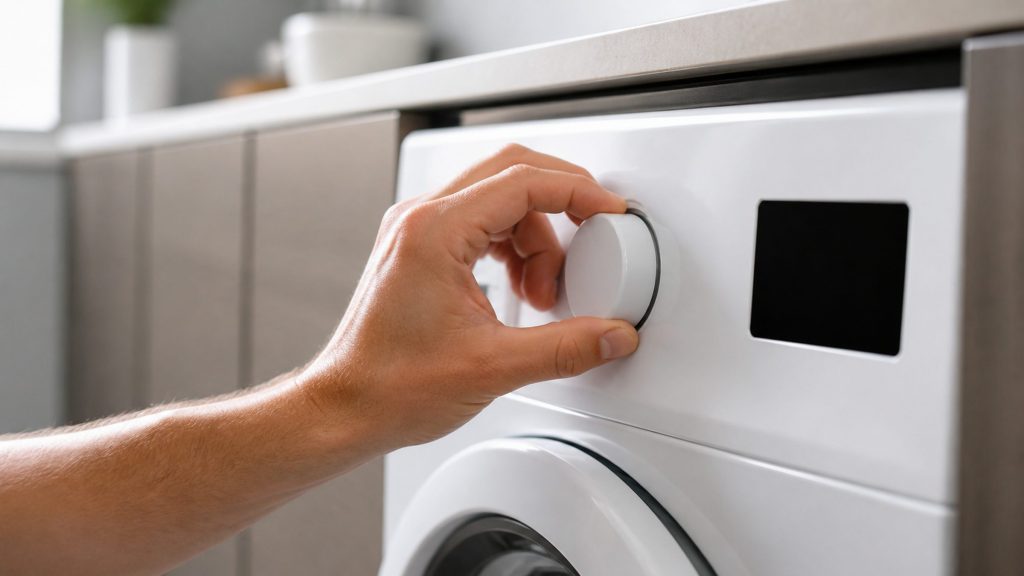
If the door is locked with a load inside, the reset is not your first move — draining it is. That distinction is the whole page.
Read more -
How to Reset Miele Dryer Filter Reminders — Three Reasons They Return
A message that survives cleaning is either a reminder that needs acknowledging, a filter cleaner than it looks, or a condenser the reminder was never about.
Read more
Tell us the model number and what it is doing.
This article is based on:
- Official manufacturer documentation
- Internal repair procedures
- Technician repair history
- Company quality standards