Maintenance & Prevention
How Often to Top Up Salt, Rinse Aid and Detergent on a Miele Dishwasher
In South Florida, expect to top up salt in a Miele dishwasher roughly every four to eight weeks with daily use, rinse aid every four to six weeks, and detergent every cycle unless the machine has an AutoDos cartridge. All three published intervals assume softer water than this city supplies, so they arrive late. The symptoms differ: no salt gives cloudy glass, no rinse aid gives wet dishes, and no detergent gives a wash that looks rinsed rather than cleaned.
The full guide
How often to top up salt, rinse aid and detergent, on this water
Three reservoirs, three jobs, three intervals — and people treat them as one chore that gets done when a light comes on. Two of those lights are computed rather than measured, and on South Florida water both of them are computed wrong until somebody corrects a setting.
Here is what each one actually is, how often it really needs doing in Miami-Dade, Broward or Palm Beach, and — more usefully — what the dishes look like when that particular one has run out. Because the three failures look nothing like each other, and telling them apart saves a service call.
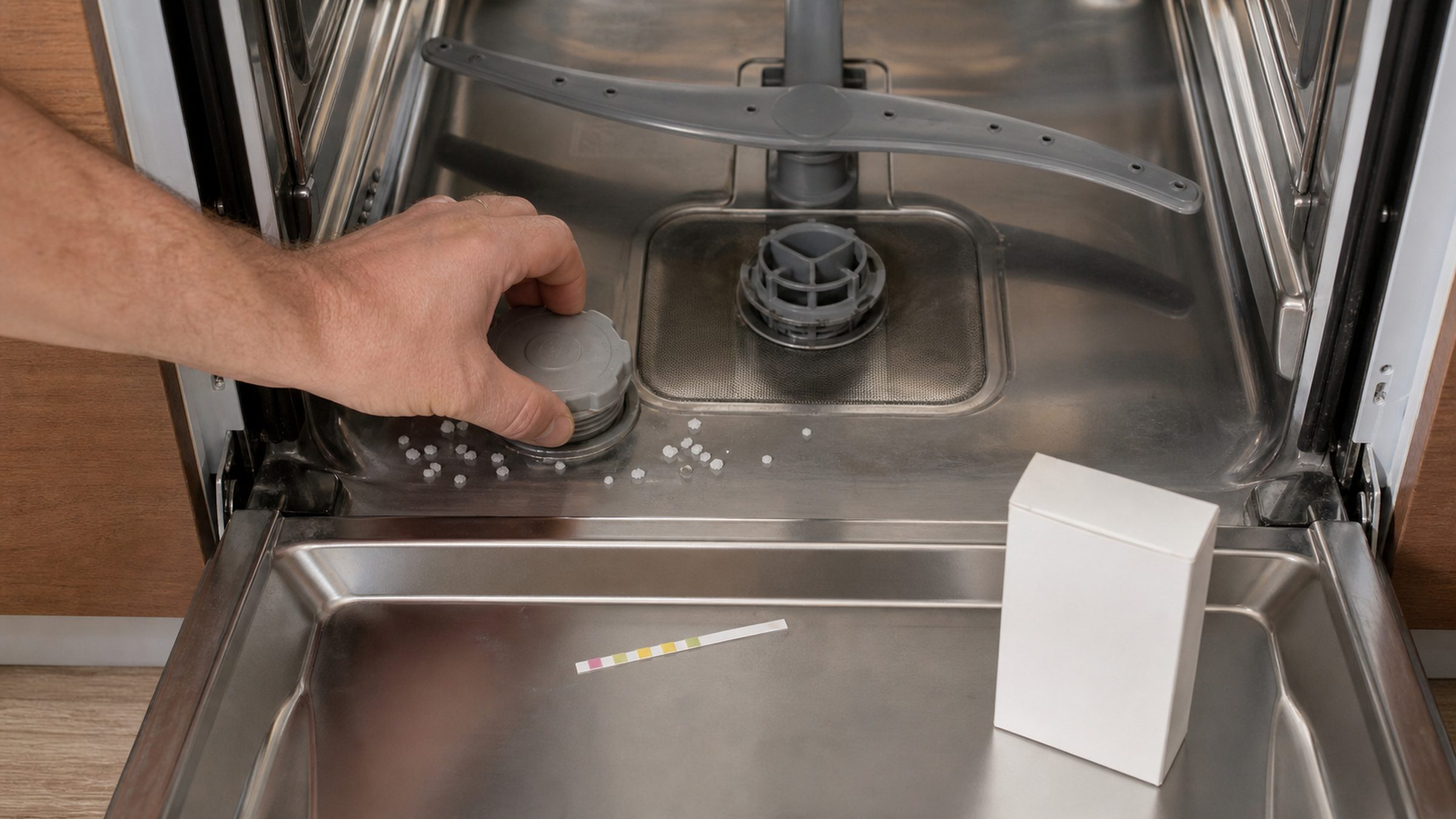
Salt: every four to eight weeks, and it is not about cleaning
The salt feeds a water softener built into the machine. It has nothing to do with washing and everything to do with what the water is like before it gets anywhere near the dishes.
On daily use in this city, expect to top up salt roughly every four to eight weeks. That is shorter than most published guidance, and the reason is simply that the guidance was written for softer supply. The harder the water, the more often the machine regenerates the resin bed, and the faster the reservoir empties.
What running out looks like: glassware that clouds and stays clouded. Not a film you can wash off — permanent etching and deposit. It arrives over months rather than days, which is why almost nobody connects it to the reservoir they have never filled.
Rinse aid: every four to six weeks, and it decides whether anything dries
Rinse aid lowers the surface tension of the final rinse so water sheets off rather than beading. On a machine that dries with residual heat — which is what this one does — that is not a luxury, it is the drying system.
Every four to six weeks is typical, and it varies more than salt does because the dosage is adjustable. If you feel you are refilling it constantly, the dosage setting is the first thing to look at rather than the reservoir.
What running out looks like: clean dishes that are wet. Plastics worst, china next, glass least. If the load is spotless and soaking, this is your answer roughly nine times out of ten, and no repair is involved.
Detergent: every cycle, unless the machine doses for you
Straightforward on most machines. On one with AutoDos, the built-in dispenser holds a cartridge and meters it out for you, and the cartridge lasts about twenty cycles — counted rather than measured, which matters, because a cartridge that was not seated properly will still be counted down.
What running out looks like: dishes that appear rinsed rather than washed. Food gone from the surface, nothing gone from the glass, no smell of detergent when you open the door.
The setting that makes all of this honest
Everything above is a rule of thumb, and the machine can do better than a rule of thumb if you let it. Set the water hardness on the appliance to what your utility actually supplies.
That single number drives how often the softener regenerates and when the low-salt reminder fires. Left at the factory value on water this hard, it counts too slowly and tells you too late — so the appliance has been quietly wrong from the day it was installed, and nothing about it looks broken.
Find the figure from the utility or a test strip. Set it once. Every interval above becomes something the machine tracks rather than something you estimate.
A ten-second monthly habit that beats every reminder
Open the door, take out the lower basket, and look at three things: the salt cap in the floor, the rinse-aid cap in the door, and the detergent compartment or cartridge. The whole check takes ten seconds and it is more reliable than any counter, because it is measuring rather than computing.
Do it on the first of the month and you will never meet any of the three failure modes above.
When it is not a consumable at all
If the dishes are coming out dirty rather than cloudy or wet, stop reading this page — the spray arms and the tub filters are what to check, and both are free. If the machine has stopped filling, the inlet filter at the tap is the usual answer in this water. And if there is a number on the display, look it up before doing anything else: on this make the number tells you which stage the cycle stopped at, and roughly four in ten of them are things the manufacturer asks you to try yourself.
Why the intervals on this page are shorter than the book
Every figure a manufacturer publishes for a consumable is calculated somewhere. The number they calculate from is average water hardness across the market the appliance was designed for, and that market is not South Florida.
Harder water means the softener regenerates more often, which means the salt goes faster. It also means the final rinse needs more help to sheet off the load, which means the correct rinse-aid dosage is genuinely higher here than the middle of the range. Neither of those is a machine behaving badly; both are a machine doing exactly what it was built to do, in water it was told would be softer.
That is the whole reason this page gives intervals in weeks rather than repeating a number from a manual. Set the hardness on the appliance and the machine will do better than any interval on any page — including this one.
Independent Miele service across Miami-Dade, Broward and Palm Beach. We are not affiliated with, authorized by or endorsed by any manufacturer.
If it turns out to be a repair
What this leads to, and what it costs
Every job on this site is priced the same way: an on-site diagnostic first, the figure agreed in writing before anybody starts.
-
Fully integrated · Semi-integrated · Built-under · ADA · AutoDos · 18" and 24" Dishwashers
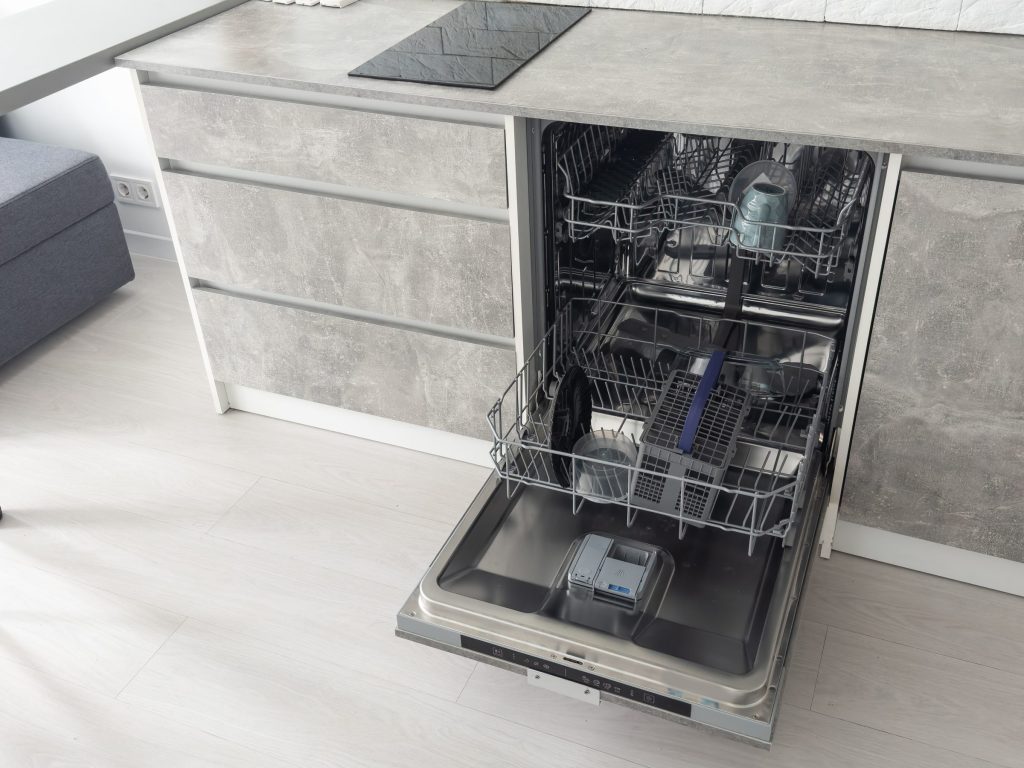
The appliance this name means in most American kitchens, and the one that tells you the most about itself. A Miele dishwasher reports the water path in detail — the tap, the inlet filter, the hose, the drain — which is why more of these calls end without a part than on any other appliance in the house.
- A cycle that stops with water still in the tub
- A number on the display that comes back after every reset
- Dishes coming out spotted, or coming out wet
-
Clean, and still soaking Dishes come out wet
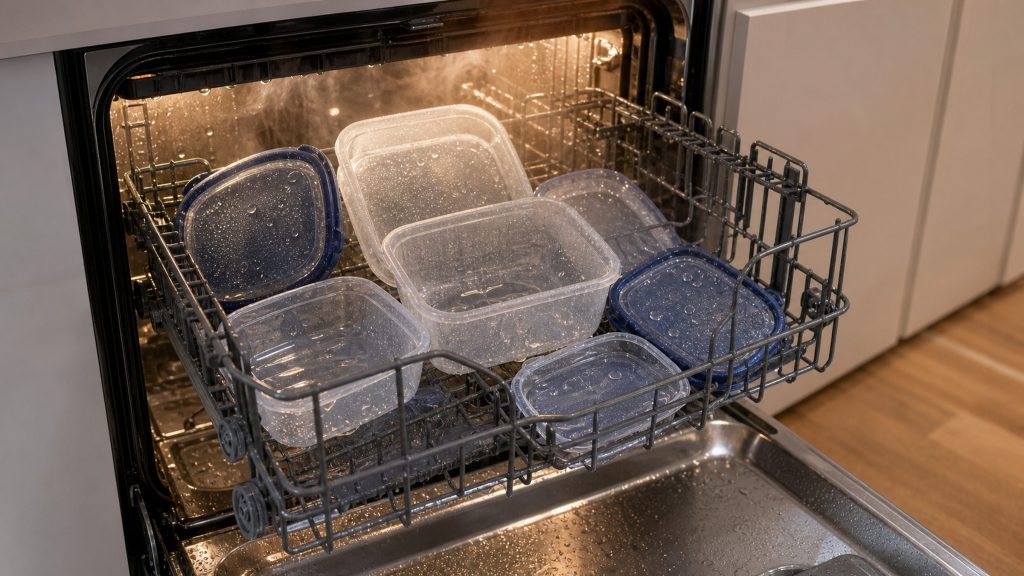
On this make that is frequently not a repair at all. A Miele dries with residual heat and, on the newer machines, by opening its own door at the end — so a machine that will not dry is often a door that is not opening or a rinse aid reservoir that is empty.
- Plastics wet, china dry
- Everything wet on every program
- A door that used to open at the end and no longer does
-
from $145 Appliance maintenance
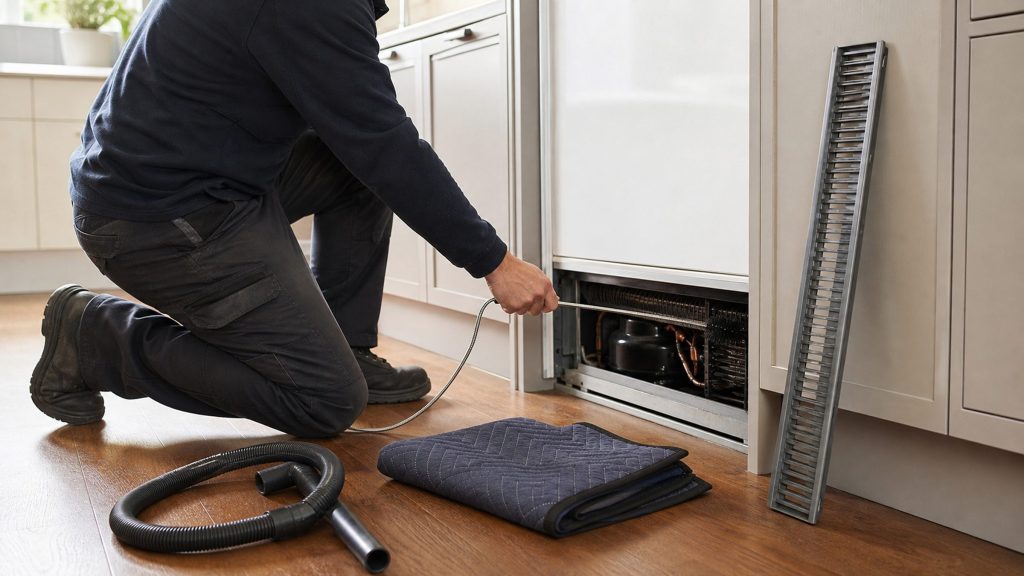
One visit covering every condenser, filter, descale and seal in the kitchen and the laundry room. In a full Miele household that can be six appliances, and doing them together is meaningfully cheaper than three separate visits.
- Every appliance in the house on one trip
- The three things this climate is hard on, all in one visit
- Water hardness set so the appliances count correctly

Questions people ask about this
The low-salt light has never come on. Is that good?
It usually means the hardness value on the appliance is set below your real water, so the machine is counting down too slowly. Check the setting rather than trusting the silence — a reminder that never arrives is not the same as a reservoir that is still full.
Can I overfill the rinse aid?
You can set the dosage too high, which is different. The reservoir has a fixed capacity, but the machine can be told to dose more per cycle than you need — and that is the usual reason people feel they are refilling it constantly.
Do I still need rinse aid with all-in-one tablets?
On this make, yes, and the reason is the drying method. A Miele dries with residual heat rather than a heated phase, so it depends on water sheeting off the load instead of beading. The rinse-aid component in a tablet is not enough for that on its own.
How does the machine know the cartridge is empty?
It counts doses rather than measuring level, which is why a cartridge swapped early and one run to the end both reset the same counter. If the wash quality dropped before the machine complained, it is worth checking the cartridge was seated properly.
Is there a way to check all three at once?
Open the door and look: the two caps in the floor of the tub and the door reservoir are all visible in ten seconds. Doing that once a month is more reliable than any reminder.
Maintenance & Prevention
More guides like this one
-
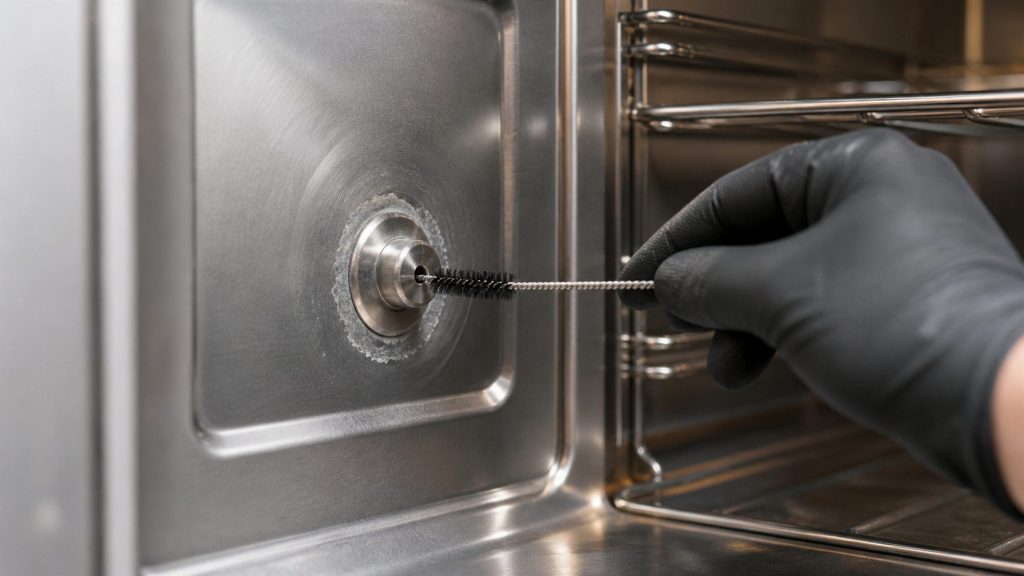
Miele Steam Oven Descale Instructions, and the Part the Program Skips
The program does the generator. The nozzle is a separate job with its own published condition, and skipping it is why a descaled machine still steams badly.
Read more -
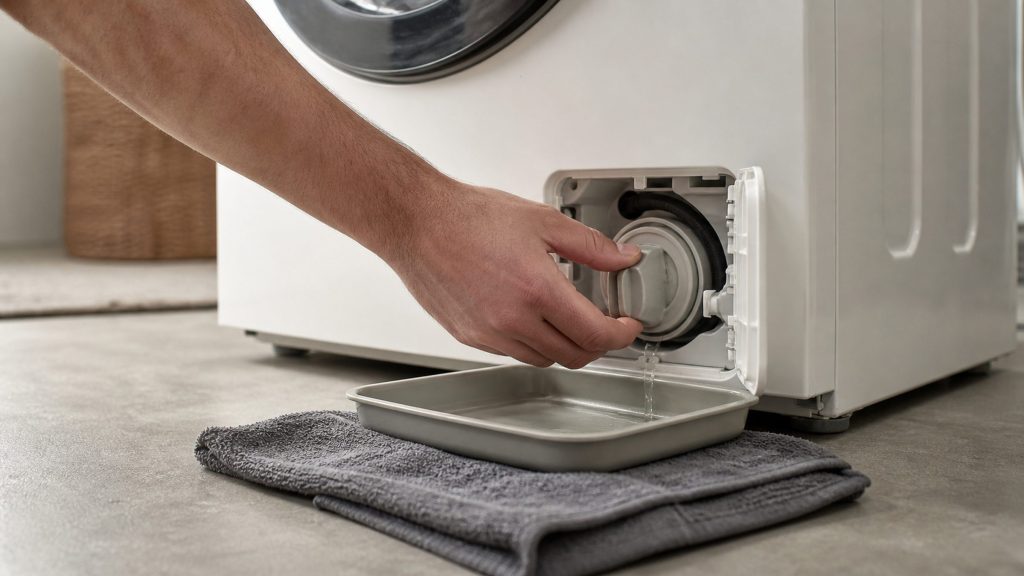
How Often Should I Clean My Miele Washing Machine in a Humid Climate?
Three jobs on three intervals, and the one that causes the smell is the fold at the bottom of the door bellows that almost nobody knows is there.
Read more -
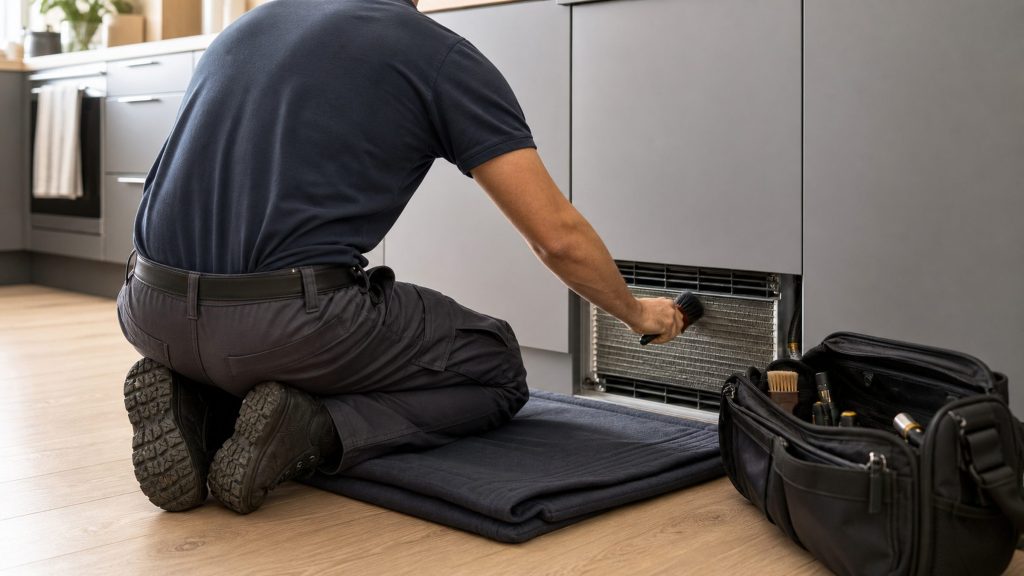
How Often Should Miele Appliances Be Serviced on a Florida Schedule?
Every interval this equipment publishes was calculated somewhere with softer water and drier air. Here is the schedule that actually fits, across the whole household.
Read more
Tell us the model number and what it is doing.
This article is based on:
- Official manufacturer documentation
- Internal repair procedures
- Technician repair history
- Company quality standards