Maintenance & Prevention
Miele Steam Oven Descale Instructions, and the Part the Program Skips
To descale a Miele steam oven, run the appliance's own descaling program with a suitable descaling agent, which handles the steam generator. Then descale the nozzle separately — remove the side runners, pull the nozzle, descale it, rinse it under running water and flush every water-carrying part before refitting. Finally, set the water hardness in the appliance's settings, because in South Florida the factory value makes the reminder arrive after the scale rather than before it.
The full guide
Miele steam oven descale instructions, and the step most people miss
There are three parts to this job and the appliance only does one of them for you.
The descaling program handles the steam generator — the vessel where water is boiled — and that is what the reminder on the display is about. It is the part everybody does, and on its own it is not enough.
The nozzle is a separate procedure. This maker publishes a condition specifically for a nozzle that needs descaling, which tells you how routine it is, and it is not touched by the program. A machine that has been descaled and still steams poorly is very often a machine whose generator is clean and whose nozzle is not.
The water hardness setting is the one that changes anything permanently, and almost nobody has ever set it.
Before you start
The appliance must be cold. Not warm — cold. There is a real burn risk in a steam oven that has been used recently, and the manufacturer's own safety wording on this is blunt: a great deal of hot steam escapes when the door is opened, and the walls, the food and the accessories all get very hot.
Choose a descaling agent. The manufacturer's own product, or a suitable proprietary equivalent. What you should not use is household vinegar. It is aggressive toward seals and metals in ways a formulated product is not, and on a sealed steam generator that is a poor trade for the money saved.
Part one: the generator
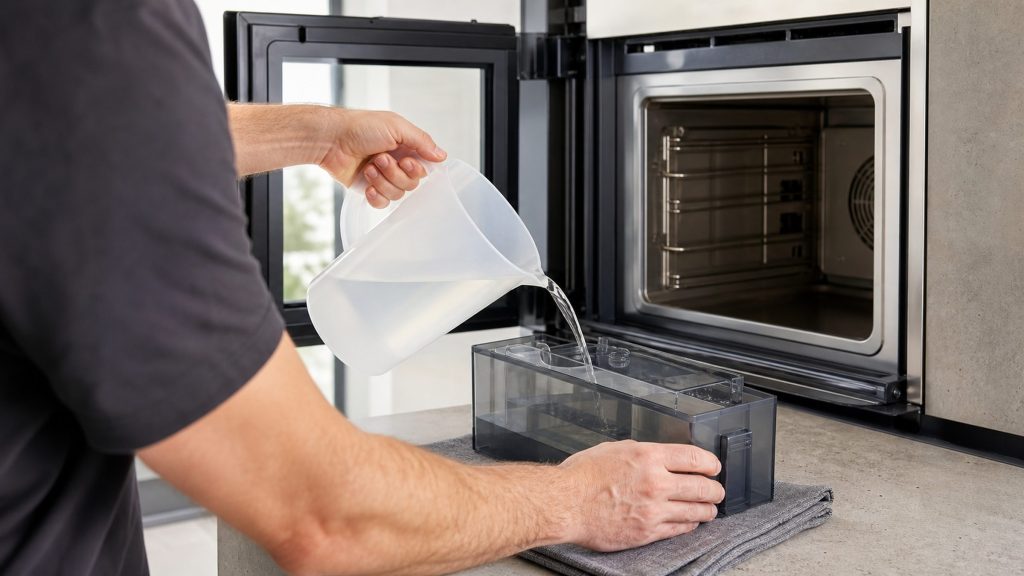
Fill the water container with the descaling solution at the strength the product specifies, put it in, and start the appliance's descaling program from the settings menu.
The machine does the rest. It will take a while, it will rinse itself afterward, and it will tell you when it is finished.
If the program reports that the tablets did not dissolve — which is a condition this maker publishes — clear the undissolved residue and run it again. That usually means the water was not warm enough or the product went in somewhere it should not have.
Part two: the nozzle, which is the actual point of this page
Once the appliance is cold again:
- Remove the side runners from the cavity. They lift out; nothing needs a tool.
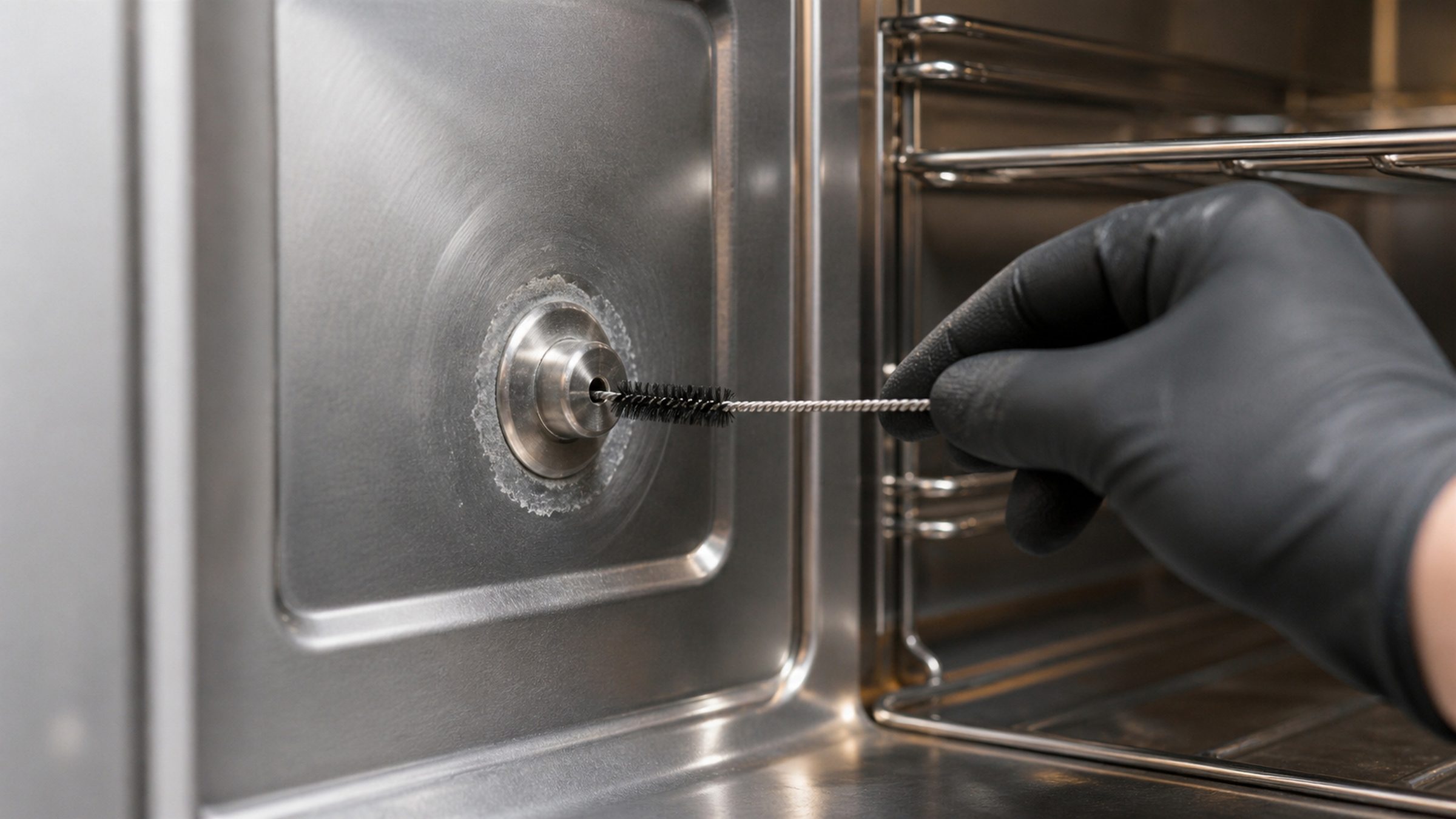
- Pull the nozzle out. It draws straight out of its seat.
- Descale it in the same solution — a container of it on the counter, not in the machine.
- Rinse it under running water. Thoroughly. Not a wipe. Whatever is left on it goes into the next thing you cook.
- Flush every part of the appliance that carries water before refitting, which the manufacturer states explicitly. Otherwise the first steam cycle carries descaler into the cavity.
- Refit the nozzle and the runners, close the door, and run a steam cycle at 212°F with nothing in the oven, letting it run through fully.
That whole sequence is twenty minutes and it is the difference between an oven that is descaled and one that has had its descaling program run.
Part three: the setting that makes the next one honest
Go into the appliance settings and set the water hardness to what your supply actually is.
The oven works out its descaling interval from that number. Left at the factory default — which assumes softer water than Miami-Dade, Broward or Palm Beach provides — it counts down too slowly, and the reminder arrives after the scale has already built rather than before.
Your utility publishes the figure and a test strip confirms it in a minute. Set it once and every future reminder becomes trustworthy.
Why this matters more here than almost anywhere
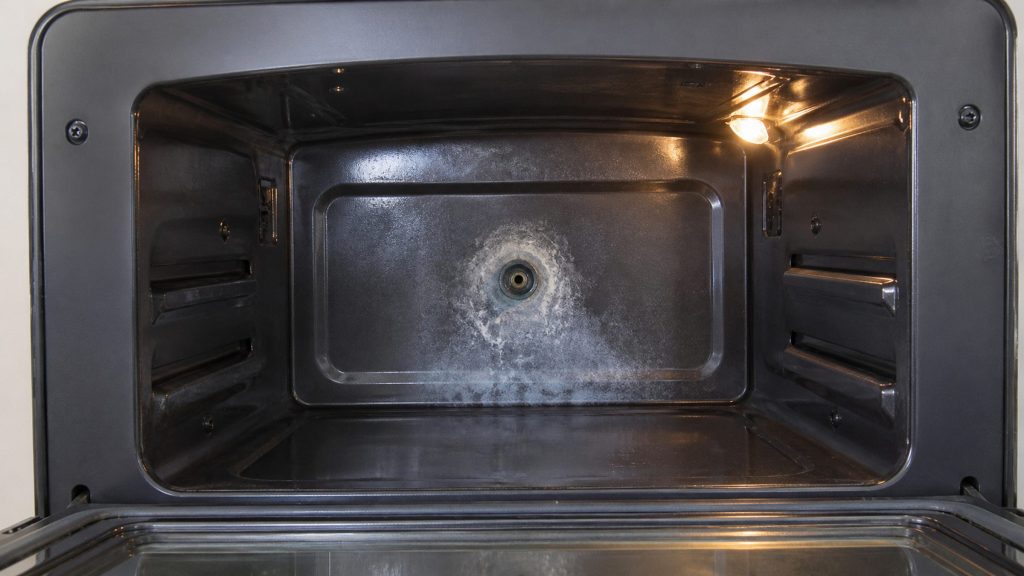
Two facts multiply together. The water is hard, because the supply comes out of limestone. And a steam oven boils that water continuously, leaving everything that was dissolved in it behind on the generator, the nozzle and the level sensors.
The result is that this appliance in this city needs a maintenance rhythm that its own default settings do not provide. That is not a defect. It is a schedule calculated somewhere else.
What scale actually costs if you leave it
Weak steam. The first symptom and the one people live with, because it arrives gradually.
A blocked nozzle, which is a published condition and a service call.
A level switch blocked by limescale deposits — also published, and the point at which the machine stops rather than underperforms.
The generator. The expensive end, and the reason a descaling row exists on this site at a fraction of the price.
Twenty minutes, twice as often as the machine asks, until the hardness is set properly. Then whenever it asks.
What to do if the machine will not run the program at all
Two situations, and neither is the generator.
It reports no water with a full container. Check the black suction hose inside the container — the maker names it as a cause, it has to be present, seated and vertical, and it is the first thing to look at. If your house has a reverse-osmosis system, that is the other documented cause: osmosis water can be too pure for the appliance to detect electrically, and the manufacturer's own answer is to bypass the system or add a pinch of salt.
The float switches are jammed. Also published, also in the container, and also visible without tools. Worth a look before assuming anything mechanical.
Both of those are the water path rather than scale, and neither needs a descaling agent to fix.
Independent Miele service across Miami-Dade, Broward and Palm Beach. We are not affiliated with, authorized by or endorsed by any manufacturer.
If it turns out to be a repair
What this leads to, and what it costs
Every job on this site is priced the same way: an on-site diagnostic first, the figure agreed in writing before anybody starts.
-
H wall ovens · DGC combi-steam · Speed ovens · Warming and vacuum drawers Ovens, steam ovens and drawers
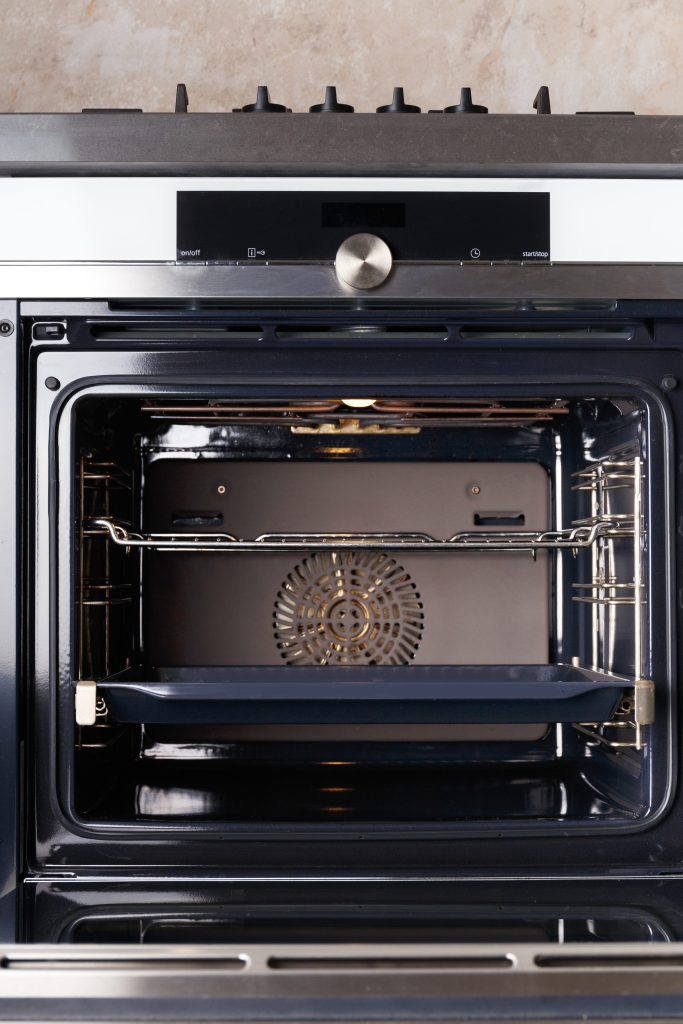
One control family covers the wall ovens, the combi-steam ovens, the speed ovens and the drawers, which is why they share a page. The steam side adds a set of conditions all its own — about the intake valve, the nozzle, the container, and the hardness of the water itself.
- A cavity that will not reach or hold temperature
- A steam program that stops and asks about water
- A door locked after a self-clean
-
Or should be, and has not asked Steam oven is asking to be descaled
The reminder is calculated from a water-hardness figure set at the factory, and South Florida water is harder than that figure — so on this coast the message arrives after the scale, not before it.
- A descaling reminder on the display
- Steam that is weaker than it was
- Descaling tablets not dissolving fully
-
from $145 Steam oven descaling
The most useful row on this site, and it is maintenance. A combi-steam oven calculates its descaling interval from a water hardness figure set at the factory — a figure South Florida water exceeds — so the reminder arrives after the scale does.
- Nozzle and generator descaled, not just the reminder cleared
- Water hardness set on the appliance so the next interval is right
- The whole water path flushed afterwards
Questions people ask about this
Can I use vinegar?
Not on a steam generator. Household vinegar is aggressive toward the seals and the metal in ways a formulated descaler is not, and this is one appliance where the cheap substitute is a genuinely bad idea. A proprietary descaler does not have to be the manufacturer's own.
The tablets did not dissolve fully.
That is a condition this maker publishes rather than a mystery, and it usually means the water was not hot enough or the tablets went in the wrong place. Run the program again with the residue cleared, and if it repeats, the water path is worth a look.
How often here?
More often than the appliance asks, because its interval is computed from a hardness value that is lower than South Florida supply. Setting the correct value is what makes the machine's own schedule trustworthy — until then, roughly twice as often as it asks is a sensible assumption.
What happens if I never descale it?
Weak steam first, then longer cooking times, then the generator itself — which is the repair this whole page exists to prevent. Scale does not announce itself; the machine simply gets worse at its job.
Do I need to descale a plain oven too?
No. This applies to the steam and combi-steam ovens, because they boil water. A conventional oven has nothing to scale.
Maintenance & Prevention
More guides like this one
-
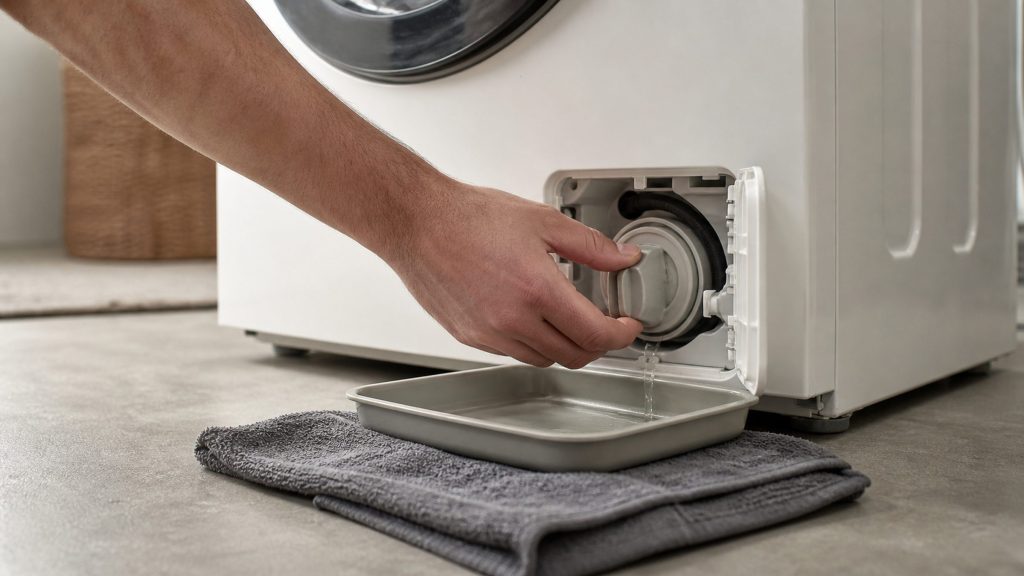
How Often Should I Clean My Miele Washing Machine in a Humid Climate?
Three jobs on three intervals, and the one that causes the smell is the fold at the bottom of the door bellows that almost nobody knows is there.
Read more -
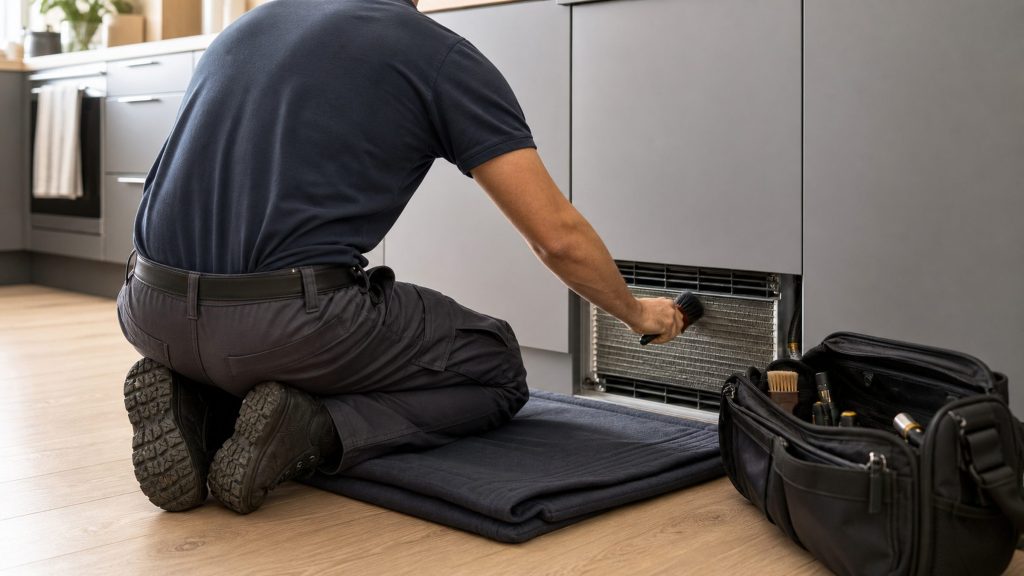
How Often Should Miele Appliances Be Serviced on a Florida Schedule?
Every interval this equipment publishes was calculated somewhere with softer water and drier air. Here is the schedule that actually fits, across the whole household.
Read more -
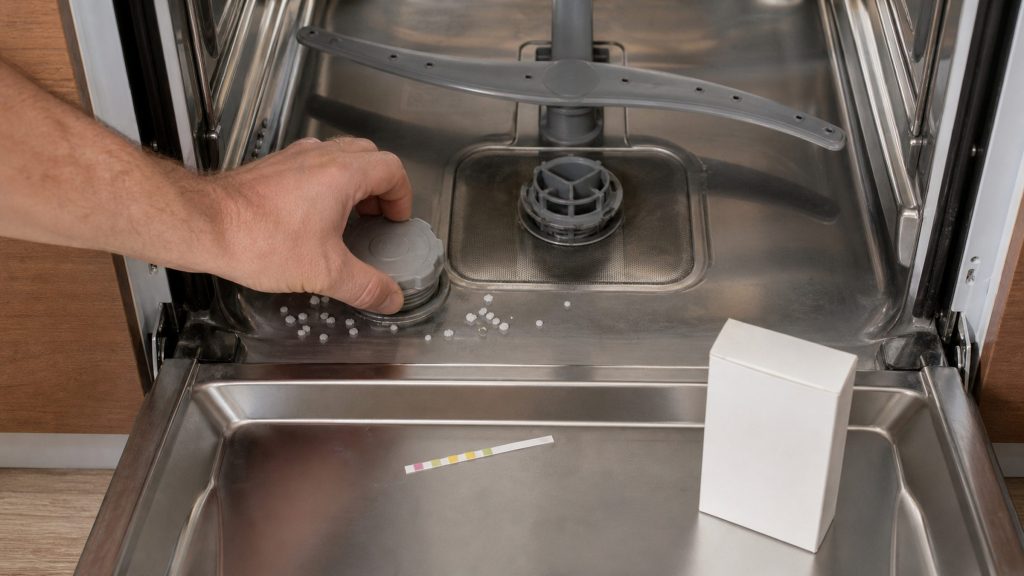
How Often to Top Up Salt, Rinse Aid and Detergent on a Miele Dishwasher
Three reservoirs, three intervals, three completely different symptoms when one runs dry — and every published interval assumes softer water than this city supplies.
Read more
Tell us the model number and what it is doing.
This article is based on:
- Official manufacturer documentation
- Internal repair procedures
- Technician repair history
- Company quality standards