Maintenance & Prevention
How Often Should I Clean My Miele Washing Machine in a Humid Climate?
Clean the drain filter on a Miele washing machine quarterly, wipe the bottom fold of the door bellows monthly, and run a hot maintenance wash monthly. In South Florida all three come round faster than the manual assumes, because a machine in a closed laundry closet never fully dries between loads. The bellows fold is the one owners never find, and it is where the smell almost always is.
The full guide
How often should I clean my Miele washing machine here, and which part?
There are three jobs. Everybody knows about one of them, some people know about the second, and the third — the one that actually causes the problem people complain about — is invisible unless somebody tells you where to look.
All three come round faster in South Florida than in the climate the manual was written for, and the reason is simple: a washing machine in a closed laundry closet in August never gets a chance to dry out between loads.
Monthly, and this is the one: the bottom fold of the door bellows
The rubber boot between the door and the drum is not a flat surface. It has a fold, and at the six o'clock position that fold holds water and residue permanently, because nothing in any cycle rinses it.
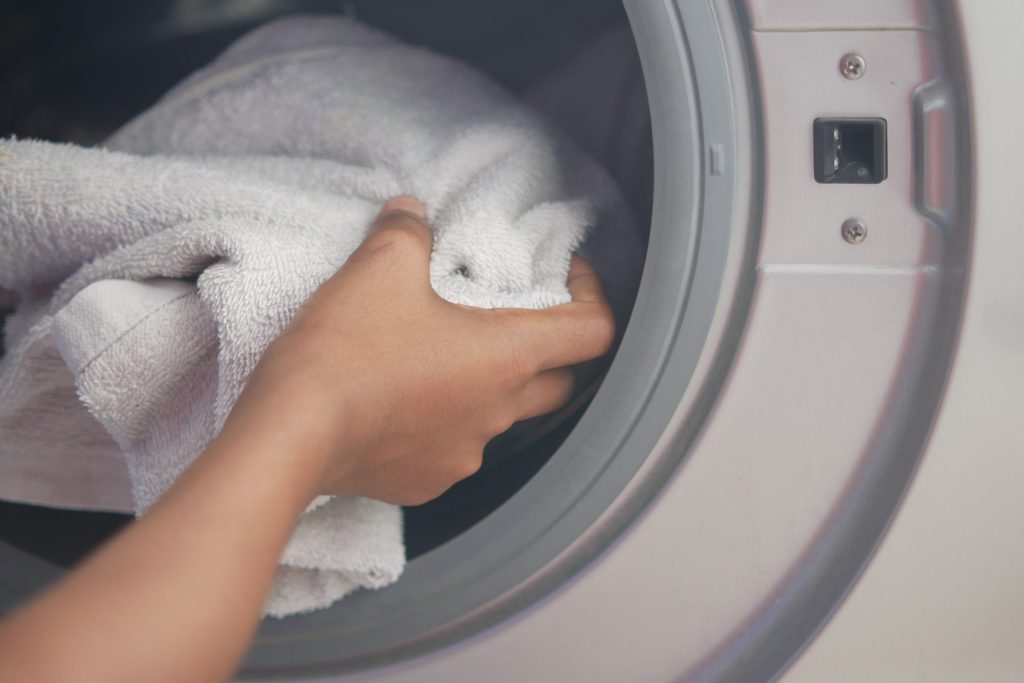
Pull the rubber back at the bottom of the opening and wipe into it. The first time you do this on a machine that has been running for a couple of years, expect to be unpleasantly surprised. Gray sludge, hair, sometimes a small object that has been living there since a previous tenant.
That fold is where the musty smell comes from about nine times out of ten. It is not the drum, it is not the detergent, and it is not the machine being defective. It is a pocket of water in a warm room.
Once a month, thirty seconds, and the difference is immediate.
Monthly: a genuinely hot empty cycle
Run the hottest program the machine has, with nothing in it and a measure of powder detergent in the drawer.
This job exists because of how everybody washes now. A 140°F cotton wash carried residue away; a 85°F daily wash does not, and it never has. Everything that builds up in a modern machine builds up because the water is too cool to move it — and once there is a film on the drum, the seal and the hoses, it is the surface everything else lives on.
Powder rather than liquid, if you have the choice: most powders contain an oxygen bleaching agent and most liquids do not. A proprietary machine cleaner is a fine substitute and is not required.
Quarterly: the drain filter
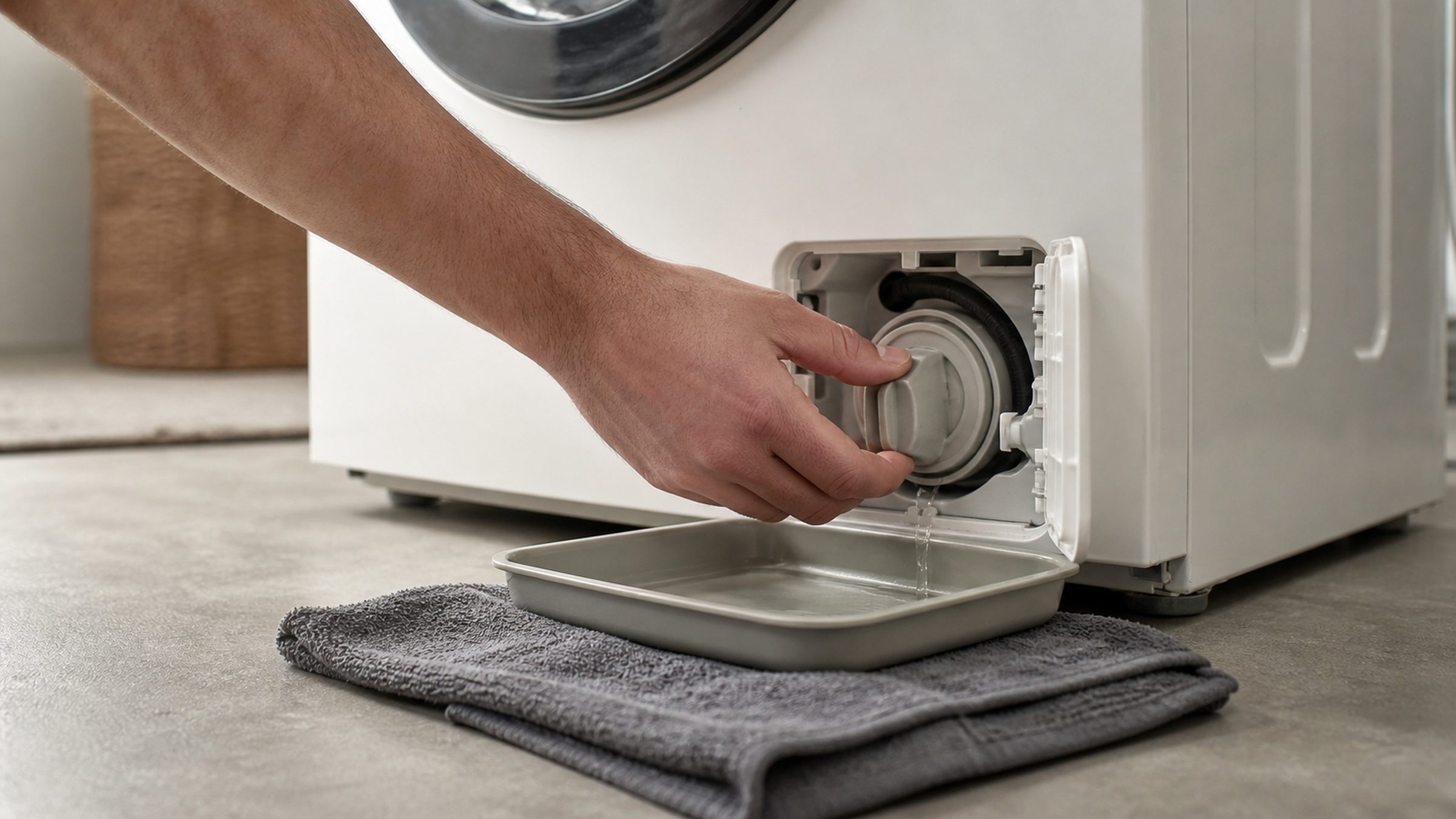
Behind the flap at the bottom front. This is the owner's part of the machine and it is placed where it is precisely so that owners can reach it.
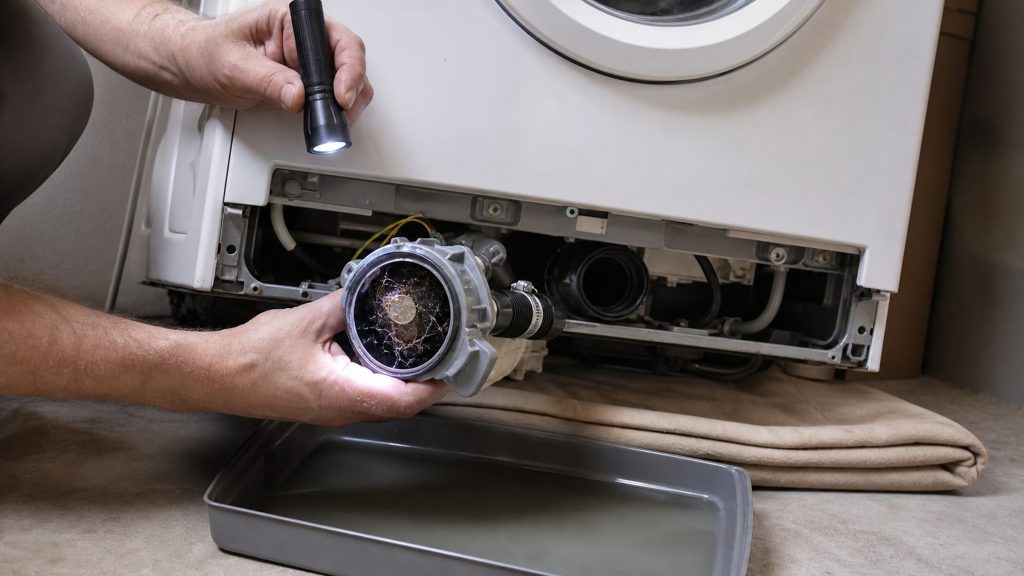
Switch the machine off at the wall first. Use the short drain hose next to the filter to empty whatever is in the drum into a shallow tray, then unscrew the filter itself and be ready for a little more water. Clear it out — hair, lint, coins, the underwiring from a bra — rinse it, and before putting it back, reach in and turn the impeller behind it with a finger. It should spin freely. Something wedged in there is a common and completely free fix for a machine that has become noisy or slow to drain.
Every three months on a household machine. Sooner if there are pets or if anybody in the house works somewhere dusty.
The habit that is worth more than all three
Leave the door on the latch and the detergent drawer pulled out an inch between loads.
That is the whole thing. It costs nothing, it takes no time, and in this climate it does more for the machine than any product sold for the purpose. A washing machine closed up after a warm cycle in a Florida laundry closet is a sealed damp box, and every problem on this page is downstream of that.
Once a year: look at the hoses
Not clean — look. The inlet hose should have no kinks, no bulges and no stiffness where it bends. The manufacturer's own guidance on a kinked inlet hose is to remove the kink and then keep an eye on that spot, because the plastic may have weakened and can tear later.
In a garage or a hot closet this matters more than in a conditioned room. It is also the one item on this page where neglect does not mean a smell or a slow drain — it means water across a floor.
What none of this fixes
If the machine is noisy specifically on the spin, and the noise rises with the speed, that is a bearing and no cleaning schedule touches it. If it will not drain after the filter has been properly cleared, that is the pump or the pressure system. And if the door will not open with water inside, drain it through the filter hose first and treat the rest as a separate problem.
What this schedule is worth against what it costs
Four minutes a month and a quarter of an hour four times a year. Against that: a door seal that lasts its design life instead of hardening early, a drain pump that is not asked to work through a filter nobody cleared, and a machine that does not smell.
The smell is what people call about. The other two are what the schedule is actually protecting, and they are the ones with a figure attached.
Worth saying plainly: none of this is specific to this make. What is specific is the climate. In a dry laundry room these intervals could be doubled and nothing would go wrong.
Independent Miele service across Miami-Dade, Broward and Palm Beach. We are not affiliated with, authorized by or endorsed by any manufacturer.
If it turns out to be a repair
What this leads to, and what it costs
Every job on this site is priced the same way: an on-site diagnostic first, the figure agreed in writing before anybody starts.
-
W1 front-loading · TwinDos · CapDosing · 24" · 120V Washing machines
A small line and a deep one: Miele sells three washing machines in the United States and builds all of them to a twenty-year design life. That changes the repair question — on a machine this age, the honest answer is usually which single part has worn rather than whether the machine is finished.
- A door that will not lock, or will not release
- A cycle that stops part-way with water in the drum
- A number on the display that returns after every reset
-
A dishwasher, a washer, or both The machine smells
Warm, damp and closed is what both of these machines are between uses, and in this climate that is all it takes. Almost none of it is a repair, and all of it is worth dealing with before it becomes one.
- A musty smell when the door is opened
- A smell that comes back within days of cleaning
- Black marks in the door seal
-
from $195 Washing machine drain & pump repair
A cycle that stops with water in the drum, or a machine that will not empty at the end. The W1 machines report the water path in detail, so the diagnosis is usually short — what lengthens the visit is getting to the back of a machine in a closet.
- Drain filter and pump checked before any part is ordered
- Pressure system tested, not assumed
- Machine drawn out and put back level

Questions people ask about this
Why does a machine that washes need cleaning?
Because almost nobody washes hot any more. Detergent and softener residue that a 140°F wash would carry away builds up at 85°F, and in a warm damp room it becomes the film that everything else grows on. The monthly hot cycle is what a lifetime of cold washing removed.
Do I need a special machine cleaner?
Not necessarily. A hot empty cycle with ordinary powder detergent does most of it — powder contains a bleaching agent that liquid usually does not. A proprietary cleaner is a reasonable finish rather than a requirement.
How bad can the drain filter get?
It fills with hair, lint, coins and whatever came out of a pocket, and a loaded one produces exactly the complaint a failed pump produces. It is the owner's part of this machine and it is behind a flap for that reason.
Is the bellows fold really that important?
It is the single most common source of the smell people blame on the machine. Nothing rinses it, water sits in it, and it is out of sight unless you deliberately pull the rubber back.
My machine is in the garage. Does that change anything?
It changes the hoses more than the drum. Salt-carrying air and bigger temperature swings age rubber faster, so the yearly look at the inlet hose matters more in a garage than in a purpose-built laundry room.
Maintenance & Prevention
More guides like this one
-
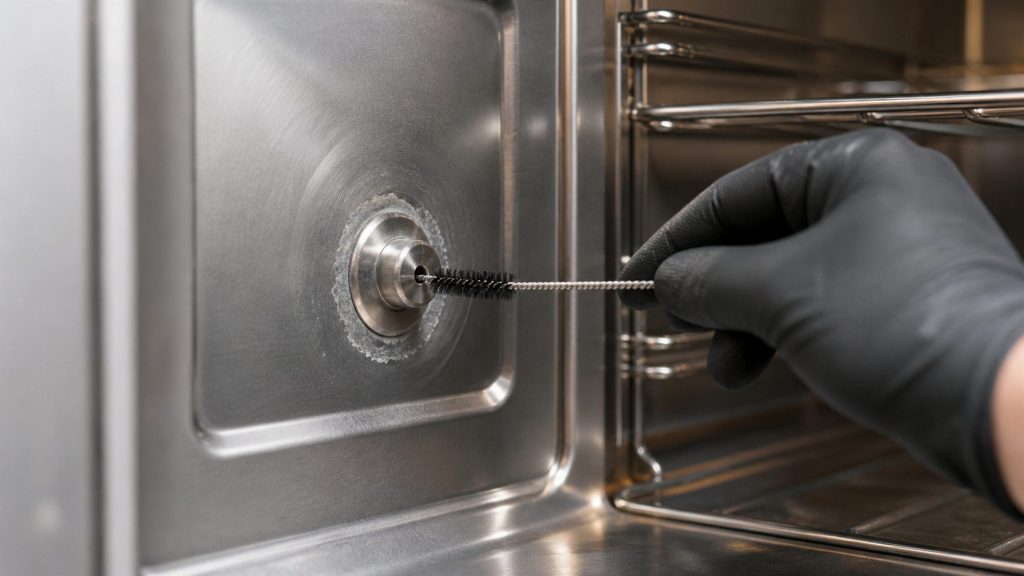
Miele Steam Oven Descale Instructions, and the Part the Program Skips
The program does the generator. The nozzle is a separate job with its own published condition, and skipping it is why a descaled machine still steams badly.
Read more -
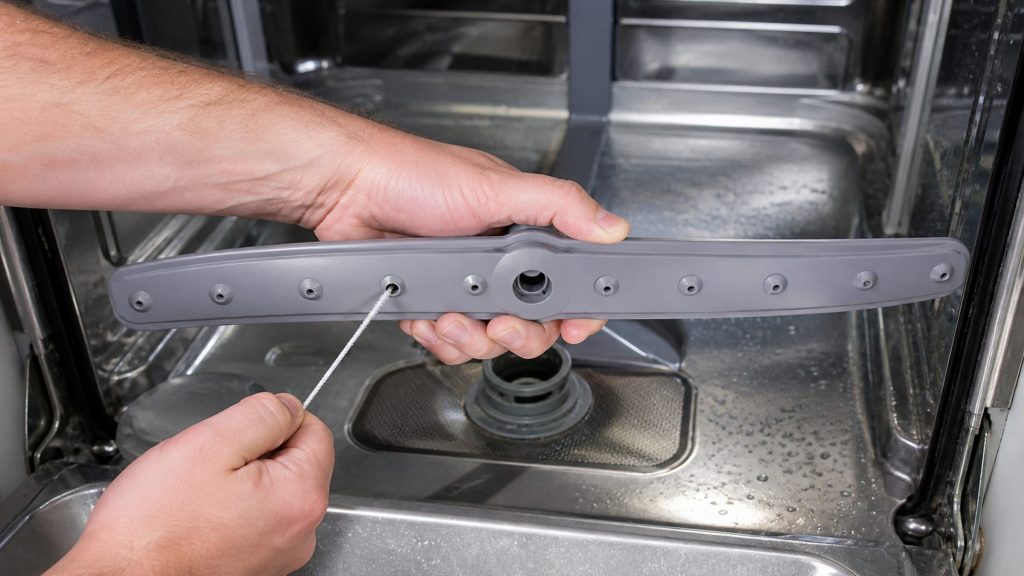
How Often Should I Clean My Miele Dishwasher? Four Jobs, Four Clocks
Everybody eventually finds the filters in the tub. Almost nobody finds the filter at the tap — and that is the one that stops the machine filling.
Read more -
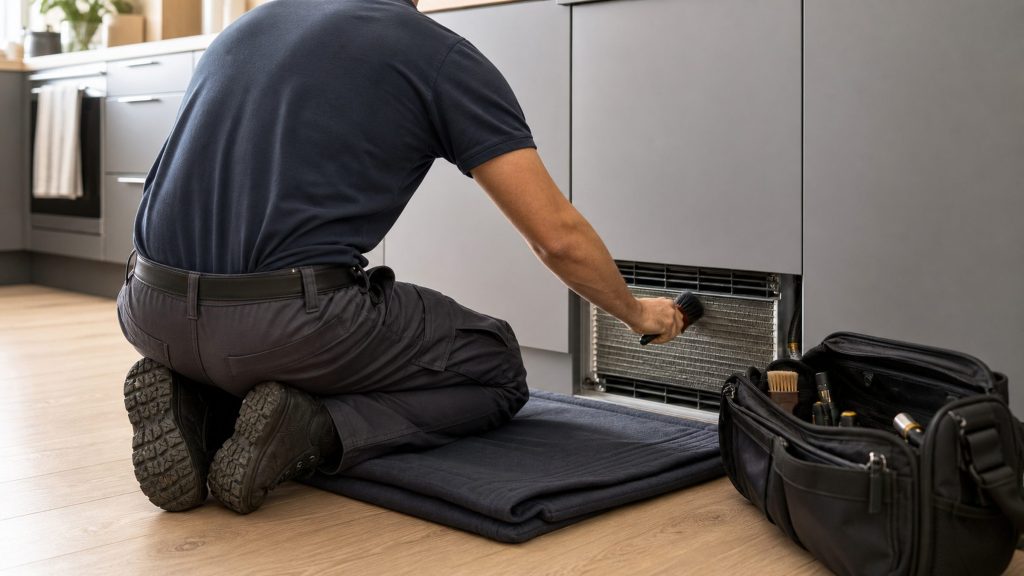
How Often Should Miele Appliances Be Serviced on a Florida Schedule?
Every interval this equipment publishes was calculated somewhere with softer water and drier air. Here is the schedule that actually fits, across the whole household.
Read more
Tell us the model number and what it is doing.
This article is based on:
- Official manufacturer documentation
- Internal repair procedures
- Technician repair history
- Company quality standards