Maintenance & Prevention
How Often Should I Clean My Miele Dishwasher? Four Jobs, Four Clocks
Clean the filters in the base of a Miele dishwasher monthly, check the spray arms quarterly, and clean the inlet filter at the water connection once a year — sooner in South Florida, where hard water loads it faster than any published interval assumes. The inlet filter is the one people never find, because it is inside the screw connection at the tap rather than inside the machine, and a blocked one is a common cause of a dishwasher that will not fill.
The full guide
How often should I clean my Miele dishwasher on this water?
There are four maintenance jobs on this machine and they run on four different clocks. Three are inside the appliance and one is not — and the one that is not is the only one that will stop the machine dead.
Everything below assumes South Florida supply. Every interval here is shorter than the interval in the book, and that is not caution: it is the arithmetic of hard water against a schedule calculated for somewhere softer.
Monthly: the filters in the base of the tub
Take out the lower basket. In the floor there is a cylindrical coarse filter that twists out, and a flat fine mesh underneath it that lifts away once the coarse one is gone.
Brush them. Not rinse — brush, with an ordinary washing-up brush under a hot tap. The coarse basket looks dirty and rinses clean in seconds; the fine mesh looks clean and is not, and it is the one doing the work. Grease films it in a way water alone does not lift.
Two minutes, once a month. This single job prevents most of what people eventually call us about on a dishwasher: smells, a slow drain, and dishes that come out gritty.
Quarterly: the spray arms
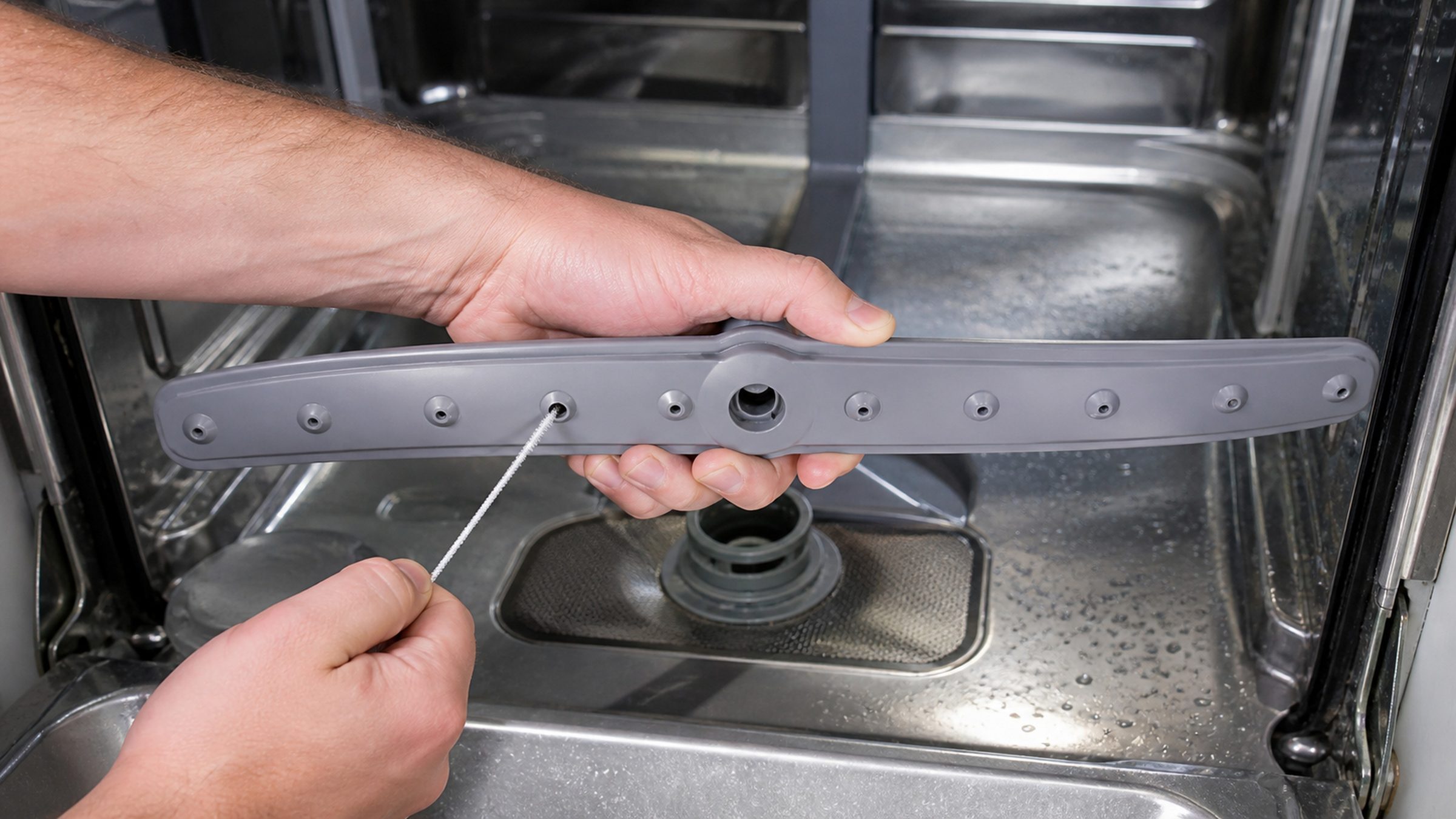
Two of them, sometimes three. Turn each one by hand — it should spin freely with no catching. Then take it off, which on most of these machines is a twist or a single clip, and hold it up to a window.
You are looking through the jets. A clear one shows daylight through every hole. A scaled one has holes that have narrowed to pinpricks, and in this water that happens over about two years rather than ten. A cocktail stick or a straightened paperclip clears them.
This is the maintenance job behind "the dishwasher does not clean as well as it used to." There is rarely a moment where it fails; the pressure just drops.
Quarterly: the seal and the tub lip
Wipe the door seal all the way round and the lip of the tub that the door closes onto. Both collect a dark residue that is the beginning of a smell, and both are reachable with a cloth in under a minute.
While you are there, look at the seal rather than just wiping it. One that has gone hard, or lifted at a corner, is letting steam out into your cabinetry — cheap to replace and expensive to ignore.
Yearly: the filter almost nobody knows about
This is the one. The inlet filter sits inside the screw connection where the hose meets the tap, not inside the machine, which is why owners never meet it and why it is the cause the manufacturer lists first for a dishwasher that will not fill.
Before you touch it: close the tap and unplug the machine. The plastic housing at that connection contains an electrical water valve and it must not go under water.
Then unscrew the connection, take out the seal, and grip the little plastic filter bar with needle-nose pliers to draw it out. Rinse it under running water — in this city expect it to be genuinely furred rather than dusty — put it back with its seal, screw the connection on firmly and open the tap slowly, watching for drips.
Once a year is a reasonable rhythm here. On a machine that has never had it done at all, do it now rather than waiting for a schedule.
Monthly, at the end: the hot empty cycle
Hottest program the machine has, nothing in it, a detergent tablet in the dispenser. This is where a proprietary dishwasher cleaner earns its keep, because by this point everything mechanical has already been dealt with and there is nothing left for it to fail against.
Order matters. A cleaner run on a machine with loaded filters and scaled jets accomplishes very little, which is why people conclude the products do not work.
What this schedule is actually protecting
Three things, and none of them are the dishes.
The heating circuit. An element coated in scale transfers heat badly, runs hotter to compensate and ages faster. That is a real repair with a real figure, and softened water plus clean jets keeps it away.
The inlet valve. A filter left to block completely puts the valve under strain, and it is the more expensive of the two parts.
The drain pump. Fine residue that gets past neglected filters ends up somewhere, and it ends up there.
Two minutes a month and twenty minutes a year, against three parts that each cost more than a year of doing it properly.
What none of this reaches
Two things people expect a cleaning schedule to fix and it will not.
Cloudy glassware. That is water hardness rather than dirt, and it is permanent once it has happened. The answer is the salt reservoir and the hardness setting, not a cleaner.
A machine that will not fill or will not drain. Those are conditions the appliance reports with a number, and the number tells you which stage it stopped at. Look it up before assuming it is maintenance — roughly four in ten of the dishwasher conditions this maker publishes are things it asks the owner to try, and the rest are not a cleaning job at all.
Independent Miele service across Miami-Dade, Broward and Palm Beach. We are not affiliated with, authorized by or endorsed by any manufacturer.
If it turns out to be a repair
What this leads to, and what it costs
Every job on this site is priced the same way: an on-site diagnostic first, the figure agreed in writing before anybody starts.
-
Fully integrated · Semi-integrated · Built-under · ADA · AutoDos · 18" and 24" Dishwashers
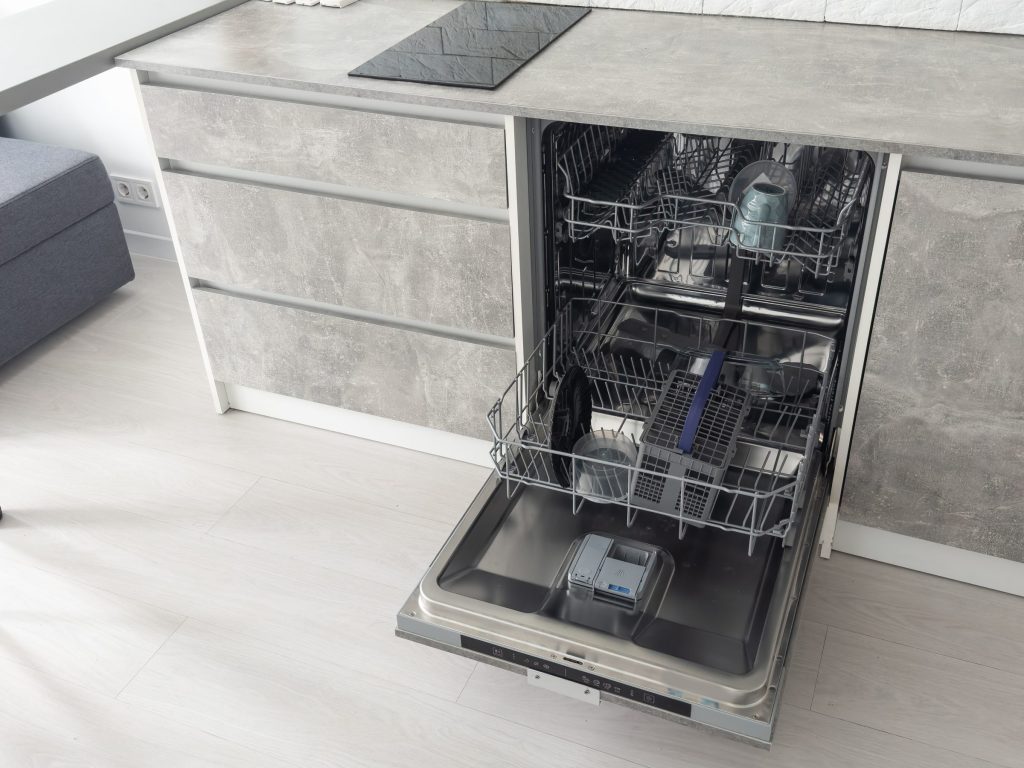
The appliance this name means in most American kitchens, and the one that tells you the most about itself. A Miele dishwasher reports the water path in detail — the tap, the inlet filter, the hose, the drain — which is why more of these calls end without a part than on any other appliance in the house.
- A cycle that stops with water still in the tub
- A number on the display that comes back after every reset
- Dishes coming out spotted, or coming out wet
-
The cycle starts and no water arrives Dishwasher will not fill
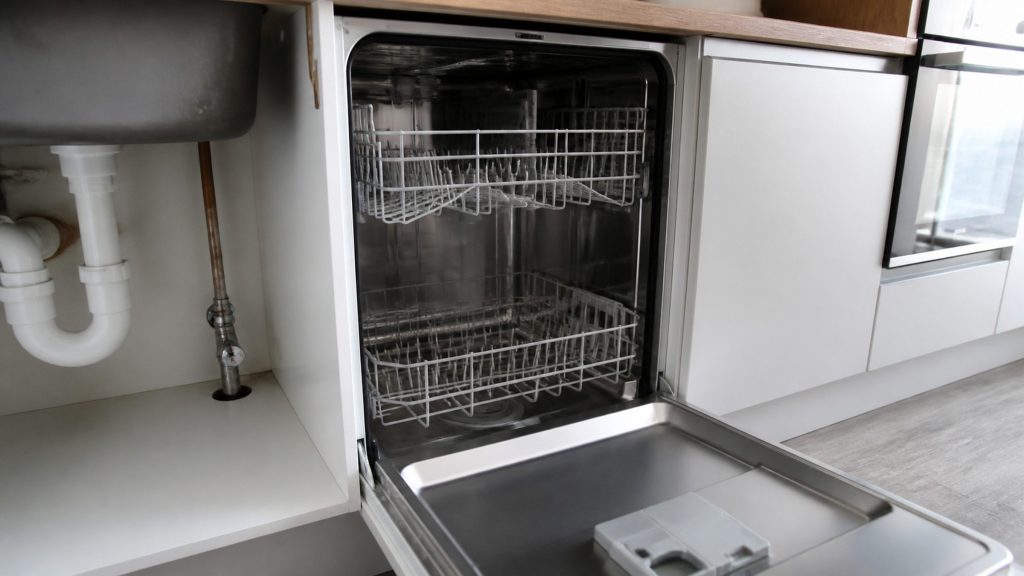
The machine starts, waits and stops. Miele publishes several separate conditions for this and they point at four things, three of which are outside the appliance and free to check.
- A cycle that stops early with dry dishes
- A number naming the water inlet
- Water arriving very slowly
-
from $145 Appliance maintenance
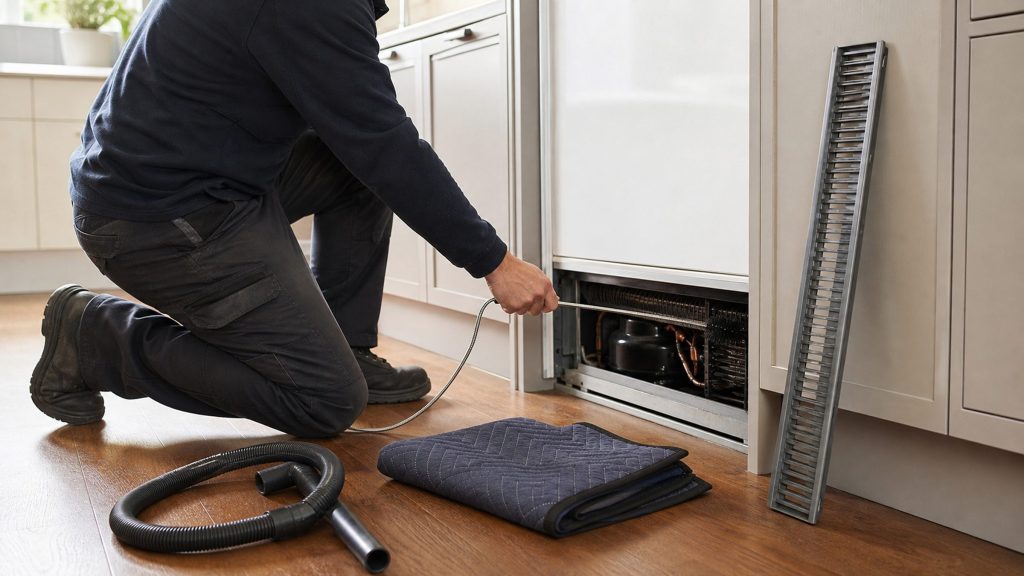
One visit covering every condenser, filter, descale and seal in the kitchen and the laundry room. In a full Miele household that can be six appliances, and doing them together is meaningfully cheaper than three separate visits.
- Every appliance in the house on one trip
- The three things this climate is hard on, all in one visit
- Water hardness set so the appliances count correctly
Questions people ask about this
Do I really need to clean the filters if I rinse plates first?
Yes, and rinsing plates first is itself a habit worth dropping — modern detergent needs something to work on. What collects in the filters is fine residue and grease rather than lumps of food, and no amount of pre-rinsing prevents it.
Where exactly is the inlet filter?
Inside the screw connection where the hose meets the tap, not inside the appliance. Close the tap and unplug the machine before touching it — there is an electrical valve in that plastic housing and it must not be dipped in water.
Can I put the filters in the dishwasher?
It defeats the point: they are what the machine filters through, so running them in it just moves the residue around. Thirty seconds under a tap with a brush does more.
Is a dishwasher cleaner worth it?
As a monthly finish after the filters are done, yes. As a substitute for doing the filters, no — it will not lift what is sitting in a mesh, and people who rely on it end up with a machine that smells of product and then of the original problem.
How do I know the spray arms are blocked?
Hold each one up to a window and look through the jets. A blocked one is obvious once you have looked at a clear one. Scale in this water closes them gradually rather than suddenly, which is why the wash seems to weaken over a couple of years.
Maintenance & Prevention
More guides like this one
-
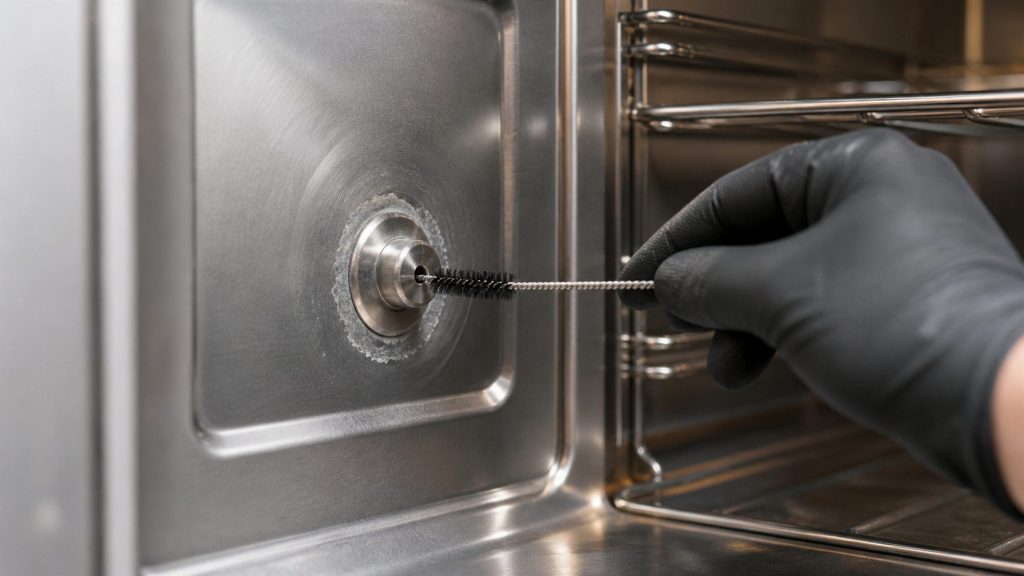
Miele Steam Oven Descale Instructions, and the Part the Program Skips
The program does the generator. The nozzle is a separate job with its own published condition, and skipping it is why a descaled machine still steams badly.
Read more -
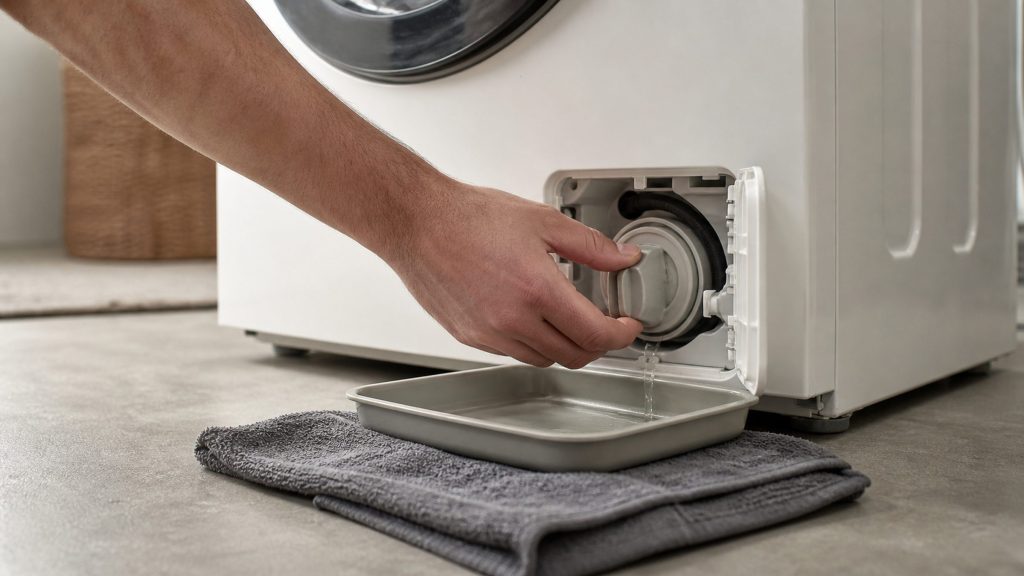
How Often Should I Clean My Miele Washing Machine in a Humid Climate?
Three jobs on three intervals, and the one that causes the smell is the fold at the bottom of the door bellows that almost nobody knows is there.
Read more -
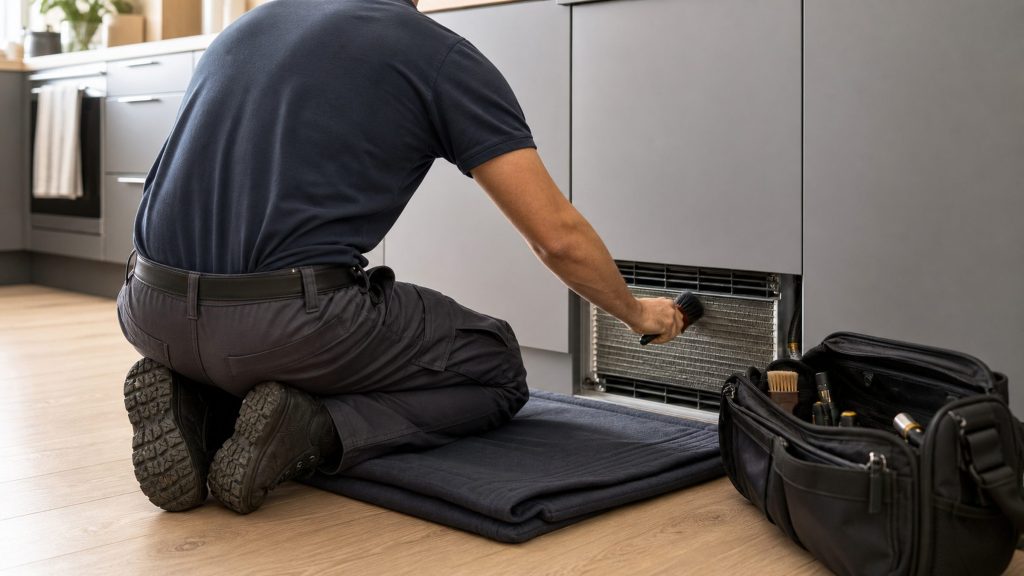
How Often Should Miele Appliances Be Serviced on a Florida Schedule?
Every interval this equipment publishes was calculated somewhere with softer water and drier air. Here is the schedule that actually fits, across the whole household.
Read more
Tell us the model number and what it is doing.
This article is based on:
- Official manufacturer documentation
- Internal repair procedures
- Technician repair history
- Company quality standards