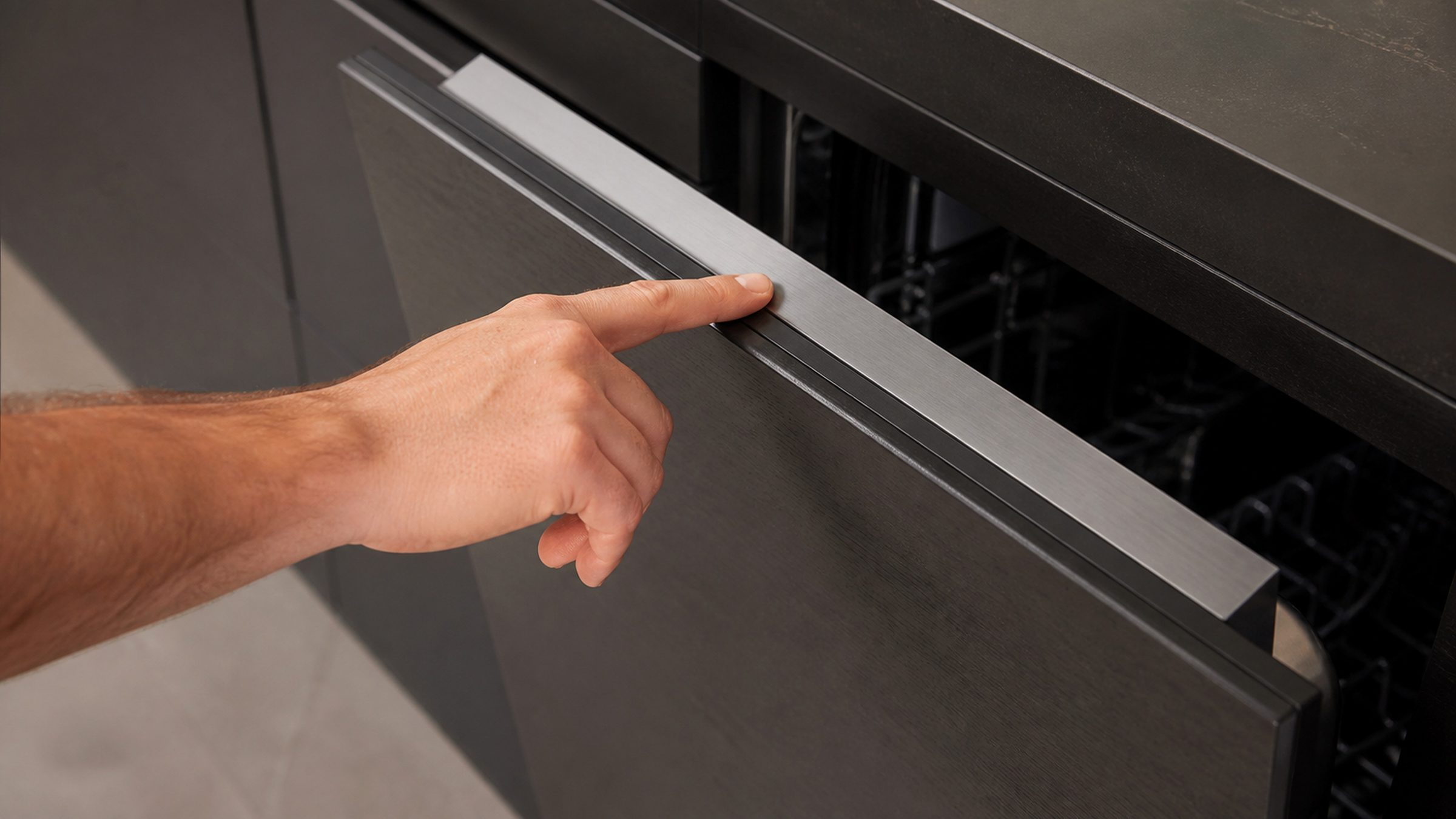
Troubleshooting
How to Reset Miele Dishwasher Controls — and What You Destroy by Doing It
To reset Miele dishwasher controls, first write down any number on the display, because resetting clears it. Then cancel the running program by holding the start button until the indicator changes, or switch the machine off at the wall or breaker for five full minutes. A power cycle clears a control that was interrupted mid-write, which happens after a brownout. It does not clear a genuine condition: if the number returns on the next cycle, the machine is reporting something real and the reset has told you so.
The full guide
How to reset Miele dishwasher controls, in the right order
The reset itself takes half a minute and there is almost nothing to it. The reason this page is longer than half a minute is that doing it first is the mistake, and it is a mistake that costs people a diagnosis.
When a Miele dishwasher stops mid-cycle it puts a number on the display. That number is the only thing the machine has told anybody about what happened, it exists nowhere else, and a reset erases it. We have arrived at plenty of kitchens where the answer was already on the screen an hour earlier and is now unrecoverable.
So the order below starts with a pen.
Step one: write the number down, exactly
The letter and every digit. F14 and F140 are unrelated problems. So are F1 and F11.
While you are there, note two more things that cost nothing and narrow the search a long way:
- Where in the cycle it stopped — at the start, mid-wash, or during the drain.
- Whether there is water standing in the tub, and roughly how much.
A machine that stopped early and dry is a fill problem. One that stopped with the tub full is a drain problem. That is half the diagnosis and it is free.
Step two: cancel the program
Hold the start button down until the program indicator changes — the exact behavior varies slightly by model, but on all of them it is a press-and-hold on start rather than a separate button.
On most machines the tub drains as part of the cancel, which is what you want before opening the door. Opening a dishwasher full of water onto a stone floor is its own small disaster.
Step three: the actual reset
Switch the machine off at the wall socket or at the breaker, not at the panel button. The panel button puts it into standby and leaves the control powered, which is why people report that the reset "did nothing."
Leave it off for five full minutes. Thirty seconds is not enough — the control holds enough residual charge to keep its state, and a short interruption often changes nothing at all.
Then switch it back on and run the shortest program with the machine empty.
What the reset actually fixes, and what it does not
It fixes a control that was interrupted mid-write. In South Florida this is not a rare event: a summer brownout or a momentary cut while a machine is running can leave the control in a state it cannot get out of. A five-minute power cycle clears that completely, and the machine goes back to normal with nothing further needed.
It does not fix anything the machine is genuinely reporting. A blocked inlet filter, a drain that will not clear, a heater that is not heating, a lock that has failed. Reset those and the number comes straight back, because the condition never went anywhere.
That is why the reset is useful as a *test* rather than as a repair. A condition that survives a proper five-minute power cycle is real, and now you know.
What to do with the number once you have it
Look it up under dishwasher specifically. This maker writes an F and a number on every appliance it builds, and roughly a third of those numbers belong to more than one machine and mean different things on each. Looking up F1 and reading about a dryer's refrigerant sensor is a genuinely easy mistake to make.
Roughly four in ten of the dishwasher conditions this manufacturer publishes are things it asks the owner to try — the tap, the inlet filter at the water connection, a kinked hose, the drain. The rest carry the maker's own sentence that they cannot be cleared without a technician, and those are worth booking rather than resetting repeatedly.
The one situation where resetting repeatedly is a bad idea
If the machine trips the breaker or an RCD when it runs, stop. That is not a control problem and repeatedly restoring the supply removes the protection that is doing its job. It needs looking at rather than restarting.
Everything else: write it down, cancel, five minutes, try again. In that order.
What a "reset" cannot reach at all
Three things on this machine survive every reset there is, and it is worth knowing which, because trying to clear them this way is where an afternoon goes.
The water hardness setting. Stored deliberately. If the machine is regenerating its softener on the wrong schedule, no power cycle changes that — the setting has to be corrected in the menu.
A locked salt or rinse-aid reminder. Those are driven by counters that only clear when the machine registers the reservoir being refilled. A reminder that persists after you have topped up usually means the cap was not screwed down fully.
A door that has stopped latching. The control cannot start a program it cannot confirm the door for, and that reads on the panel as a machine that ignores you. It is a mechanical problem and it will still be there after the reset.
Independent Miele service across Miami-Dade, Broward and Palm Beach. We are not affiliated with, authorized by or endorsed by any manufacturer.
If it turns out to be a repair
What this leads to, and what it costs
Every job on this site is priced the same way: an on-site diagnostic first, the figure agreed in writing before anybody starts.
-
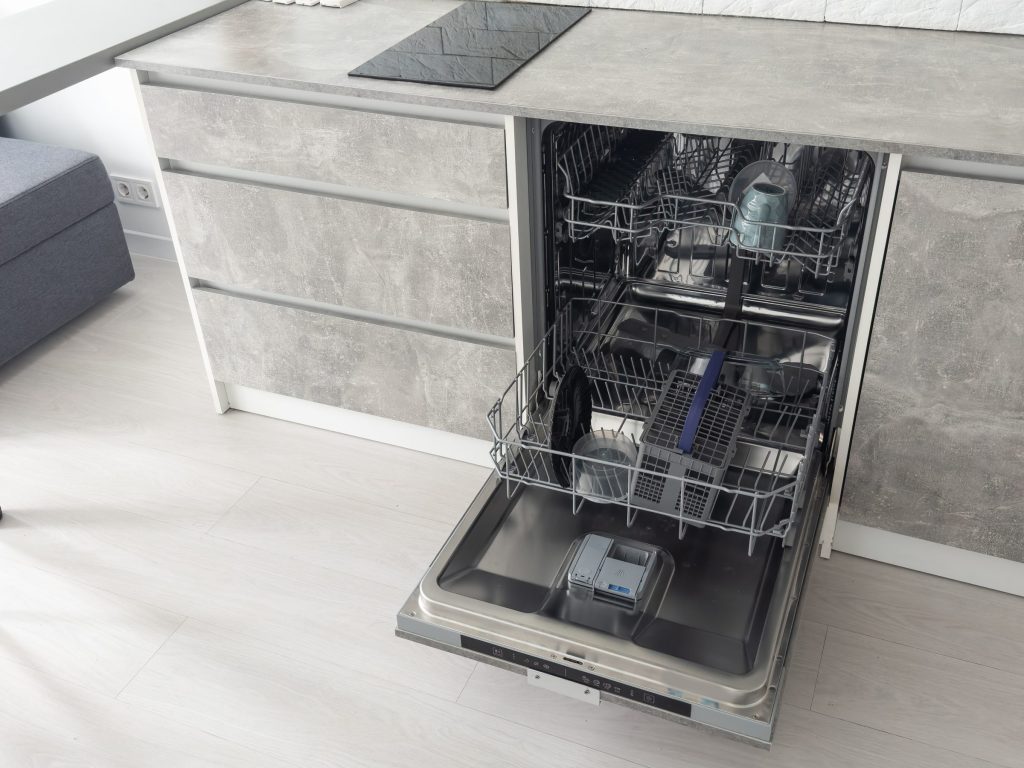
Fully integrated · Semi-integrated · Built-under · ADA · AutoDos · 18" and 24" Dishwashers
The appliance this name means in most American kitchens, and the one that tells you the most about itself. A Miele dishwasher reports the water path in detail — the tap, the inlet filter, the hose, the drain — which is why more of these calls end without a part than on any other appliance in the house.
- A cycle that stops with water still in the tub
- A number on the display that comes back after every reset
- Dishes coming out spotted, or coming out wet
-
And the cycle has stopped There is an F number on the display
Miele writes an F and a number on every appliance it builds. The number on its own is not the condition — the number plus the appliance is — and a good share of them are things the manufacturer asks the owner to try first.
- A number that returns after every reset
- The same number on two different appliances
- A number with words beside it
-
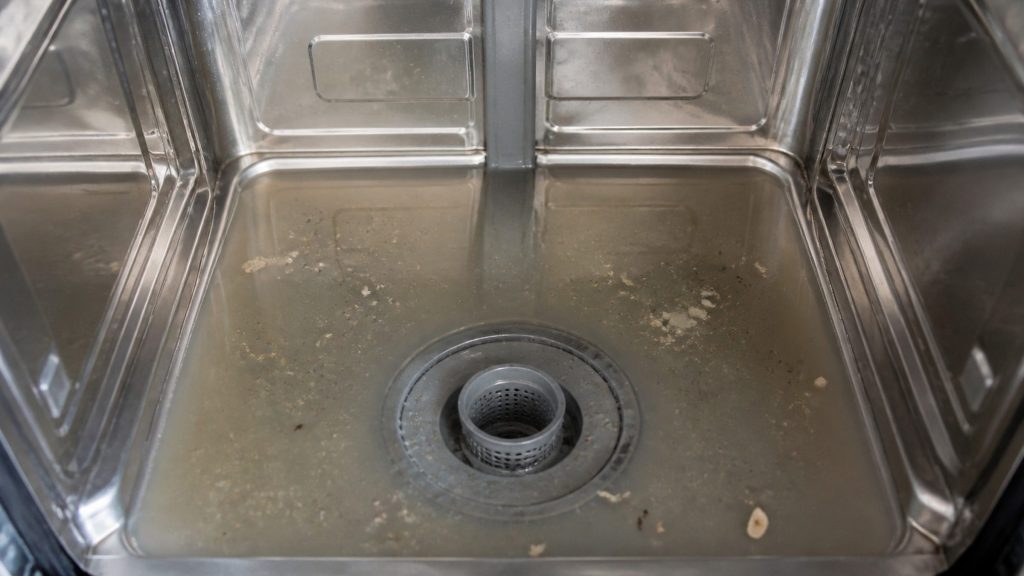
Water still in the tub at the end Dishwasher will not drain
A cycle that finishes — or stops — with water standing in the bottom of the tub. On a Miele this usually reports itself with a number, and more often than not the cause is outside the machine altogether.
- Standing water after the cycle
- A number on the display and a cycle that stopped
- Water that drains if you run it again
Questions people ask about this
Is there a reset button?
Not a dedicated one. There is a program cancel — usually the start button held down — and there is the power cycle. Those are the two, and they do different things: one abandons the cycle, the other restarts the control.
Why five minutes and not thirty seconds?
Because the control holds enough charge to keep its state alive briefly. Thirty seconds often changes nothing, and then people conclude the reset does not work. Five full minutes is the interval that reliably clears it.
The number came straight back.
Then it means something and the reset has done its job — it has told you the condition is real rather than a hiccup. Look the number up under 'dishwasher' specifically, because on this make the same number means different things on different appliances.
Will a reset lose my settings?
No. Water hardness, rinse aid dosage and language are stored and survive it. What clears are the current program, any condition on the display, and the count the machine had reached.
Does it clear a full salt or rinse-aid reminder?
No, and it should not. Those are triggered by counters that only reset when the machine sees the reservoir refilled. A reminder that persists after topping up is worth a look at how full it actually is.
Troubleshooting
More guides like this one
-
After a South Florida Power Cut: How to Reset Miele Oven Controls
The manufacturer publishes a condition specifically for the supply being interrupted mid-cycle. That makes this a documented event rather than a mystery — and it has a documented answer.
Read more -
How to Reset Miele Washing Machine Controls on a W1, and When Not To
If the door is locked with a load inside, the reset is not your first move — draining it is. That distinction is the whole page.
Read more -
How to Reset Miele Dryer Filter Reminders — Three Reasons They Return
A message that survives cleaning is either a reminder that needs acknowledging, a filter cleaner than it looks, or a condenser the reminder was never about.
Read more
Tell us the model number and what it is doing.
This article is based on:
- Official manufacturer documentation
- Internal repair procedures
- Technician repair history
- Company quality standards