Troubleshooting
The Miele Dryer Filter Nobody Finds: Cleaning the Plinth Filter
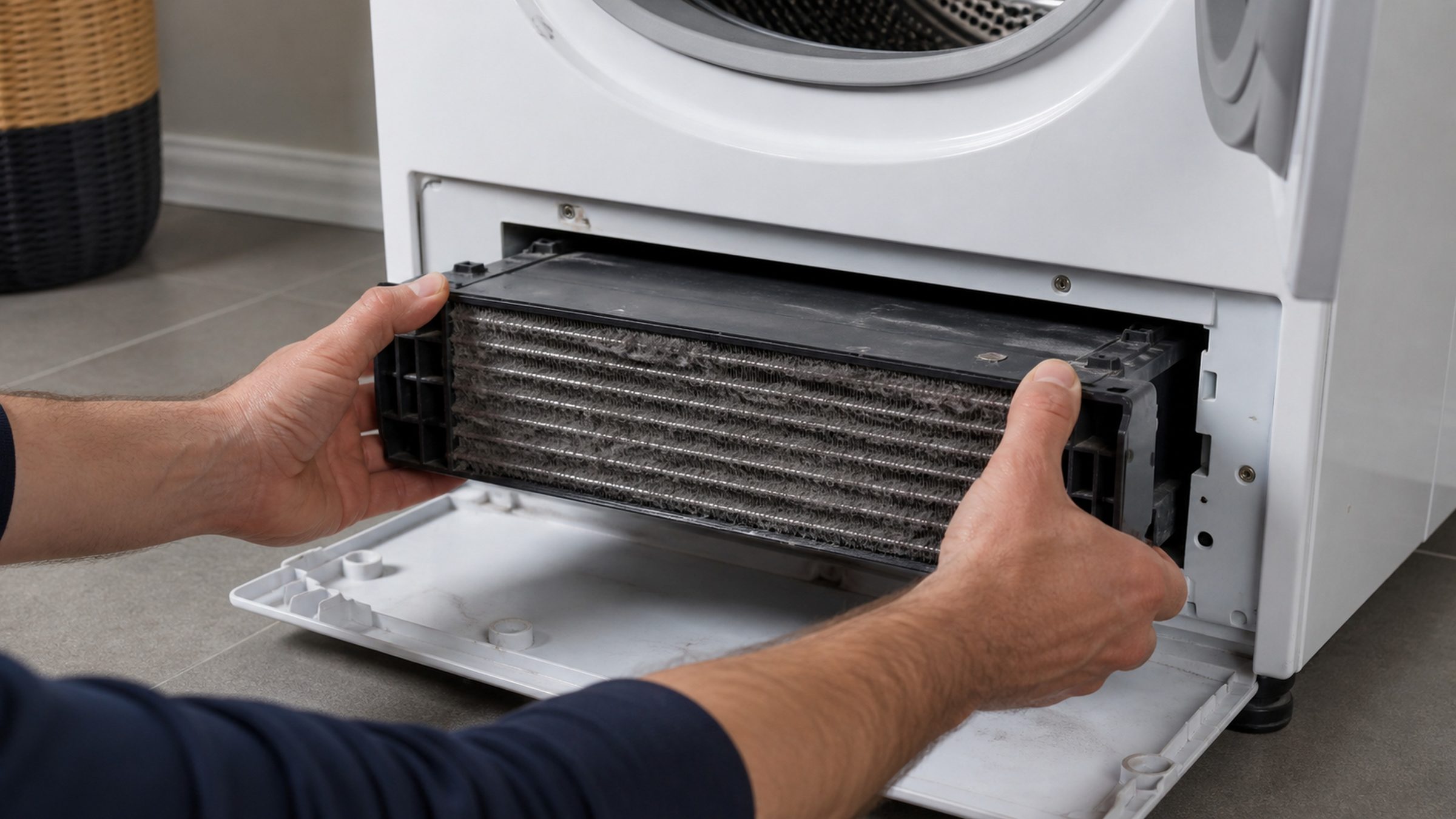
The plinth filter on a Miele heat-pump dryer sits behind the panel at the bottom front, in front of the condenser block, and it is the second of two filters — most owners only ever clean the one in the door opening. Open the plinth flap, remove the filter, rinse it under running water, let it dry fully before refitting, and check the condenser fins behind it at the same time. In South Florida this needs doing far more often than the manual suggests, because the lint here is damp and packs rather than lifting off.
The full guide
Cleaning the plinth filter on a Miele dryer, and why it matters here
There are two filters on this machine. Almost everybody meets the first one — it is in the door opening, you see it every time you unload, and cleaning it is obvious.
The second one lives behind the panel at the bottom front, in front of the condenser block. It is finer, it is out of sight, and on the machines we open in South Florida it has frequently never been touched. It is also the one that decides whether the appliance works properly, because it is protecting the part the whole machine depends on.
Why a heat-pump dryer cares so much about a filter
A vented dryer heats air and throws it outside. If a filter is partly blocked, it runs less efficiently and that is roughly the end of it.
This machine does not throw anything outside. It moves heat around a sealed refrigerant loop, condensing the moisture out of the air on a cold surface and putting the heat back in on a warm one. Both of those surfaces are behind the plinth, and both of them need air moving across them freely.
Restrict that airflow and the machine does not stop. It works harder for longer, at a lower efficiency, with the compressor running against a resistance it was not designed for — for years, quietly.
Miele publishes a condition for exactly this, naming the lint filters and the plinth filter as the cause. That is the manufacturer saying, in its own documentation, that this is what goes wrong.
The step-by-step
Switch it off at the wall. Put a towel down — a small amount of water usually comes out with the filter.
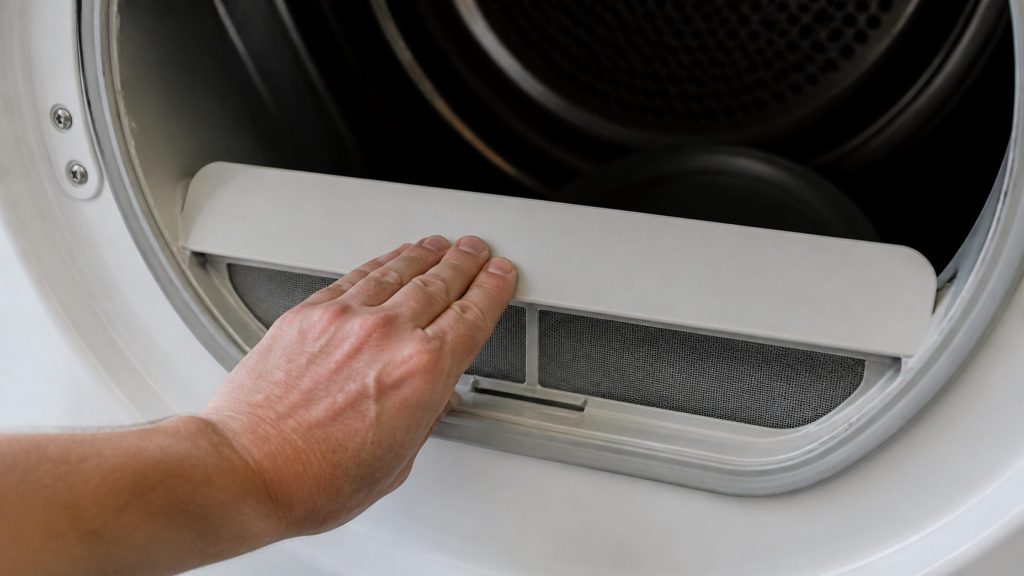
Open the plinth flap at the bottom front. It presses in or releases on a catch depending on which machine you have.
Take the filter out and hold it up to a window. This is the moment that convinces people. A loaded plinth filter is an even gray mat that looks unremarkable lying flat and completely opaque against the light. If daylight comes through the mesh, it is fine.
Rinse it under running water, both sides, warm, no detergent, until water passes through easily. Squeeze it rather than wringing it — the mesh is not fabric.
Look at the condenser fins behind it. Clean metal is what you want. If they are felted with lint, a soft brush or a vacuum with a brush head on a low setting will lift the loose material. Never push a hard nozzle into the fins — they bend, and bent fins are a permanent restriction.
Let it dry completely before refitting. Hours, not minutes. A damp filter back in a warm machine in this climate is a smell within a fortnight.
How often, honestly
The interval in the book is a starting point calculated for a drier climate. Here, every few months is realistic, and more often if the machine lives in a garage or shares a room with pets.
The reliable signal is not a schedule at all — it is the cycle length. A heat-pump dryer is slow by design and that is fine. A heat-pump dryer that is slower than it was a year ago is telling you the air path has closed up, and this is the first thing to check.
What this is protecting
Three things, in ascending order of cost.
The cycle time, which is what you notice.
The moisture sensors, which decide when the load is dry. On a machine fighting restricted airflow they read late, so cycles overrun and clothes sometimes come out damp anyway.
The compressor. This is the real one. A sealed refrigerant circuit working continuously against a restricted condenser is doing exactly what shortens its life, and it is the most expensive part on the appliance by a distance.
Twenty minutes, three or four times a year, against the largest figure on the dryer page. That is the whole argument.
When it is not the filter
If the machine reports a full condensate container when the container is empty, that is the float, the pump or the drain rather than the air path. If it never gets warm at all, the filters are unlikely to be the whole story. And if there is a number on the display, look it up under dryer specifically — on this make the same number means different things on different appliances.
What a properly clean one looks like afterwards
Hold it up to the same window you checked it against. Daylight should come through the whole mesh evenly, with no darker patches — a patch that stays dark after rinsing is material worked into the weave and needs more water rather than more scrubbing.
The condenser fins behind should read as metal rather than as felt. You are not aiming for showroom clean; you are aiming for air being able to pass.
Two mistakes worth naming
Refitting it damp. The commonest one. The filter goes back into a machine that will be warm within the hour, and a fortnight later there is a smell nobody can place. Give it hours to dry, and if that is inconvenient, do the job in the morning.
Using a hard vacuum nozzle on the fins. They bend, they stay bent, and a bent fin is a permanent restriction in exactly the place this whole page is about. A brush attachment or a soft brush, always.
Independent Miele service across Miami-Dade, Broward and Palm Beach. We are not affiliated with, authorized by or endorsed by any manufacturer.
If it turns out to be a repair
What this leads to, and what it costs
Every job on this site is priced the same way: an on-site diagnostic first, the figure agreed in writing before anybody starts.
-
T1 heat pump · Ventless · 24" · 120V · No duct required Heat-pump dryers
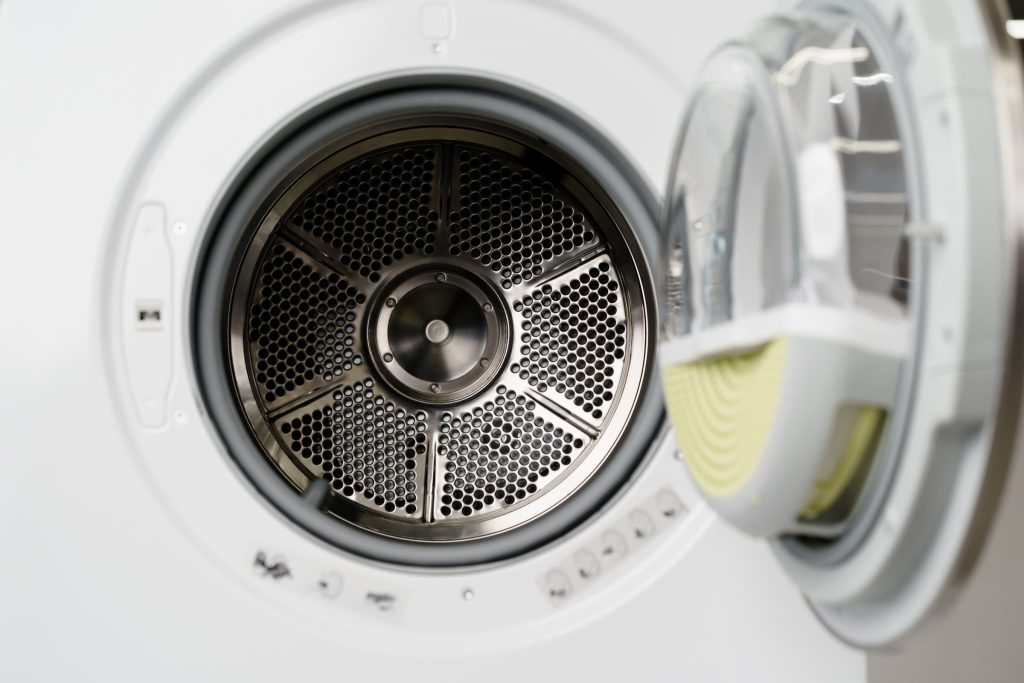
Every dryer Miele sells in the United States is a heat pump, and there is no vented model to compare it to. That is the single most useful thing to know before booking: this machine has a sealed refrigerant circuit rather than a heating element, so almost nothing that goes wrong with it is what goes wrong with an ordinary dryer.
- Clothes coming out damp after a full cycle
- A cycle that stops and shows a number
- A machine that runs and never gets warm
-

Damp clothes and no error on the display Dryer will not dry
The commonest complaint on a heat-pump dryer and the one most often solved without a part. This machine has no heating element — it moves heat around a sealed loop — and everything about that depends on air moving freely.
- Damp clothes after a full cycle
- Cycles getting steadily longer
- No error message at all
-
from $135 Dryer condensate & filter service
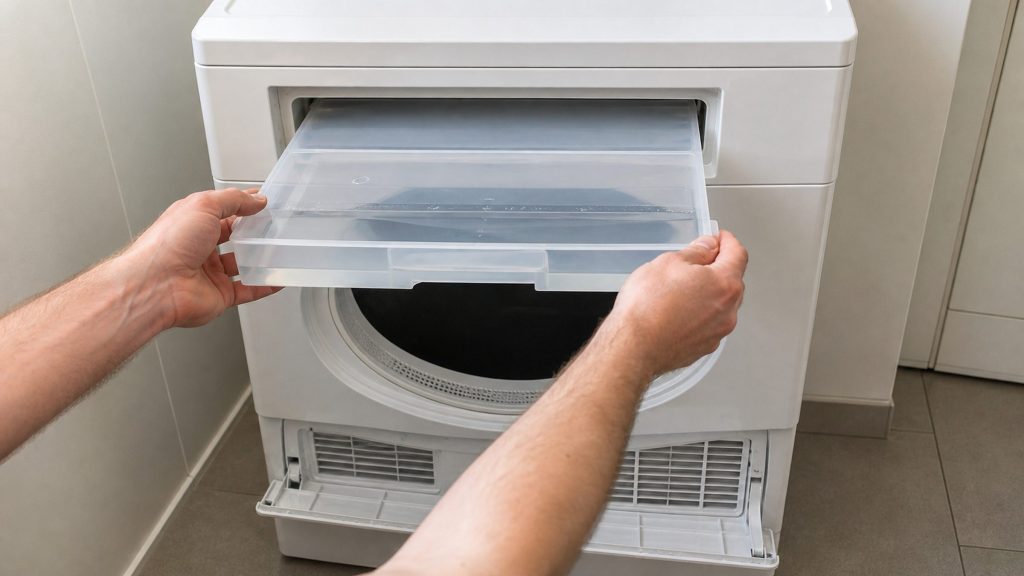
Priced as maintenance on purpose, because on a ventless dryer in this humidity it is the row that keeps the expensive one away. Filters, condenser block, condensate path and the sensors that all three affect.
- Both filters and the condenser block cleaned properly
- Condensate container, float and pump checked
- Drum sensors cleaned so the cycle ends when it should

Questions people ask about this
How is this different from the filter in the door?
The door filter catches the coarse lint from the load and is meant to be cleaned every cycle. The plinth filter is the fine one, protecting the condenser behind it, and is meant to be cleaned occasionally — which in practice means never, because most owners do not know it exists.
Mine looks clean. Do I still need to?
Hold it up to the light. A plinth filter that looks fine flat on a table is frequently opaque against a window. The mat is thin, even and grey, which is exactly why it does not look like dirt.
Can I vacuum it instead of rinsing?
For the surface, yes. For the mat that has worked into the mesh, no — that needs water. Rinse it, and use the vacuum for the condenser fins behind rather than for the filter.
What if the fins are packed solid?
Then that is a service rather than a five-minute job, and it is worth having done properly. A condenser block that has never been cleaned has material in places a rinse does not reach, and forcing it damages fins.
Will cleaning it fix a long cycle?
Very often, yes, and that is the point of this page. A restricted air path is the commonest cause of a heat-pump dryer taking longer than it used to, and it is free to correct.
Troubleshooting
More guides like this one
-

After a South Florida Power Cut: How to Reset Miele Oven Controls
The manufacturer publishes a condition specifically for the supply being interrupted mid-cycle. That makes this a documented event rather than a mystery — and it has a documented answer.
Read more -
How to Reset Miele Washing Machine Controls on a W1, and When Not To
If the door is locked with a load inside, the reset is not your first move — draining it is. That distinction is the whole page.
Read more -
How to Reset Miele Dryer Filter Reminders — Three Reasons They Return
A message that survives cleaning is either a reminder that needs acknowledging, a filter cleaner than it looks, or a condenser the reminder was never about.
Read more
Tell us the model number and what it is doing.
This article is based on:
- Official manufacturer documentation
- Internal repair procedures
- Technician repair history
- Company quality standards