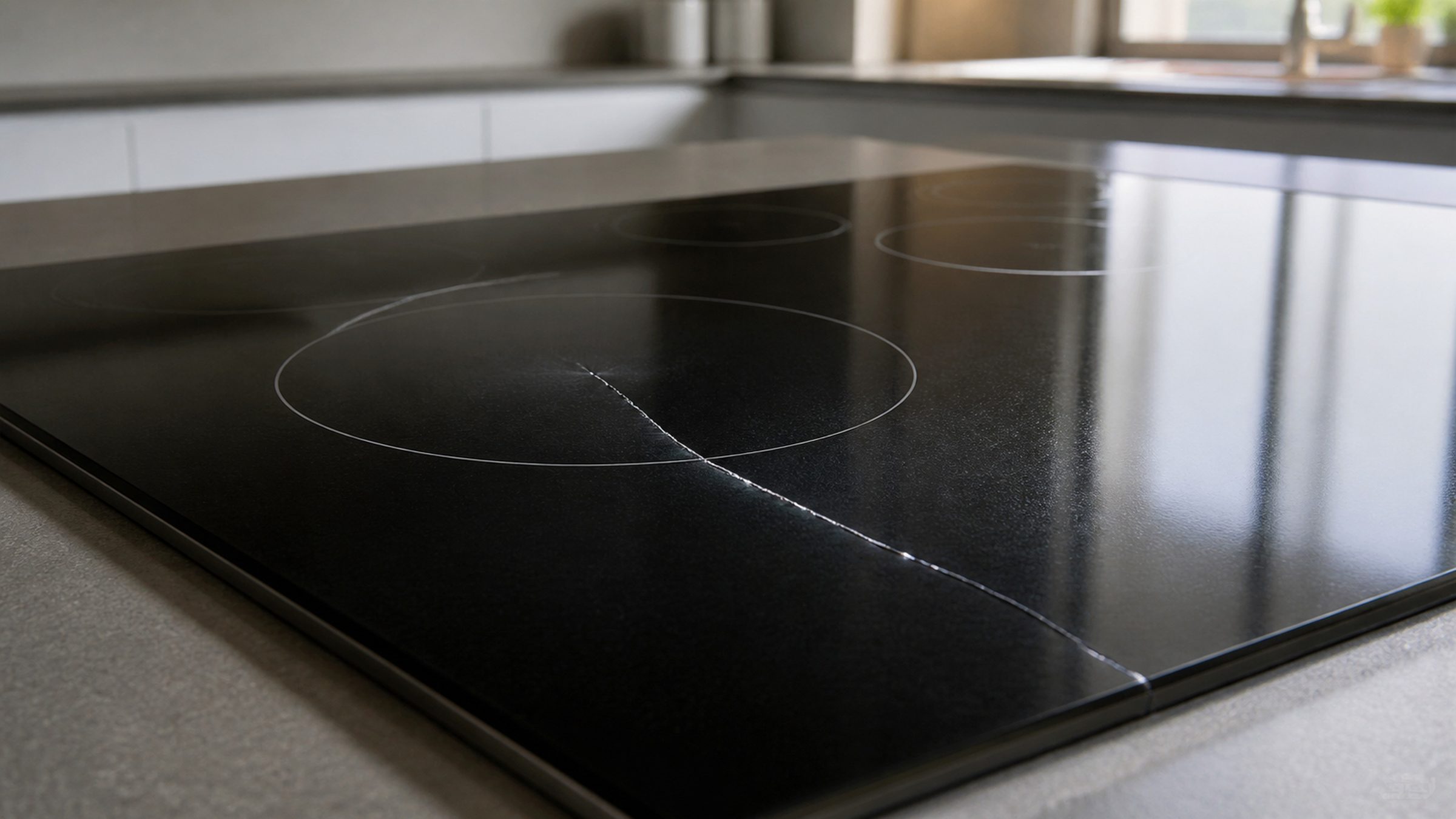
Cost Expectations
Replacing the Glass on a Glass Top Stove: The Question Before the Price
Replacing the glass on a glass top stove typically starts around $395 including labor, with the surface itself accounting for most of it at roughly $300 to $600 depending on the model. The figure is not the first question, though. The surface carries the printed control markings and is cut for that specific appliance, so availability is confirmed against the model number before a date is offered — and on a discontinued cooktop that answer sometimes ends the conversation.
The full guide
What it costs to replace the glass on a glass top stove, and what comes first
From about $395 including labor, with the surface itself accounting for most of it — roughly $300 to $600 depending on the model.
That is the answer to the question people ask. It is not the answer to the question that decides the outcome, which is this one:
Is the glass still made for your appliance?
Why availability is the real question
The surface is not a piece of glass. It is a specific component that carries the printed control markings and zone graphics, is cut and ground for one particular cabinet opening, and is manufactured in small volumes for one model.
There is no generic equivalent, no cutting one down, and no substituting a similar top from another model. It either exists as a part or it does not.
On a current cooktop, it exists and the price above applies. On a discontinued one — and cooktops stay in kitchens far longer than they stay in catalogs — the answer is sometimes that the part is gone, and at that point the conversation changes from a repair to a replacement.
That is why we check the model number before offering a date rather than after. It is a two-minute call and it saves everybody a wasted appointment.
Stop using it while you find out
On an induction or radiant cooktop, the glass is the barrier between everything you spill and the electronics underneath.
A crack that reaches the edge is a direct path for liquid. This is the one thing on this site we ask people to stop using immediately rather than work around: switch it off at the breaker and leave it off.
A chip in the middle of the surface, away from any edge, is a judgment call that is worth having somebody look at. Anything that runs to the frame is not.
What actually cracks them
Rarely impact. Three causes account for most of what we see.
Thermal stress. A very hot pan set down on a cold part of the surface, or cold liquid hitting a hot zone. Ceramic glass tolerates enormous absolute temperatures and much less sudden difference across a few inches.
A top clamped too tightly in its cutout. This one is an installation problem and it is quietly common in stone counters. The glass is under load before anybody cooks on it, and then a normal thermal cycle finishes the job. Worth checking when the new one goes in, or it happens again.
Something dropped, edge-on. A pan handle, a jar. The center of the surface is remarkably tough; the edge is where the damage lands.
Whether it is worth doing
The comparison people make is the repair against a new cooktop. On a built-in appliance that comparison is incomplete.
A new cooktop is unlikely to have exactly the same cutout dimensions, so the honest replacement figure is the appliance plus whatever the counter needs doing to it — and in a stone counter that is a fabricator, a template and a real number. On a solid-surface or laminate top it is much less.
So the arithmetic tends to look like this. On a stone counter, the glass replacement is usually the cheaper path by a distance. On a laminate counter with a common cutout, it is closer and worth thinking about, particularly if the appliance is old enough that other things are coming.
What the job involves
The top comes out of the counter. The coils or radiant elements, the wiring loom and the control board transfer to the new surface, the seal around the edge is renewed rather than reused, and every zone is proved before we leave.
It is not a difficult repair. It is a careful one, and most of the time is in getting the old surface out of a stone cutout without damaging the stone.
What to have ready when you call
The model number, which for a cooktop is usually on the underside of the appliance or on the paperwork rather than anywhere visible from the kitchen. If you cannot reach it, the original invoice or the appliance registration will have it.
A photograph of the damage, which tells us whether it reaches the edge.
What kind of counter it is set into. That one decides most of the labor and all of the replacement comparison.
What happens if the part is discontinued
You get told, before a date is offered, and then there are three honest options.
A used or new-old-stock surface. These do turn up, and on a cooktop that is otherwise sound it is a legitimate route. What we will not do is fit one without saying where it came from.
Replace the appliance. Which on a laminate counter is straightforward and on stone is a fabricator's job. Getting a real number for the counter work before deciding is worth the phone call.
Live with it, carefully, if and only if the damage is a chip well away from any edge and away from a zone. That is a judgment made by looking at it rather than over the phone, and it is not the default answer.
Why we ask for a photograph
Because "a small crack" means five different things. A hairline in the middle of the surface, a chip at the frame, a crack running from a zone to the edge and a full break are four different conversations, and the photograph settles which one you have in ten seconds instead of a visit.
Independent Miele service across Miami-Dade, Broward and Palm Beach. We are not affiliated with, authorized by or endorsed by any manufacturer.
If it turns out to be a repair
What this leads to, and what it costs
Every job on this site is priced the same way: an on-site diagnostic first, the figure agreed in writing before anybody starts.
-
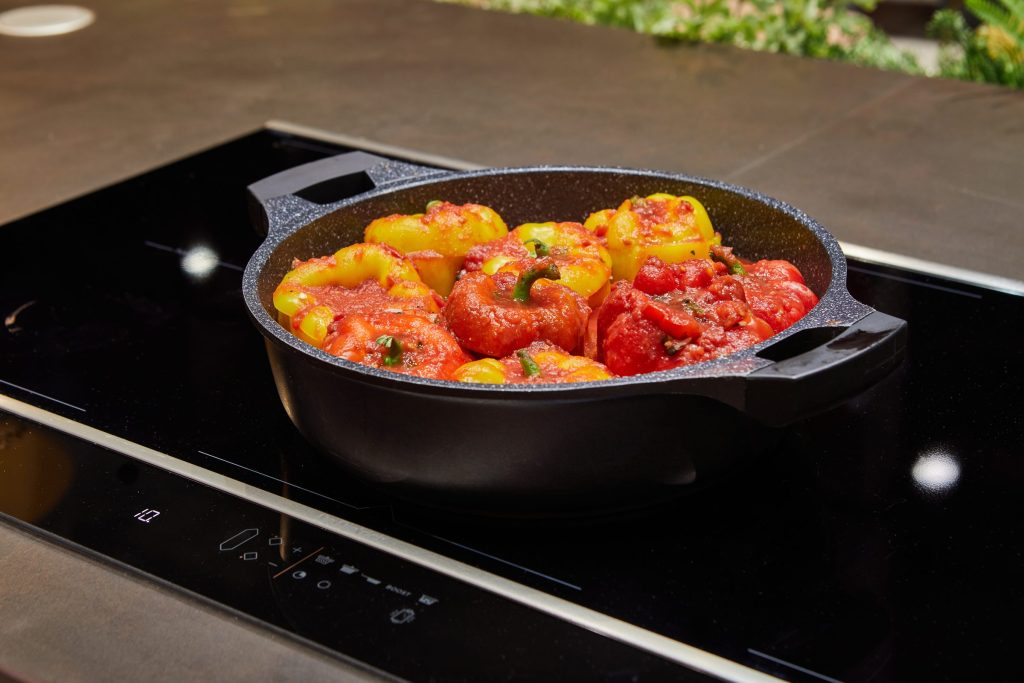
KM induction · KM gas · KM electric · KMR rangetops · 24" to 48" Cooktops and rangetops
The one place this make writes something other than F and a number: the induction tops write FE, and a bare F with nothing after it is its own condition. Induction also reports more than any other cooking surface Miele builds — and most of what it reports is about heat and about the glass rather than about a part.
- A zone that switches itself off part-way through cooking
- Controls that stop responding to touch
- A gas burner that lights and drops out
-
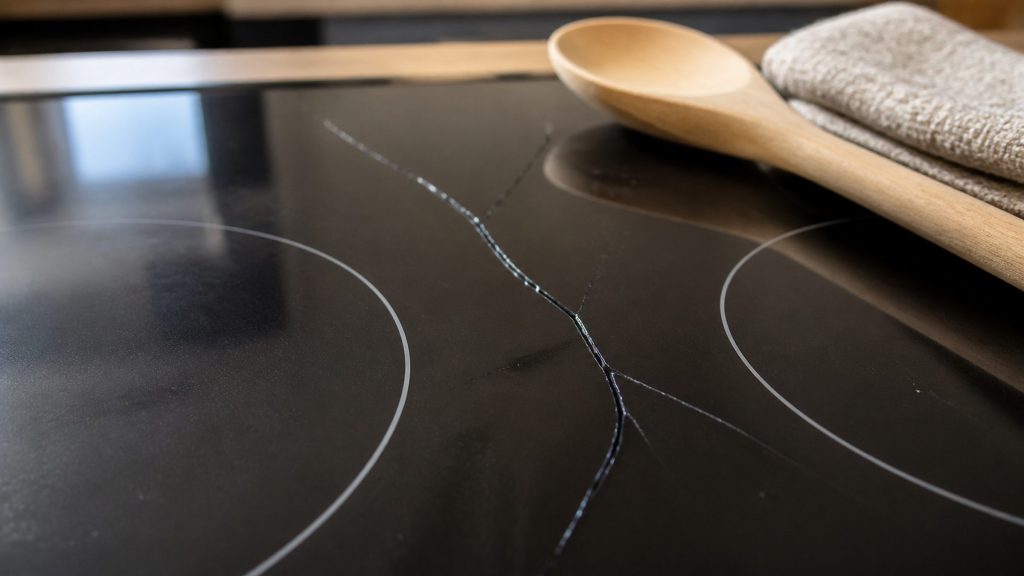
Stop using it Cooktop glass is cracked
On an induction or radiant top the glass is the barrier between spills and the electronics underneath. A crack that reaches the edge lets liquid straight in, and this is the one thing on this site we ask people to stop using immediately.
- A crack running to the edge
- A chip at the frame
- Crazing around one zone
-
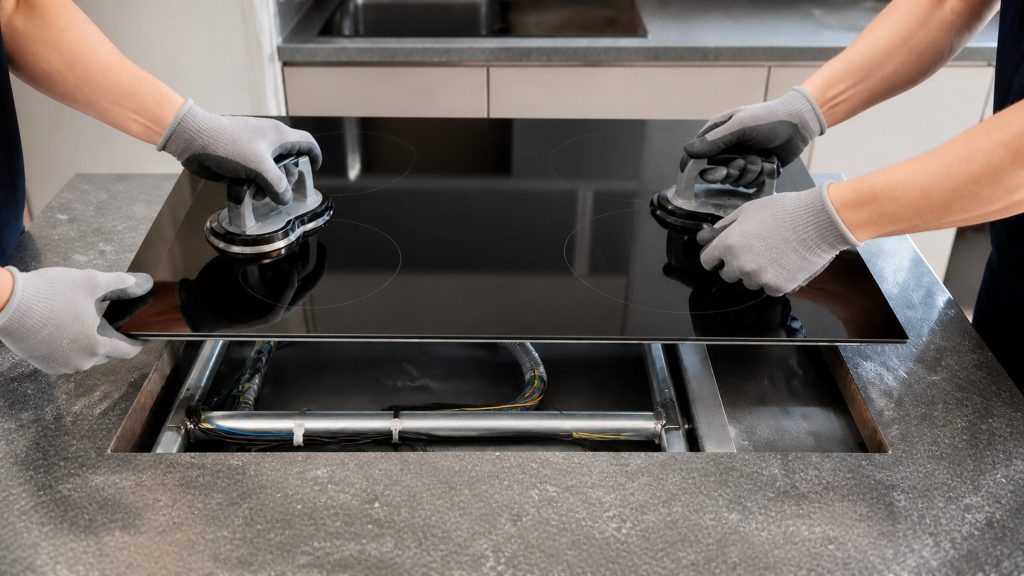
from $395 Cooktop glass replacement
Cracked, chipped at the edge, or crazed around a zone. The surface is most of the cost and it is specific to the model — so availability is confirmed before anything is booked, because on a discontinued top it sometimes decides against the repair.
- Availability confirmed against the model number first
- Appliance made safe the same day where it is cracked through
- Frame and seal renewed with the glass
Questions people ask about this
Can a crack be repaired rather than replaced?
No. There are resin products sold for windscreens and none of them are appropriate for a cooking surface that cycles between room temperature and several hundred degrees. The surface is replaced or the appliance is replaced.
Is it worth replacing on an older cooktop?
Sometimes, and the honest comparison is against a new cooktop plus any cabinetry work the different cutout requires. On a built-in top in a stone counter that second number is frequently larger than people expect, which pushes the arithmetic toward the repair.
Why does the glass cost so much?
Because it is not a sheet of glass. It carries the printed control graphics, it is cut and ground for that specific cutout, and it is a low-volume part for a specific model. There is no generic equivalent.
Nothing hit it. How did it crack?
Thermal stress, usually: a very hot pan set on a cold surface, or cold liquid onto a hot zone. The other cause we see is a top clamped too tightly into a stone cutout, which puts the glass under load before anybody cooks on it.
Can I keep using it if the crack is small?
Not on an induction or radiant top. The glass is what keeps spills away from the electronics, and a crack that reaches the edge is a direct path. This is the one thing on this site we ask people to stop using rather than book around.
Cost Expectations
More guides like this one
-
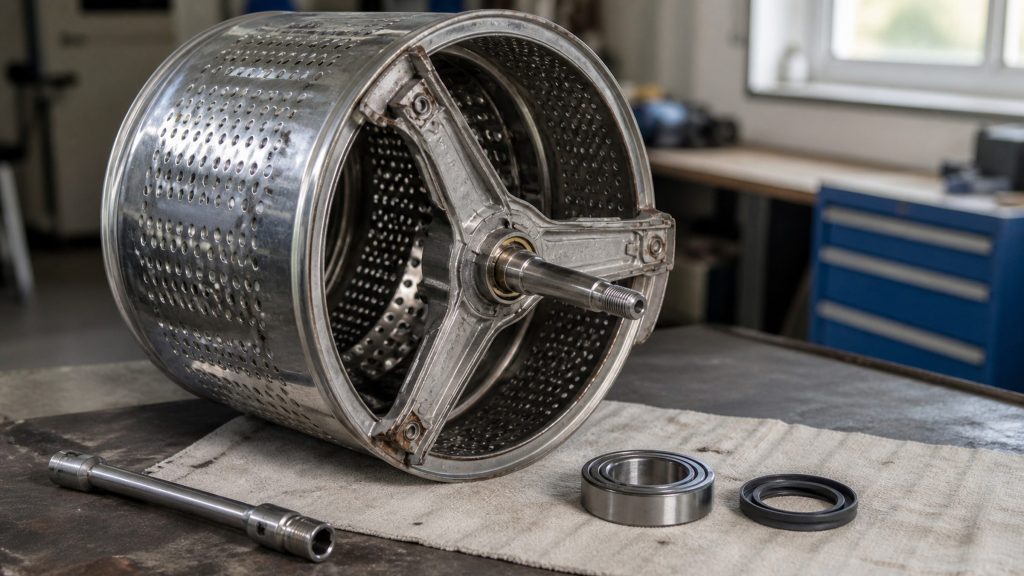
The Twenty-Year Claim: What the Lifespan of a Miele Washing Machine Really Is
The design life is a real engineering target and it is not a warranty. Four parts decide whether your machine reaches it, and only one of them is expensive.
Read more -
What an Appliance Service Call Costs in South Florida, and What It Should Include
The national range is $59 to $129. The more useful question is what the fee buys and whether it comes off the bill — and three questions worth asking before booking anybody.
Read more -
Is It Worth Repairing a Miele Washing Machine? The Arithmetic, Not the Slogan
Four numbers decide it and only one of them is the quote. Here is the sum done out loud, including the case where the answer is no.
Read more
Tell us the model number and what it is doing.
This article is based on:
- Official manufacturer documentation
- Internal repair procedures
- Technician repair history
- Company quality standards