Maintenance & Prevention
Why You Have to Add Salt to Miele Dishwasher Reservoirs in South Florida
Yes. The salt reservoir in the floor of a Miele dishwasher feeds a built-in water softener, and across Miami-Dade, Broward and Palm Beach the supply is harder than the machine's factory hardness setting assumes. Without salt the softener stops working, scale builds on the heating element and the spray jets, and glassware goes permanently cloudy. Use dishwasher salt only — never table salt — and set the water hardness on the appliance so the low-salt reminder arrives on time.
The full guide
Why you have to add salt to Miele dishwasher reservoirs here
It is the question every American owner of a European dishwasher asks in the first week, usually after finding a screw cap in the floor of the tub and wondering what it is for. The honest answer everywhere is "it depends on your water." The honest answer here is simply yes.
That cap is not a detergent compartment and it is not an overflow. It is the filler for a water softener built into the machine, and the salt is the thing that regenerates it. Every cycle, the incoming supply passes through a resin bed that swaps the calcium and magnesium in hard water for sodium. Periodically the machine flushes that bed with brine from the reservoir to recharge it. No salt, no brine, no softening — and the machine goes on washing in whatever comes out of the tap.
Why the water here settles the argument
The utilities across Miami-Dade, Broward and Palm Beach draw from limestone aquifers, and the supply arrives noticeably harder than the value most appliances assume as a default. That single fact is behind three separate things people notice about dishwashers in this city and rarely connect:
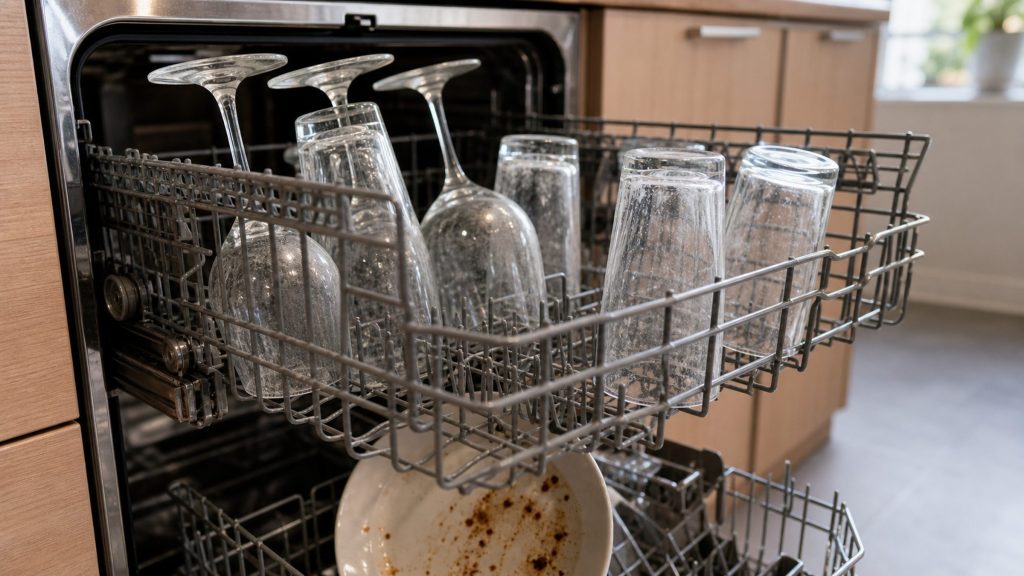
- Glassware that clouds and never recovers. This is not detergent residue and it does not wash off. It is etching and mineral deposit, and by the time it is visible it is permanent. Softened water prevents it; nothing reverses it.
- A wash that gets weaker over about two years. Scale narrows the jets in the spray arms gradually. There is no moment where it fails, which is exactly why nobody attributes it to water.
- A heating element that has to work harder. Coated in scale it transfers heat poorly, runs hotter to compensate, and ages faster than it should.
None of that is a failure of the appliance. All of it is the appliance being asked to run in water it was told, at the factory, was softer than it is.
The step almost nobody takes
Filling the reservoir is the famous half. The half that actually matters is setting the water hardness on the appliance, and in our experience on service calls across South Florida it has essentially never been done.
The machine uses that number for two things: how often to regenerate the resin, and when to tell you the salt is low. Leave it at a value below your real hardness and both go wrong quietly — the softener regenerates too rarely, and the reminder arrives after the salt has run out rather than before. The appliance is not broken and it is not lying. It is doing arithmetic with a number somebody was supposed to correct.
Find your hardness from the utility's published figure or a test strip, and set it in the machine's settings menu. It takes a minute and it is the difference between a softener that works and a reservoir that gets topped up on a guess.
How to top it up without making a mess
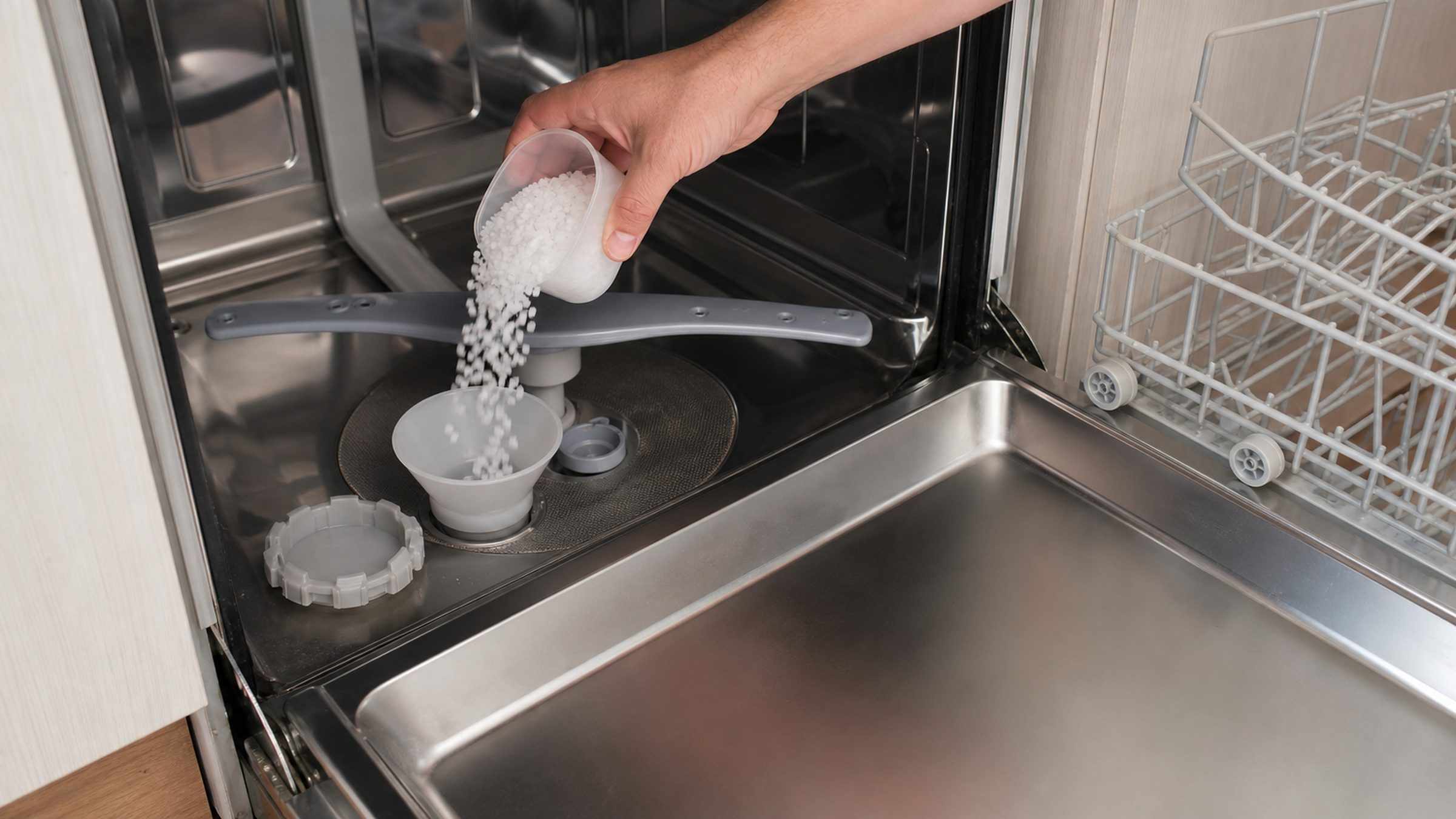
The reservoir is under the lower basket, in the floor of the tub. Take the basket out, unscrew the cap, and — if this is the first fill — pour in about a liter of water before the salt, which is the only time you will need to. Then use the funnel that came with the machine, or a cheap kitchen one, and fill until it is full.
Two things worth knowing. Water will overflow out of the reservoir as you pour, and that is correct rather than alarming: you are displacing brine. And run a rinse cycle straight afterwards so that any salt spilled on the stainless floor is flushed away rather than left sitting there, because concentrated salt on stainless is the one way this maintenance job can cause a problem instead of preventing one.
What this has to do with everything else on the machine
Salt, rinse aid and detergent are three different jobs and people treat them as one. The salt softens the water going in. The detergent cleans. The rinse aid changes the surface tension so water sheets off rather than beading, which is what makes a Miele dry at all, because it dries with residual heat rather than a long heated phase.
Get the salt wrong and the symptom is cloudy glass and a weakening wash. Get the rinse aid wrong and the symptom is wet dishes. They are separate reservoirs with separate reminders, and diagnosing one as the other is the most common self-inflicted dishwasher problem we see in this city.
When it is not the salt
If the dishes are coming out visibly dirty rather than cloudy, salt is not your answer — start with the spray arms and the filters, which are free to check and account for most of it. If the machine has stopped filling altogether, look at the inlet filter at the tap, which loads with scale here faster than any manual expects. And if there is a number on the display, look it up before doing anything else: on this make the number plus the appliance tells you where the machine stopped.
Independent Miele service across Miami-Dade, Broward and Palm Beach. We are not affiliated with, authorized by or endorsed by any manufacturer.
If it turns out to be a repair
What this leads to, and what it costs
Every job on this site is priced the same way: an on-site diagnostic first, the figure agreed in writing before anybody starts.
-
Fully integrated · Semi-integrated · Built-under · ADA · AutoDos · 18" and 24" Dishwashers
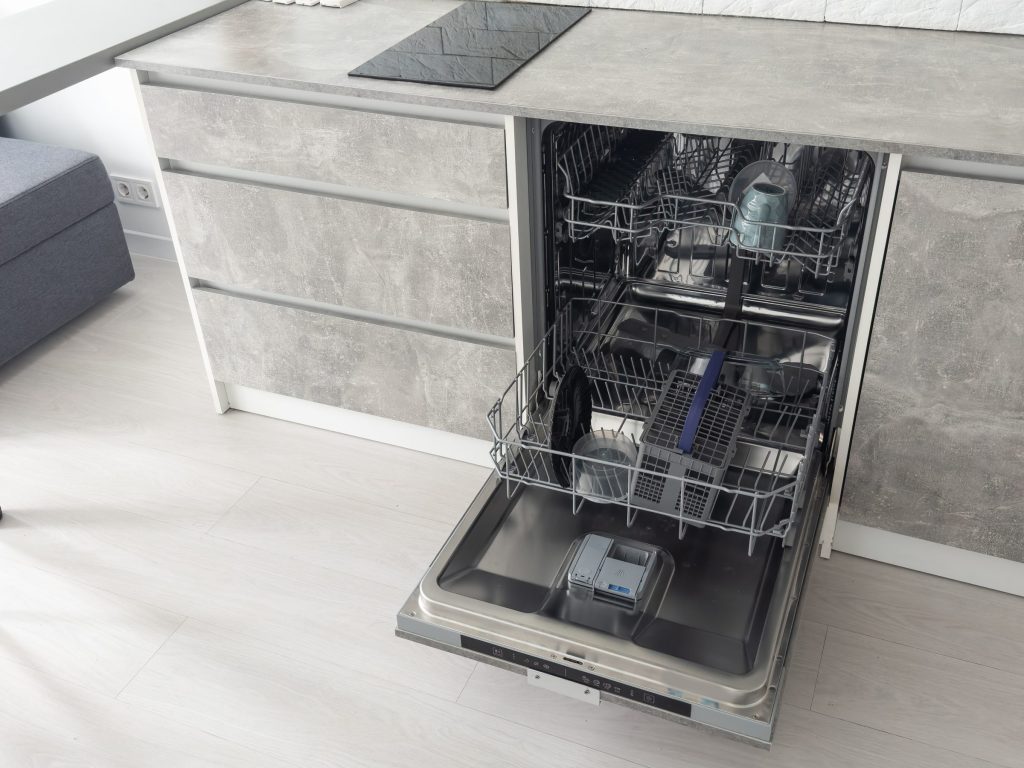
The appliance this name means in most American kitchens, and the one that tells you the most about itself. A Miele dishwasher reports the water path in detail — the tap, the inlet filter, the hose, the drain — which is why more of these calls end without a part than on any other appliance in the house.
- A cycle that stops with water still in the tub
- A number on the display that comes back after every reset
- Dishes coming out spotted, or coming out wet
-
Water in and out normally, and still not clean Dishes come out dirty
The machine fills, runs and empties, and the dishes are no better than when they went in. Which rack is failing is the useful clue and it is one you can read from the kitchen.
- One rack clean and the other not
- Gritty residue on everything
- Worse on the short programs than the long ones
-
from $145 Appliance maintenance
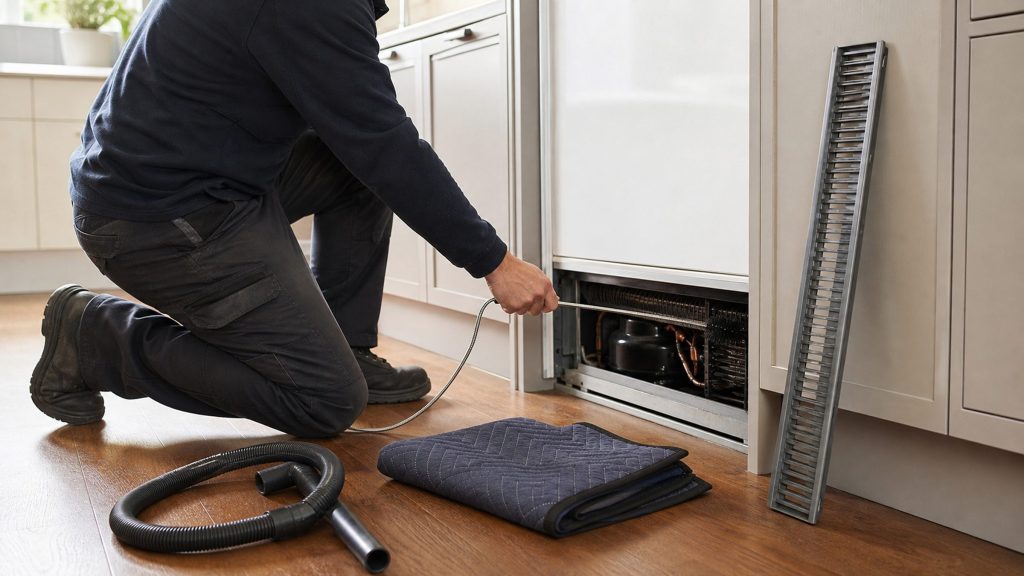
One visit covering every condenser, filter, descale and seal in the kitchen and the laundry room. In a full Miele household that can be six appliances, and doing them together is meaningfully cheaper than three separate visits.
- Every appliance in the house on one trip
- The three things this climate is hard on, all in one visit
- Water hardness set so the appliances count correctly

Questions people ask about this
Can I skip the salt if I use all-in-one tablets?
On water this hard, no. All-in-one tablets contain a softening agent sized for average water, and South Florida supply is above average. The machine's own softener is far more capable, and the tablets do not switch it off — they simply cannot do its job as well.
What happens if I never add any?
Nothing dramatic, and then everything gradually. Glassware clouds and does not come back, the spray jets narrow with scale so wash pressure drops, and the heating element coats and works harder. None of it announces itself; it just gets slowly worse over a year or two.
Can I use table salt?
No. Table salt is fine-grained and usually carries anti-caking agents, and both will block the softener unit. Coarse dishwasher salt is a different product for a reason and it is not expensive.
There is water in the salt reservoir. Is that a leak?
No, that is normal and expected. The reservoir is full of brine by design. Water sitting in it after you top up is the softener working, not the tub leaking into it.
How do I know what my water hardness is?
Your utility publishes it, and a test strip settles it in a minute. Set that number on the appliance rather than leaving the factory value — it is what makes the low-salt reminder arrive at the right time instead of late.
Maintenance & Prevention
More guides like this one
-
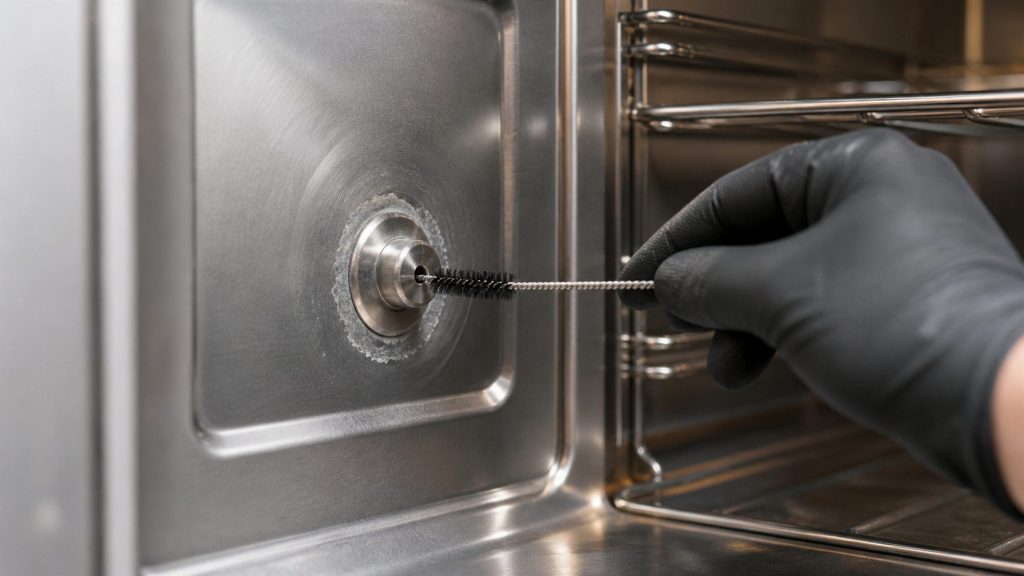
Miele Steam Oven Descale Instructions, and the Part the Program Skips
The program does the generator. The nozzle is a separate job with its own published condition, and skipping it is why a descaled machine still steams badly.
Read more -
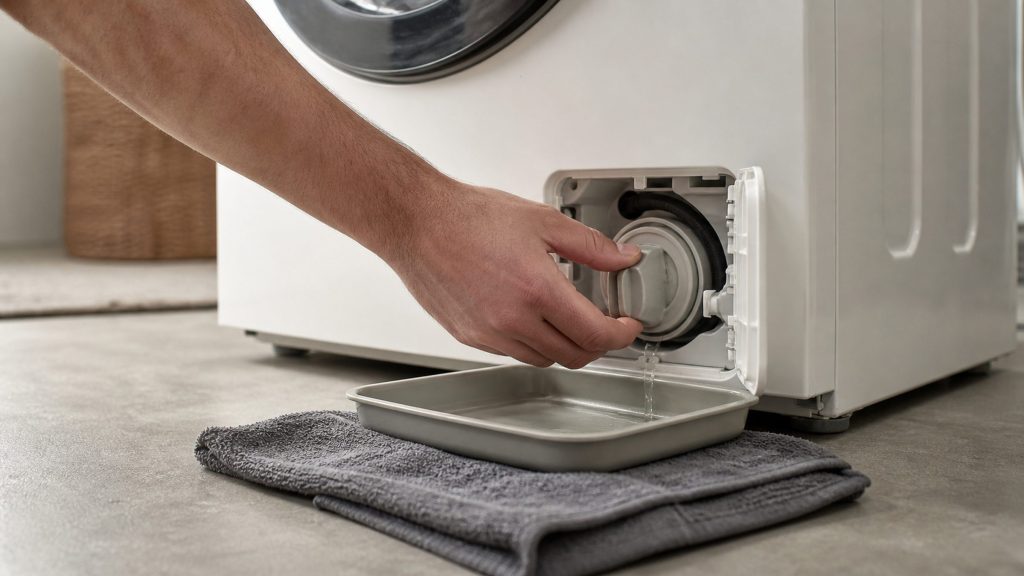
How Often Should I Clean My Miele Washing Machine in a Humid Climate?
Three jobs on three intervals, and the one that causes the smell is the fold at the bottom of the door bellows that almost nobody knows is there.
Read more -
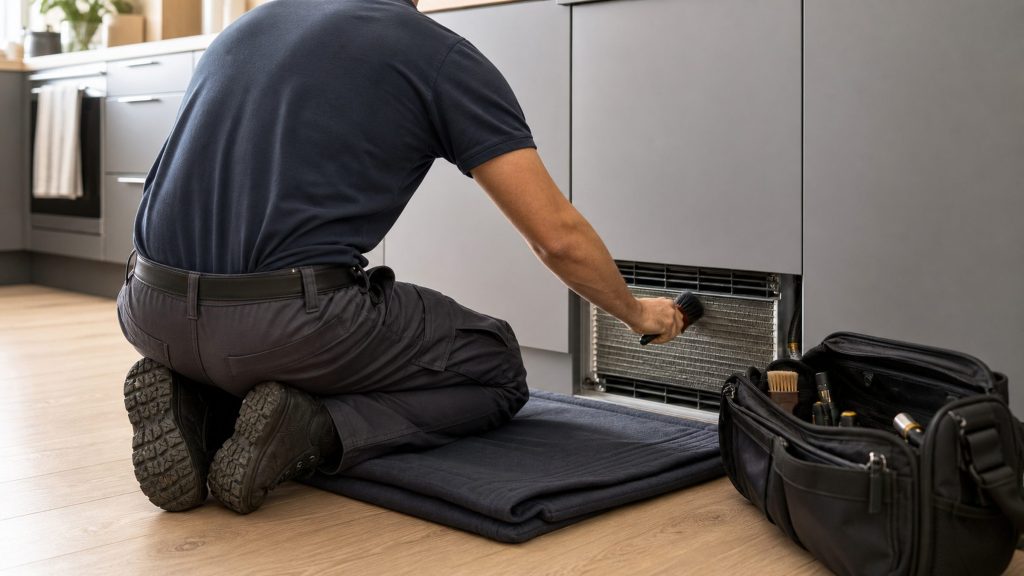
How Often Should Miele Appliances Be Serviced on a Florida Schedule?
Every interval this equipment publishes was calculated somewhere with softer water and drier air. Here is the schedule that actually fits, across the whole household.
Read more
Tell us the model number and what it is doing.
This article is based on:
- Official manufacturer documentation
- Internal repair procedures
- Technician repair history
- Company quality standards