Cost Expectations
Do I Have to Use Miele Descaling Tablets? An Honest Answer
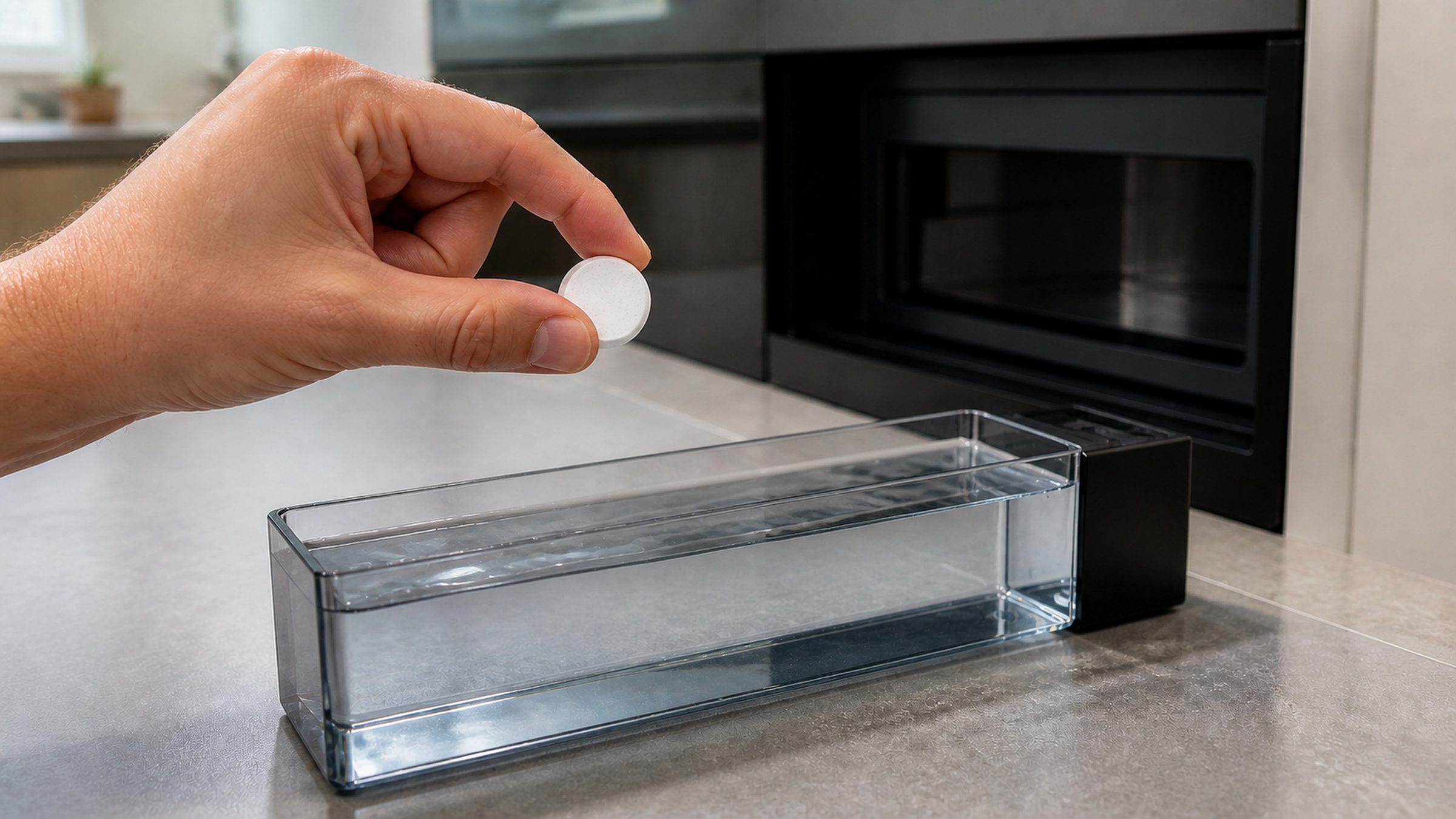
No, you do not have to use Miele descaling tablets. Any suitable proprietary descaling product intended for appliances will do the job, and the appliance cannot tell the difference. What matters is that it is a formulated descaler rather than a kitchen substitute: household vinegar is aggressive toward seals and metals in a steam generator and is the one alternative genuinely worth avoiding. The manufacturer publishes a condition for tablets that have not dissolved fully, which is usually water that was not warm enough.
The full guide
Do I have to use Miele descaling tablets? No — with one real caveat
The appliance does not know what brand of descaler is in its water container. It heats the solution, circulates it, rinses and stops. Any suitable proprietary descaling product intended for appliances will do the job at its stated dilution.
So the short answer is no, and anybody telling you otherwise is selling.
The caveat is what people substitute instead, and there is one substitution that is genuinely worth avoiding.
Why not vinegar
This is the internet's default answer to every descaling question and on a steam generator it is a bad one.
A steam generator is a sealed vessel with gaskets, mixed metals and a level electrode, held at temperature for the duration of a program. Household vinegar at kitchen strength is considerably more aggressive toward those seals and toward aluminum components than a formulated descaler is at its working dilution — and a formulated descaler is buffered and inhibited precisely to protect the metals it is not meant to attack.
The damage is not dramatic. It is slow, invisible, and shows up as a seal that weeps two years later. That is the worst kind of self-inflicted appliance problem: cheap at the time, unattributable afterwards, and expensive.
Vinegar in a kettle is one thing. Vinegar in a machine whose generator is not replaceable on its own is another.
What about citric acid
Better than vinegar and still a judgment call.
The two things a home-mixed solution does not give you are measured concentration and corrosion inhibitors. A proprietary descaler has both, which is most of what you are paying for.
If the goal is to avoid the branded product specifically, a supermarket appliance descaler does that at a fraction of the difference and with none of the guesswork. That is the sensible middle ground and it is what we would use.
The condition where the tablets do not dissolve
Worth knowing because the manufacturer publishes it: a condition specifically for descaling tablets not dissolving completely, with undissolved components remaining.
Two usual causes, both mundane:
- The water was not warm enough for the product to break down within the program.
- The product went somewhere it should not have — the wrong compartment, or the cavity rather than the container.
Clear the residue, check where the product is supposed to go for your model, and run the program again. If it repeats on a correctly loaded machine, the water path rather than the tablet is what to look at.
The question that actually matters more than the brand
Not what you descale with. How often.
A Miele steam oven works out its descaling interval from a water hardness value set on the appliance, and the factory default assumes softer water than Miami-Dade, Broward or Palm Beach supply. So the countdown runs too slowly and the reminder arrives after the scale rather than before it.
Setting that value correctly is a one-minute job in the settings menu and it does more for the appliance than any choice of product. Your utility publishes the figure; a test strip confirms it.
Until it is set, assume you need to descale roughly twice as often as the machine asks.
And the step the program does not do
The descaling program handles the generator. It does not touch the nozzle, which has its own published condition and its own procedure — remove the side runners, pull the nozzle, descale it separately, rinse it under running water, and flush every water-carrying part before it goes back.
A machine that has been descaled and still steams badly is very often a machine with a clean generator and a scaled nozzle. That is not a product problem and no brand of tablet fixes it.
What this costs, in perspective
The branded tablets are a few dollars a descale. A supermarket alternative is less. Vinegar is nearly free and may cost you a generator.
The genuinely expensive option is the one where nobody descales at all: weak steam, then long cooking times, then a level switch blocked by limescale — which the manufacturer also publishes as a condition — and eventually the generator itself, which is the largest figure on this appliance by a wide margin.
Buy whichever descaler you like. Do it on the right interval, do the nozzle as well, and set the hardness.
A short checklist for the next descale
Before. Appliance cold. Descaler chosen and at the strength on the packet. Cavity emptied of racks and runners.
During. Program run to the end without interrupting it. Kitchen ventilated, because the smell is noticeable.
After. Nozzle out, descaled separately, rinsed under running water. Every water-carrying part flushed. A steam cycle at 212°F run empty before anything is cooked.
Once, ever. Water hardness set in the settings menu, so the next reminder means something.
That is the whole job, and the brand of the product is the least important line on the list.
Independent Miele service across Miami-Dade, Broward and Palm Beach. We are not affiliated with, authorized by or endorsed by any manufacturer.
If it turns out to be a repair
What this leads to, and what it costs
Every job on this site is priced the same way: an on-site diagnostic first, the figure agreed in writing before anybody starts.
-
H wall ovens · DGC combi-steam · Speed ovens · Warming and vacuum drawers Ovens, steam ovens and drawers
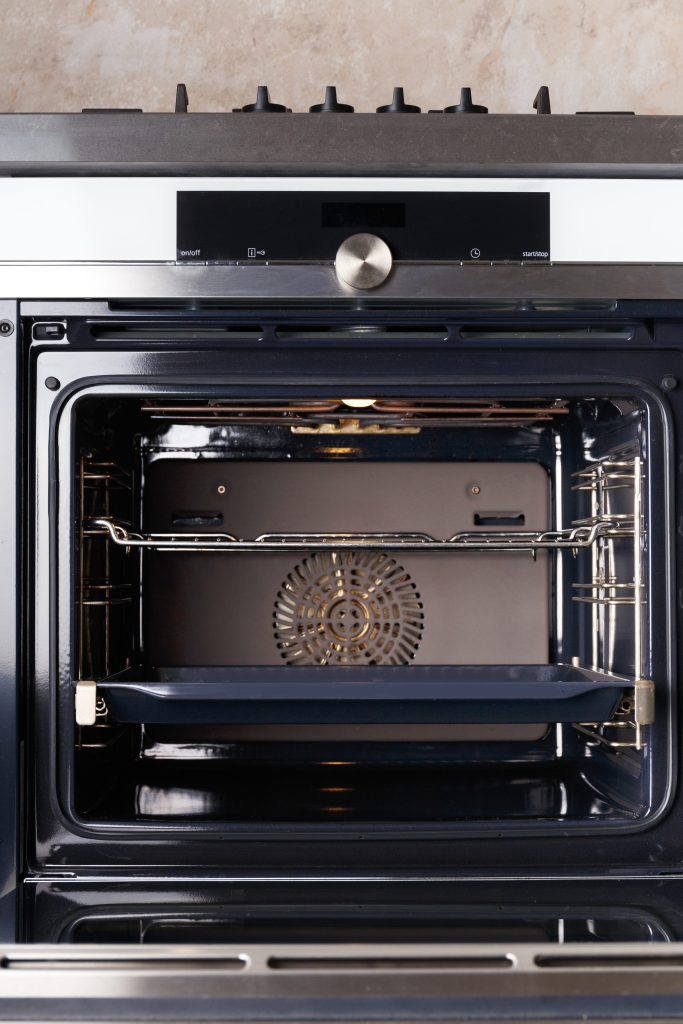
One control family covers the wall ovens, the combi-steam ovens, the speed ovens and the drawers, which is why they share a page. The steam side adds a set of conditions all its own — about the intake valve, the nozzle, the container, and the hardness of the water itself.
- A cavity that will not reach or hold temperature
- A steam program that stops and asks about water
- A door locked after a self-clean
-
Or should be, and has not asked Steam oven is asking to be descaled
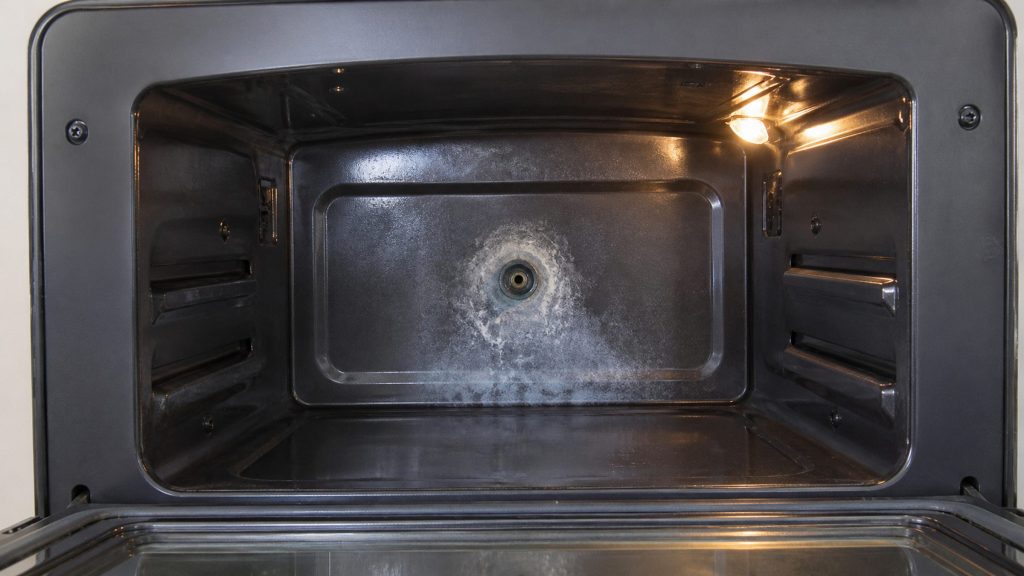
The reminder is calculated from a water-hardness figure set at the factory, and South Florida water is harder than that figure — so on this coast the message arrives after the scale, not before it.
- A descaling reminder on the display
- Steam that is weaker than it was
- Descaling tablets not dissolving fully
-
from $145 Steam oven descaling
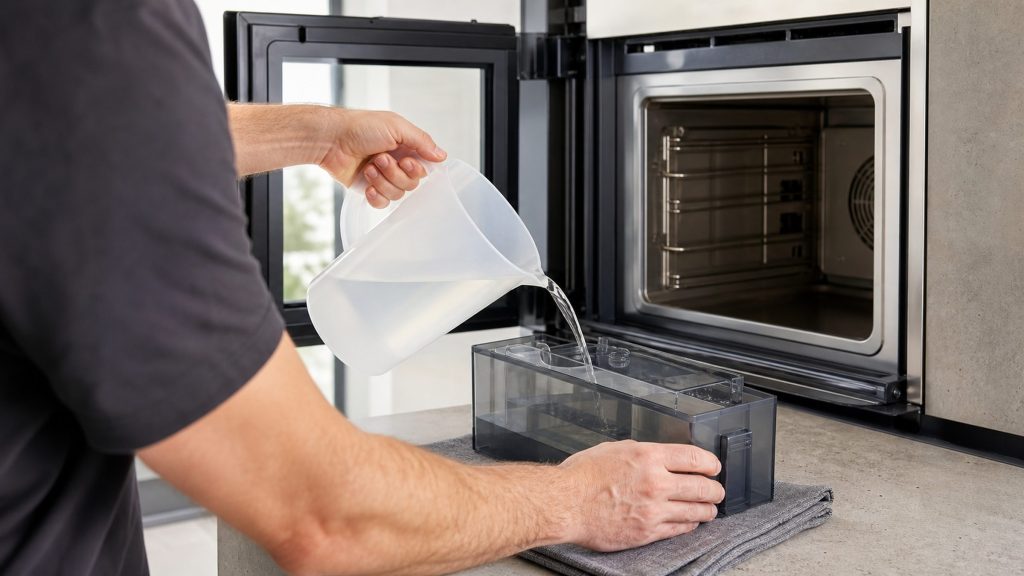
The most useful row on this site, and it is maintenance. A combi-steam oven calculates its descaling interval from a water hardness figure set at the factory — a figure South Florida water exceeds — so the reminder arrives after the scale does.
- Nozzle and generator descaled, not just the reminder cleared
- Water hardness set on the appliance so the next interval is right
- The whole water path flushed afterwards
Questions people ask about this
Will using another brand void anything?
Using a suitable descaling product as directed is ordinary maintenance. What causes trouble is using something that is not a descaler at all — a kitchen acid, a bathroom product, or a concentrate at the wrong strength — because those attack seals and finishes rather than scale.
Why not vinegar? Everyone online says vinegar.
Because a steam generator is a sealed vessel with gaskets and mixed metals, held hot. Acetic acid at household strength is far more aggressive toward those than a formulated descaler at its working dilution, and the damage is slow and invisible until something leaks.
Citric acid?
Better than vinegar and still a judgment call, because concentration and rinsing matter and a home-mixed solution is neither measured nor buffered. If you want to avoid the branded product, a proprietary appliance descaler is the sensible middle ground.
The tablets did not dissolve.
That is a condition this maker publishes. It usually means the water was not warm enough or the product went somewhere it should not have. Clear the residue and run the program again; if it repeats, the water path rather than the tablet is worth looking at.
How much does the branded product actually cost per descale?
Modest, and it is not where the money on this appliance is. The expensive item is the descale that never happened — a steam generator is several times the price of a lifetime supply of tablets.
Cost Expectations
More guides like this one
-
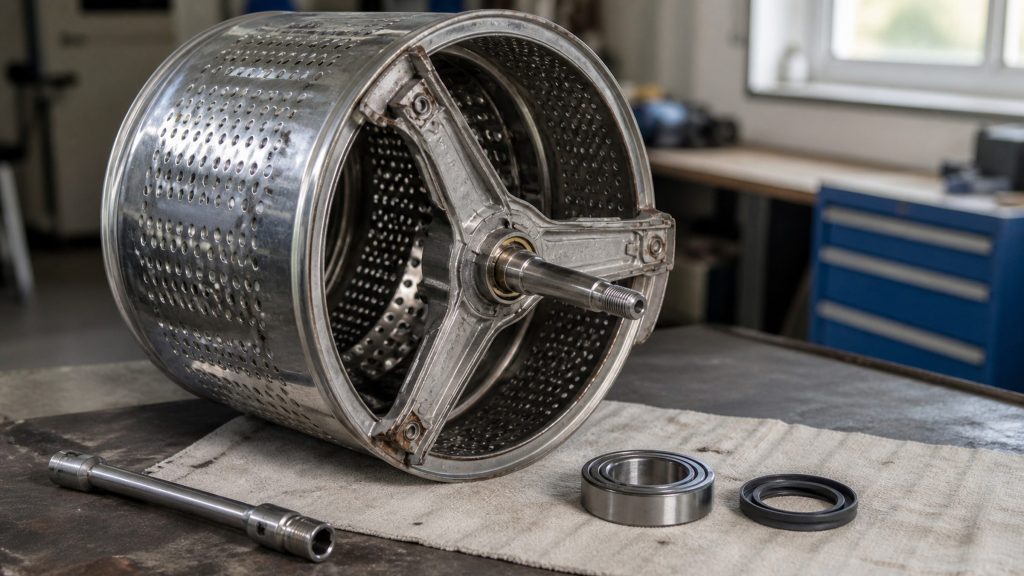
The Twenty-Year Claim: What the Lifespan of a Miele Washing Machine Really Is
The design life is a real engineering target and it is not a warranty. Four parts decide whether your machine reaches it, and only one of them is expensive.
Read more -
What an Appliance Service Call Costs in South Florida, and What It Should Include
The national range is $59 to $129. The more useful question is what the fee buys and whether it comes off the bill — and three questions worth asking before booking anybody.
Read more -
Is It Worth Repairing a Miele Washing Machine? The Arithmetic, Not the Slogan
Four numbers decide it and only one of them is the quote. Here is the sum done out loud, including the case where the answer is no.
Read more
Tell us the model number and what it is doing.
This article is based on:
- Official manufacturer documentation
- Internal repair procedures
- Technician repair history
- Company quality standards