Appliance
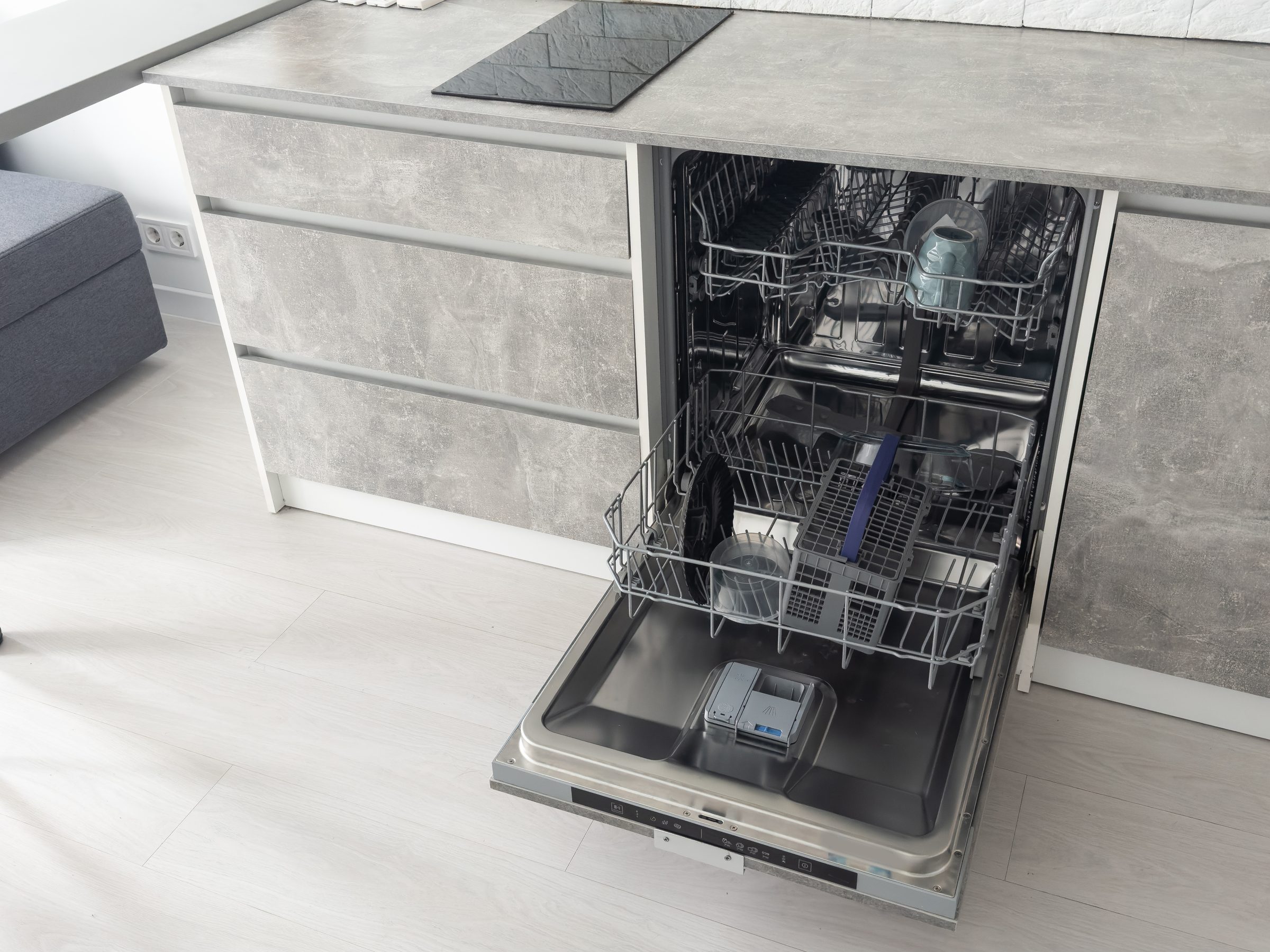
Miele dishwashers
The appliance this name means in most American kitchens, and the one that tells you the most about itself. A Miele dishwasher reports the water path in detail — the tap, the inlet filter, the hose, the drain — which is why more of these calls end without a part than on any other appliance in the house.
- From $95 diagnostic, credited to the repair
- 59 cities and neighborhoods covered
- OEM parts available on order
- In writing the price, before anything is opened
The short version
What this equipment is, for a repair
Configurations
Fully integrated · Semi-integrated · Built-under · ADA · AutoDos · 18" and 24"
Access
Planned before the visit, not discovered on arrival
Parts
OEM, available on order
Diagnostic
From $95, credited to the repair
What we do on it
Repairs we carry out on Miele dishwashers
Starting figures for this equipment in South Florida. The exact cost is confirmed after an on-site diagnostic — and this is not the whole list of what can go wrong, so call if your problem is not here.
-
from $95 Diagnostic visit
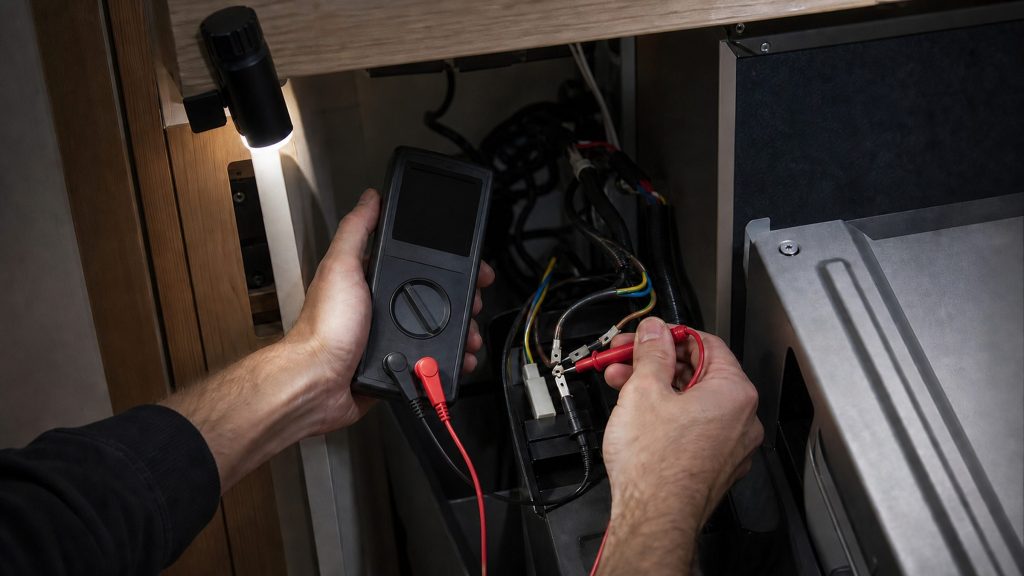
One visit that ends with a named cause, a figure and a decision — and the fee comes off the bill if you go ahead with the work.
- Credited against the repair
- A written figure before anything is ordered
- Nine appliance types, one rate
-
from $175 Dishwasher drain & fill repair
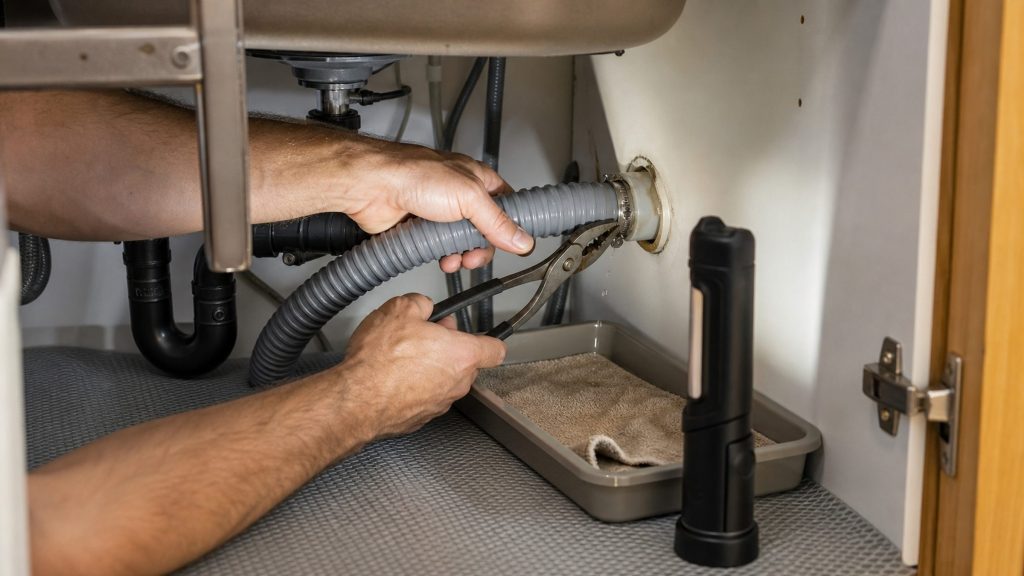
Water not arriving, or not leaving. On a Miele this is the best-reported problem in the house — the machine names the stage it stopped at, and four of the five things it can be are outside the appliance and free to check.
- The tap, the inlet filter and the hose checked before any part
- Drain path proved from the tub to the standpipe
- Flow pressure measured, not assumed
-
from $265 Dishwasher pump & motor repair
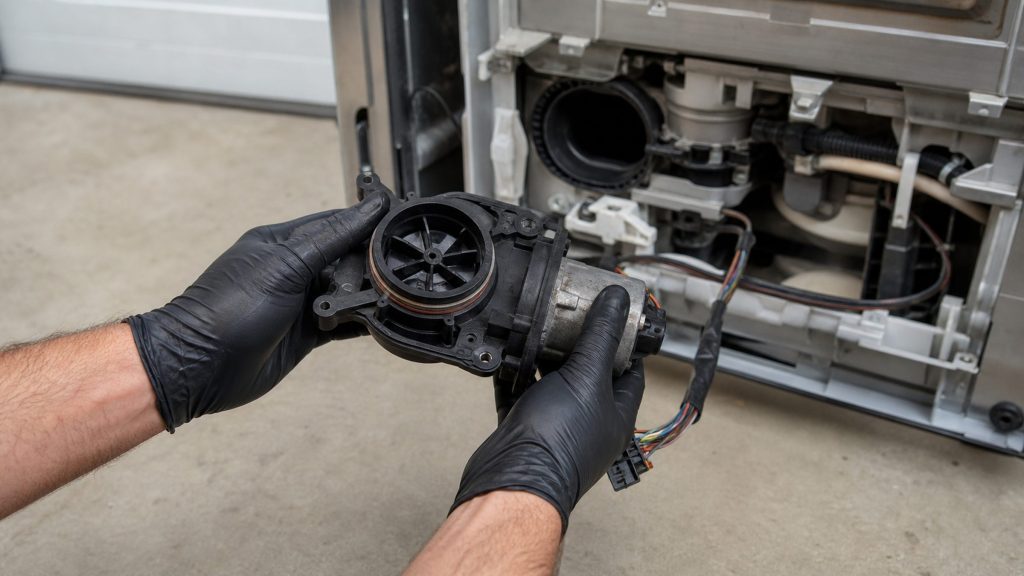
Water arriving and leaving normally, and the dishes still coming out dirty. That is the circulation side — the wash motor, the diverter and the spray arms — and which rack is failing tells us which of the three before anybody arrives.
- Diverter position identified from which rack is failing
- Spray arms and their bearings checked before parts
- Machine drawn out from under the counter as part of the job
-
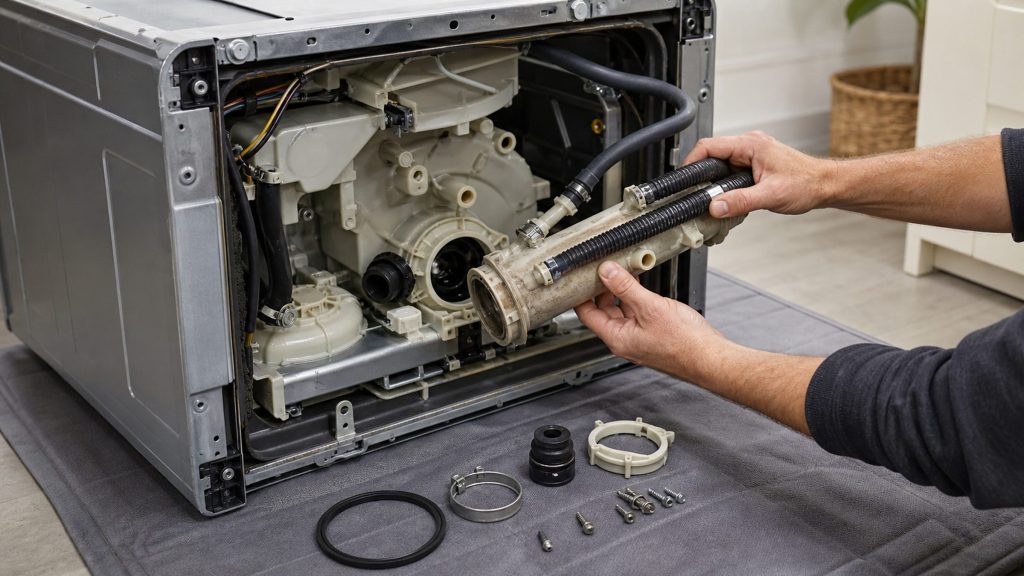
from $225 Dishwasher heating & drying repair
Water that never gets hot, or dishes that come out wet. On this make the heater and its temperature sensor report as two separate conditions, which is why this is its own repair rather than part of the pump one.
- Heater and sensor tested separately, as the machine reports them
- Drying checked before anything is called a failure
- Rinse aid and door-opening behavior confirmed first
-
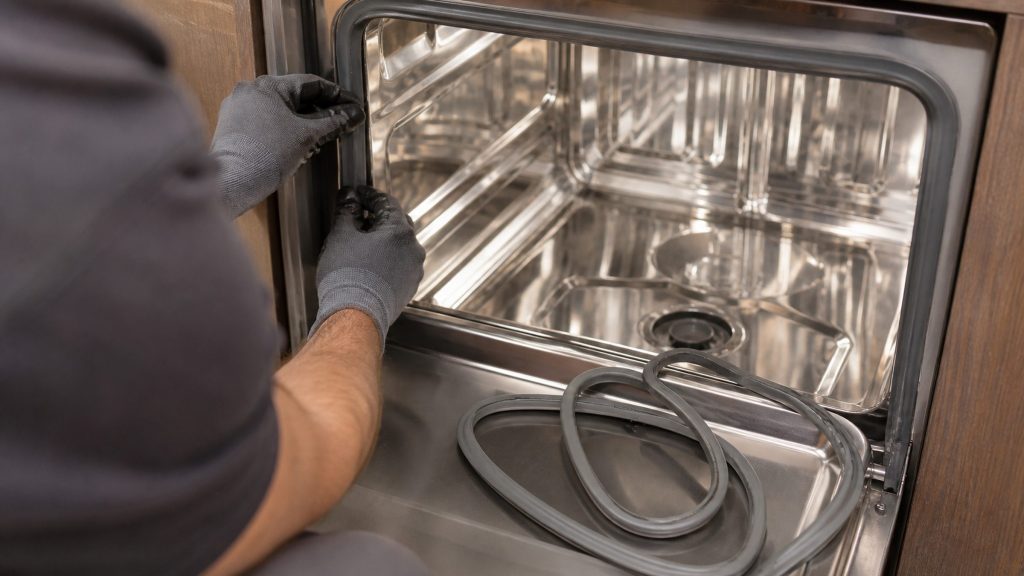
from $165 Dishwasher door & seal repair
The cheapest thing that goes wrong on the appliance and the one people live with longest: a door that drops, a door that will not stay shut, or a seal gone hard enough to let steam past. On a fully integrated machine the door is carrying your cabinetry, which is why it wears faster here.
- Springs and hinge cables checked as a pair
- Panel weight accounted for on integrated machines
- Seal replaced along its whole run, not patched
-
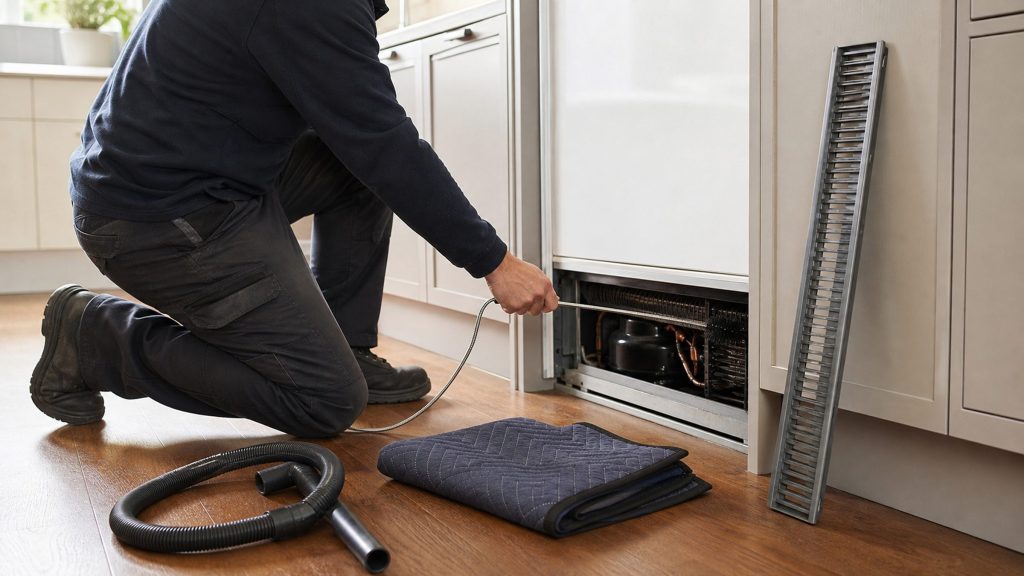
from $145 Appliance maintenance
One visit covering every condenser, filter, descale and seal in the kitchen and the laundry room. In a full Miele household that can be six appliances, and doing them together is meaningfully cheaper than three separate visits.
- Every appliance in the house on one trip
- The three things this climate is hard on, all in one visit
- Water hardness set so the appliances count correctly
-
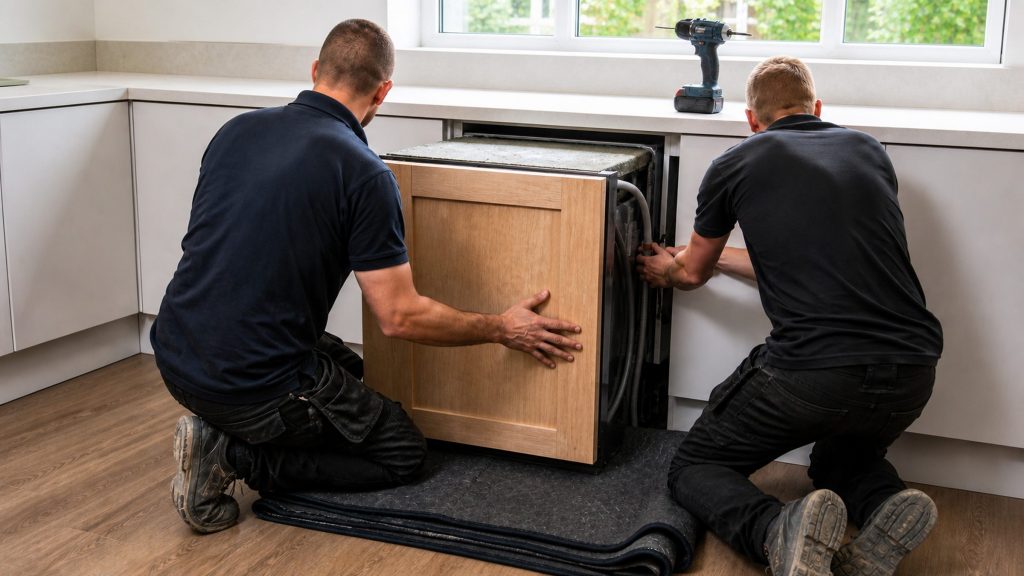
from $225 Appliance installation
Where a meaningful share of the repairs on this site are prevented or created. Ventilation under an induction cooktop, a drain that will actually take a heat-pump dryer, and water at the pressure the maker names as a minimum.
- Ventilation, drainage and flow pressure checked, not assumed
- Panel-ready doors hung and set with the panels on
- Levelling done properly, on every machine
In more detail
About Miele dishwashers
Four ways this machine is fitted, and why we ask
Fully integrated behind your own panel, semi-integrated with a visible control strip, built-under with a stainless front, and the ADA-height machines that are shorter than the rest. They are the same appliance underneath and three different amounts of work to reach. A photograph of the front answers it in one message.
What actually goes wrong
- Water not arriving. The tap, the inlet filter at the valve, a kinked hose, or flow pressure below the 7.25 psi the maker names as a minimum. All four are outside the machine.
- Water not leaving. The filters in the base of the tub, the drain hose loop, the disposal plug on a new installation, then the drain pump.
- The circulation pump or the diverter. Which rack is not cleaning is the clue, and it is worth noticing before anybody arrives.
- The heater circuit and its sensor, which this make reports as two separate conditions.
- The door. Springs and hinges carrying a heavy custom panel, and the seal that goes hard.
Scale, and why it matters more here
The water in Miami-Dade, Broward and Palm Beach is harder than the figure this machine assumes. That shows up as a blocked inlet filter, as cloudy glassware that people mistake for a wash problem, and as a salt reservoir that empties faster than the reminder expects. None of it is a failure and all of it is preventable.
What to have ready when you call
The model number from the sticker on the edge of the door, the number on the display if there is one, and whether the machine is behind a custom panel. Those three decide the visit.
This article is based on:
- Official manufacturer documentation
- Internal repair procedures
- Technician repair history
- Company quality standards

Before you book
Questions about miele dishwashers
The display shows a number and the cycle has stopped. What do I do first?
Look up the number on this site before you do anything else, because on this make it genuinely tells you where to look. Roughly a third of the dishwasher conditions the manufacturer publishes are about water arriving or leaving — the tap, the inlet filter at the valve, a kinked hose, the drain — and all four of those are checkable in ten minutes without tools. The other two thirds the maker says outright are not an owner's job, and those pages say so rather than inventing a checklist.
Where is the inlet filter, and why does it keep blocking?
It is inside the screw connection where the hose meets the tap, not inside the machine. It blocks here faster than the manual expects because South Florida water carries more scale and grit than the water the interval was written for. It comes out with pliers, rinses under a tap and goes back with its seal — with the machine unplugged and the tap closed, because there is an electrical valve in that plastic housing.
Is a fully integrated machine harder to repair than a stainless one?
It is harder to get to, which is not the same thing. The panel is your cabinetry, it is heavy, and it has to come off before the machine can come out from under a stone counter. That is planned time on the appointment rather than a surprise, and it is why we ask which kind you have when you book.
Everything comes out clean but wet.
On this make that is usually not a heater. Miele dries with residual heat and, on the newer machines, by opening the door at the end — so a machine that will not dry is often a door that is not opening, a rinse-aid reservoir that is empty, or a load packed so that water sits in the hollows. All three cost nothing to check.
What is AutoDos, and does it break?
It is the built-in dispenser that holds a cartridge of detergent and doses it per cycle. It is a mechanism, so it can go wrong, and it has conditions of its own on the display. What it more often is: an empty cartridge, or the machine set to a program that does not use it.
Where we do it
Across Miami-Dade, Broward, and Palm Beach
Same terms everywhere we go: an on-site diagnostic first, the price agreed in writing, and the exact figure confirmed once we have seen the unit.
Neighborhoods people ask for by name